A wobbly tooth can feel scary, but it does not always mean something is seriously wrong.
Most of the time, a loose implant crown is caused by a loosened screw or worn cement, not a failing implant.
Your dental implant post is fused to your jawbone, so it takes a lot to actually damage it.
Still, it helps to know the difference between a simple fix and a bigger problem. A loose crown might just need tightening or a new bond, while true implant failure can involve pain, swelling, or bone loss.
This guide walks you through what might be moving, the signs that point to each cause, and what steps to take before you see your dentist.
Key Takeaways
- Movement in your implant crown is usually a loose screw or cement issue, not implant failure.
- Pain, swelling, or other gum diseases are signs you should get checked out right away.
- Your dentist can quickly identify the cause and often fix it in one visit.
What May Actually Be Moving
When your implant crown feels loose, three different parts could be the problem. Each part has its own job, and knowing which one is affected helps your dentist fix it the right way.
The Implant Fixture and Jawbone Foundation
The implant fixture is the small post placed inside your jawbone. It acts like an artificial tooth root.
Over time, bone cells grow around this post in a process called osseointegration. This creates a strong, stable base for your new tooth.
If the fixture itself starts moving, this is the most serious type of looseness. It often means the bone never fully attached to the post, or the attachment has broken down.
This can happen due to failed osseointegration from infection, poor bone quality, or too much pressure during healing.
You may also notice red or swollen gum tissue around the area. This type of movement is different from a simple screw problem, and it usually means the whole implant needs a closer look.
The Abutment and Implant Connection
The abutment is the small connector piece that sits on top of the implant fixture. It links the fixture to your visible crown.
A tiny screw usually holds the abutment in place. This screw can loosen over time from normal chewing, grinding, or an uneven bite.
In fact, screw loosening happens in about 5% to 12% of single-tooth implants within the first several years. This is one of the most common implant problems, but it’s also one of the easiest to fix.
If your dentist finds a loose screw, they can often just remove the crown, clean the connection, and tighten a new screw to the right torque.
This restores stability without needing to touch the implant fixture itself.
The Crown Attachment Method
Your visible crown attaches to the abutment in one of two ways. It’s either a screw-retained crown or a cement-retained crown.
With a screw-retained crown, a screw holds the crown directly onto the abutment through a small access hole.
If this screw loosens, the crown may feel wobbly even though the implant below is fine.
With a cement-retained crown, dental cement bonds the crown to the abutment like glue.
Over years of chewing, this cement bond can weaken or break down, causing the crown to shift or feel loose.
Both types are common implant restoration methods. Your dentist can often tell which type you have and fix a loose crown by retightening the screw or reapplying cement, depending on your specific implant system.
Clues That Point to a Loose Crown or Screw
A few clear signs can help you figure out if your crown or screw is the problem, not the implant itself.
Pay attention to how your bite feels, what your crown looks like, and any changes in movement or sound.
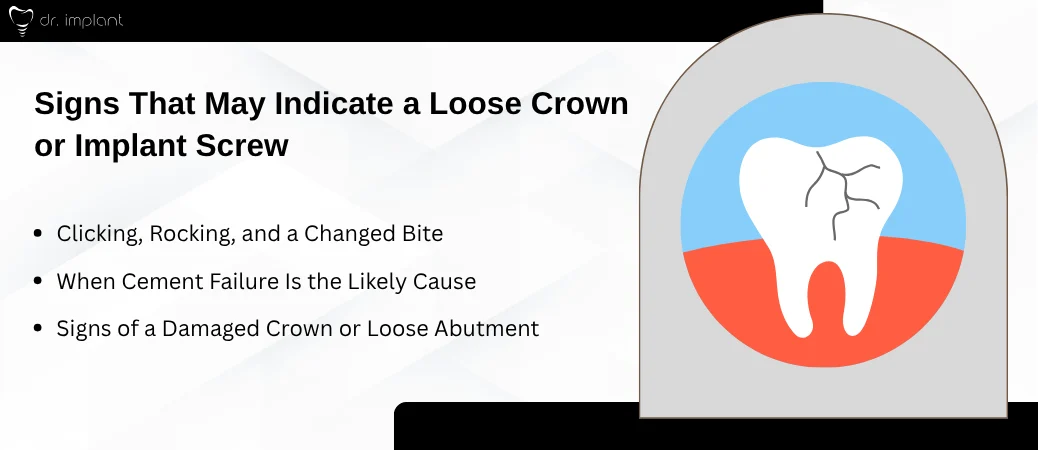
Clicking, Rocking, and a Changed Bite
A clicking sound when you chew is one of the most common signs of a loose implant crown. This often happens because the abutment screw has loosened just enough to let the crown shift slightly.
You might also notice your crown rocking side to side when you press on it with your tongue or finger.
This rocking motion is different from an implant that’s failing at the bone level, since it usually stays limited to the visible tooth.
Your bite may feel uneven too. If your crown sits even slightly higher or lower than before, your opposing teeth might hit it first when you chew.
This can throw off your occlusion, or how your teeth come together, and make chewing feel awkward until the issue gets fixed.
When Cement Failure Is the Likely Cause
If your crown was attached using dental cement instead of a screw, cement failure could be the reason it feels loose. Over time, cement can break down from chewing forces, temperature changes, or normal wear.
You might notice a small gap between your crown and gum line, or you may actually see or feel the crown lifting slightly.
Some people also notice a bad taste, since bacteria can collect in the space where the cement has failed.
Cement failure is generally considered one of the most common causes of a loose crown, right alongside screw loosening.
The good news is that this is usually a simple fix. Your dentist can clean the area and re-cement the crown in most cases.
Signs of a Damaged Crown or Loose Abutment
Sometimes the crown itself is damaged rather than just loose. Look for any visible cracks, chips, or a crown fracture, especially if you recently bit down on something hard.
A loose abutment can also cause similar symptoms to a loose crown, since the abutment is what connects your crown to the implant post.
You might feel movement that seems to come from below the gum line rather than just the visible tooth.
These issues fall under common dental implant failure diagnoses, meaning they involve the parts attached to the implant rather than the implant post itself.
If you grind your teeth or have a habit of chewing on hard objects, you may be more likely to experience abutment screw loosening or crown damage over time.
Warning Signs of True Implant Instability
True implant failure feels different from a loose crown, and it often comes with other symptoms too. Watch for movement deep in the gum, signs of infection, and problems tied to the healing stage of your implant.
Mobility of the Implant Post
If the actual titanium post feels like it’s shifting, this is a serious sign. A loose dental implant post means the bone around it may no longer be holding it firmly in place.
You might notice this movement when you bite down or even when you gently press on the implant. Unlike a loose crown, this feeling comes from deep below the gum line, not just the visible tooth.
This type of mobility usually points to failed osseointegration, which means the bone never properly fused with the implant.
It can also happen later if bone support breaks down over time. Either way, you shouldn’t wait to get this checked.
Inflammation, Infection, and Bone Loss
Your gums can tell you a lot about implant health. Redness, swelling, or bleeding around the implant site may point to peri-implant mucositis, which is inflammation limited to the soft tissue.
If left untreated, this can progress to peri-implantitis, a more serious form of gum disease that affects the bone holding your implant.
You might notice gum recession, a bad taste in your mouth, or even pus near the implant if a bacterial infection has set in.
Bone loss is one of the most concerning signs, since it directly weakens implant stability. Your dentist can check for this using x-rays, since bone loss often isn’t visible just by looking in the mirror.
Early Healing Problems and Late Complications
Timing matters when it comes to implant problems. Early complications usually happen during the first few months after placement, often due to improper implant placement or insufficient bone density at the time of surgery.
Late complications can show up years later, even if your implant felt perfectly fine at first. These often stem from ongoing peri-implant inflammation or poor oral hygiene habits that build up over time.
Pay attention to any new discomfort, swelling, or looseness, no matter how long you’ve had your implant.
Catching these warning signs early gives your dentist the best chance to protect your implant health and prevent further bone loss.
What to Do Before Your Dental Appointment
If your implant crown feels loose, a few simple habits can protect it until your dentist takes a look. Here’s how to keep things stable and avoid turning a small problem into a bigger one.
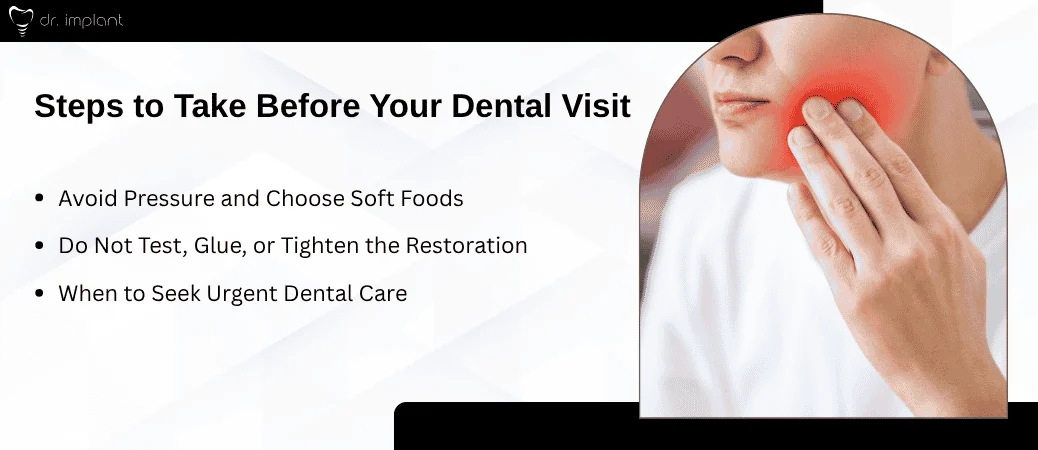
Avoid Pressure and Choose Soft Foods
Chewing forces can make a loose crown wiggle even more, so give it a break. Stick to soft foods like yogurt, scrambled eggs, mashed potatoes, and soup for the next few days.
Try to chew on the opposite side of your mouth as much as you can. This takes pressure off the loose implant crown and lowers the risk of it shifting further.
Skip anything hard, sticky, or chewy. Foods like nuts, caramel, or crusty bread put extra bite forces on the area and can lead to occlusal overload, which may damage the implant connection even more.
Do Not Test, Glue, or Tighten the Restoration
It might be tempting to wiggle the crown with your finger or tongue to see how loose it is. Try to resist this urge, since extra movement can loosen it further or even cause it to fall out completely.
Never try to fix a loose dental implant crown with household glue or dental cement from a drugstore. These products aren’t made for implants and can make it harder for your dentist to fix things properly.
Do not attempt to tighten the crown or abutment yourself, even if you have the right tools.
This part of your care with a loose implant crown should always be handled by a trained dentist to avoid an implant fracture or damage to the screw threads.
When to Seek Urgent Dental Care
Most loose crowns aren’t a true dental emergency, but some signs mean you need help right away.
Call an emergency dentist immediately if you notice bleeding, swelling, sharp pain, or if your bite suddenly feels uneven.
If the entire crown falls off and leaves the metal abutment exposed, don’t wait for your next regular checkup. This can expose the implant connection to bacteria and should be checked within a day or two.
A loose dental implant post itself, meaning the part fused to your jawbone, is much less common but far more serious.
If you feel the implant moving at the base rather than just the crown, contact your dentist right away, since this could point to bone loss or implant failure.
How Dentists Diagnose and Repair the Problem
If your implant crown feels loose, your dentist will run some simple tests to find the exact cause. From there, treatment can range from a quick screw tightening to a more involved fix for the implant itself.
Clinical Examination and Imaging
Your dentist will start with a hands-on clinical examination. They will gently wiggle the crown to see if it moves, and check your gums for any swelling or redness.
X-rays are usually the next step. These images let your dentist see the bone around the dental implant screw and check for bone loss.
Your dentist may also test the implant torque to see how tight the components are. This step helps them tell the difference between a loose screw and a real problem with the implant.
Bite checks are also common. Your dentist will look at how your teeth come together, since an uneven bite can put extra stress on your crown.
Retightening or Replacing Implant Components
In most cases, your dentist can fix a loose crown by simply retightening the abutment screw. This is a quick fix that often takes less than an hour.
Sometimes the screw or crown itself needs to be replaced instead of just tightened. If any implant components show signs of wear or damage, your dentist will swap them out for new parts.
Your dentist will make sure everything fits back together correctly. This step is a routine part of implant dentistry and helps keep your dental restorations working well for years to come.
If cement was used to hold your crown in place, your dentist may need to remove old cement and reapply new cement. This helps make sure your crown stays secure going forward.
Managing Disease or Replacing a Failed Implant
If gum disease is the cause of your loose implant, your dentist will treat the infection first. This may include a deep cleaning and a course of antibiotics to clear things up.
If the bone around your implant has broken down, your dentist may suggest a bone graft or bone grafting to help rebuild the area. This gives your implant a stronger base to sit in.
When an implant has failed and can’t be saved, your dentist will talk to you about implant removal. Once the area heals, you can move forward with a new implant placement.
Because every case is different, your provider will walk you through your options for further dental implant treatment.
Their goal is to help you get back to a comfortable, working smile in restorative dentistry care.
Protecting Your Implant Restoration Long Term
You can help your implant last for many years by taking a few simple steps. Watching your bite forces, cleaning around the implant every day, and keeping up with dental visits all play a big part in keeping things stable.

Managing Bruxism and Heavy Bite Forces
If you grind your teeth at night, this is something you need to take seriously. Bruxism puts extra pressure on your implant that it wasn’t built to handle.
This pressure is called occlusal overload, and it’s one of the most common causes of screw loosening. Over time, it can also lead to tiny shifts in the implant known as micro-movements.
A night guard is one of the easiest ways to protect your implant. Your dentist can make a custom one that fits your mouth and spreads out the force evenly.
Your dentist will also check your occlusion, or how your teeth come together, at regular visits. If your bite is off, they can adjust it before it causes damage.
Daily Cleaning Around the Implant
Good oral hygiene habits protect both your implant and the gum tissue around it. Plaque buildup near the implant can lead to gum irritation and bone loss over time.
Plaque control starts with brushing twice a day, but that alone isn’t enough for implants. You also need to clean between your teeth and around the base of the crown.
Here are a few tools that help with interdental cleaning:
- Interdental brushes: Small brushes that fit between teeth and around the implant post
- Water flosser: Uses a stream of water to remove food and plaque from hard-to-reach spots
- Floss made for implants: Designed to slide around the abutment without catching
Using these tools daily supports long-term gum health and helps you spot problems early, like swelling or bleeding.
Keeping Up With Professional Maintenance
To prevent infection, regular dental check-ups are one of the best ways to catch small issues before they turn into bigger ones.
Your dentist can spot early signs of screw loosening, gum changes, or bone loss that you might not notice on your own.
Most dentists recommend implant check-ups every six months, though your dentist may suggest more frequent visits based on your needs.
During these visits, they’ll check the tightness of the screw, take x-rays if needed, and clean areas you can’t reach at home.
Staying on top of implant health through professional care helps make sure small problems don’t turn into implant failure. It’s a simple habit that protects your investment for years to come.
Frequently Asked Questions
A loose crown, a loose screw, and a failing implant are three different problems with three different fixes. Here are quick answers to the questions people ask most often.
Why does my implant crown feel loose?
Your crown can feel loose for a few reasons. The most common cause is a loosened abutment screw, which is the small screw that holds your crown to the implant post.
Cement failure is another common cause. If your crown was cemented on, the bond can break down over time and let the crown wiggle.
Wear and tear also play a role. Chewing puts pressure on your crown every day, and this can slowly loosen the connection.
How can I tell whether the crown screw is loose or the implant itself is failing?
You can’t fully tell on your own, but a few clues can help. If just the crown moves or clicks while the gum around it looks normal, a loose screw is likely.
If you feel pain, notice swelling, or see the gum pulling away from the implant, this points to a bigger problem. True mobility of the implant fixture is more serious than a loose crown and often comes with these extra warning signs.
Your dentist is the only one who can confirm which part is moving. They will check the crown, the screw, and the implant separately using an exam and an X-ray.
Can a loose implant crown be tightened by my dentist?
Yes, in most cases your dentist can fix a loose crown. If the screw has loosened, they will remove the crown, clean the connection, and tighten a new screw to the correct torque.
If cement failure caused the problem, your dentist may reattach the crown with new cement. Sometimes the crown needs small adjustments first so it fits and bites correctly.
You should never try to tighten the screw yourself. Home tightening can damage the screw or connection and make the repair harder for your dentist.
Is a loose implant crown an emergency?
A loose crown is usually not a true emergency, but you shouldn’t ignore it either. You should see your dentist within a few days to prevent more damage.
Waiting too long can cause bigger problems. Continued chewing on a loose crown can crack the screw, wear down the connection, or even cause you to swallow or breathe in a small piece.
Call your dentist right away if you have swelling, fever, or severe pain. These signs suggest something more serious than a loose screw.
Why does my dental implant screw keep coming loose?
If your screw keeps loosening again and again, something is causing repeated stress on the joint. Common causes include an uneven bite, a crown that doesn’t fit quite right, or too much force on one side of your mouth.
Grinding your teeth at night can also add extra pressure. Cantilever designs, where part of the crown sticks out past the implant, tend to loosen more often too.
A single loose screw can happen even with a well-made crown. But repeated loosening means something in the setup needs to be corrected, not just retightened.
What does actual dental implant failure feel like?
Real implant failure feels different from a simple loose crown. You may notice the whole implant moving, not just the crown on top of it.
Other signs include ongoing pain, swelling, or gums that look red or puffy around the implant. You might also notice pus or a bad taste near the implant site, which can point to infection.
Bone loss around the implant is another sign of failure, and this often shows up on an X-ray before you feel major symptoms.
If you notice any of these signs, contact your dentist quickly so they can check the implant and plan the right next step.