Getting a dental implant is a big step toward restoring your smile. Protecting it starts the moment the procedure ends. You play a direct role in how well your implant heals and how long it lasts.
Preventing infection after a dental implant is possible by keeping the area clean, taking prescribed medications as directed, avoiding smoking, and watching for early warning signs like swelling, pus, or increasing pain.
Small daily actions make a real difference during the first few days and in the months that follow.
When you understand what normal healing looks like and when to call your dentist, you lower your risk of serious problems. With the right care and habits, you give your implant the best chance to stay stable and healthy for years.
Key Takeaways
- Keep the surgical area clean and follow all care instructions closely.
- Watch for unusual pain, swelling, discharge, or fever and act quickly.
- Attend checkups and maintain strong daily habits to protect your implant.
Recognizing Early Signs of Implant Infection
You can protect your implant by spotting problems early and acting fast. Pain that gets worse instead of better and swelling that spreads are warning signs you should not ignore.
Common Symptoms to Watch For
Some discomfort is normal in the first few days. Mild soreness, light bruising, and small amounts of oozing often improve each day.
You should pay attention if symptoms increase after day three instead of fading. Growing pain, visible pus, and a bad taste in your mouth can signal infection.
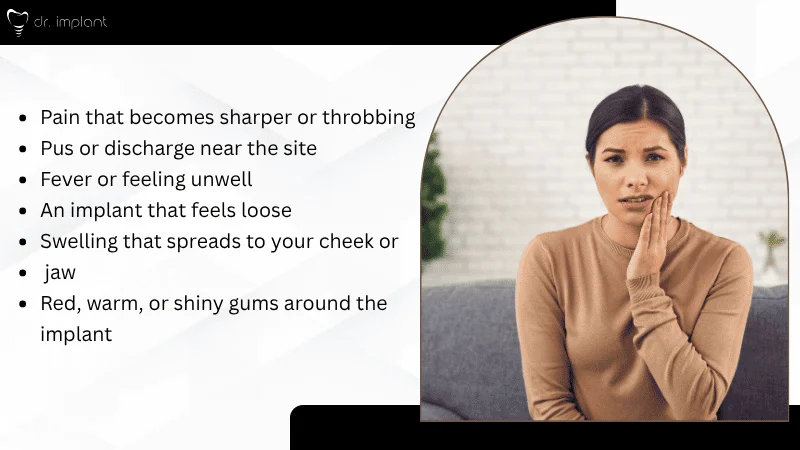
Look for these specific signs:
- Pain that becomes sharper or throbbing
- Swelling that spreads to your cheek or jaw
- Red, warm, or shiny gums around the implant
- Pus or discharge near the site
- Fever or feeling unwell
- An implant that feels loose
You may also notice bleeding that does not slow down.
Immediate Steps If Infection Is Suspected
If you notice warning signs, call your dentist right away. Do not wait to see if it improves on its own.
Keep the area clean, but avoid scrubbing the implant site. Rinse gently if your dentist has recommended an antimicrobial mouthwash.
Take all prescribed antibiotics exactly as directed. Do not stop early, even if you feel better. You should also avoid smoking, alcohol, and heavy exercise. These can slow healing and make infection worse.
Early treatment often prevents deeper bone damage. Quick action can protect both your implant and your overall oral health.
Best Practices for Post-Procedure Oral Hygiene
You protect your implant by keeping the area clean without disturbing healing tissue. Use gentle tools, follow clear steps, and stay consistent every day.
Effective Cleaning Around Implants
Focus on keeping plaque away from the implant site while it heals. During the first few days, avoid brushing directly over the surgical area. Instead, use any prescribed antimicrobial rinse as directed.
You should not rinse hard or create suction, such as drinking through a straw. These actions can disturb the blood clot and slow healing.
After your dentist clears you, clean gently around the implant with a soft brush. Move slowly and avoid pressure.
You should also keep the rest of your mouth very clean. Plaque from nearby teeth can spread bacteria to the implant area.
If you notice bleeding, swelling that gets worse, pus, or a bad taste, call your dentist right away.
Recommended Oral Hygiene Products
Use tools made for gentle and precise cleaning. The goal is to remove plaque without irritating the gum tissue.
Choose these products:
- Soft-bristled toothbrush to protect healing gums
- Low-abrasive toothpaste to avoid scratching the implant surface
- Antimicrobial mouth rinse if prescribed
- Implant-safe floss or interdental brushes
- Water flosser if your dentist recommends it
Research on oral hygiene tips after dental implant surgery highlights the value of interdental brushes and water flossers for cleaning around implant posts. These tools reach areas that a regular toothbrush may miss.
Avoid hard-bristled brushes or whitening toothpaste with harsh particles. They can irritate your gums and damage the surface of the implant crown.
Replace your toothbrush every three months, or sooner if the bristles spread out.
Brushing and Flossing Techniques
Brush at least twice a day using small, gentle circles. Hold your brush at a 45-degree angle toward the gumline.
Do not scrub. Light pressure works better and protects your gums.
When flossing, slide the floss carefully between your teeth and curve it around each side. If you use implant floss, follow the product directions to clean under and around the implant crown.
If you have limited hand control, try an electric toothbrush with a soft head. Many people find it easier to clean evenly with this tool.
You should avoid irritating the wound in the first few days. Let the tissue settle before applying direct pressure.
Stay consistent. Daily care prevents plaque buildup, which lowers your risk of peri-implant inflammation and infection.
Routine Follow-Up and Professional Monitoring
You protect your implant by showing up for regular checkups and letting your dental team track small changes early. Careful exams and cleanings lower your risk of infection and long-term implant problems.
Importance of Scheduled Dental Visits
You need routine visits even if your implant feels fine. Your dentist or hygienist checks the gum tissue, measures pocket depth, and looks for early signs of swelling or bleeding.
Regular implant maintenance visits help prevent peri-implant disease and lower the risk of implant failure.
At these visits, your provider may:
- Remove hardened plaque around the implant
- Check your bite for excess pressure
- Review your home care routine
- Take X-rays when needed
Professional cleanings reach areas you cannot clean well at home. These visits also give you a clear plan to fix small issues before they turn into infection.
Monitoring for Long-Term Implant Success
Long-term success depends on steady monitoring of your gum and bone health. Your dental team tracks changes over time, not just at one visit.
Ongoing evaluation of the tissues around implants plays a key role in the lifelong management of peri-implant conditions, as outlined in these diagnostic measures for monitoring and follow-up.
Your provider may check:
| What They Monitor | Why It Matters |
| Gum pocket depth | Detects early infection |
| Bleeding on probing | Shows active inflammation |
| Bone levels on X-ray | Confirms implant support |
| Implant stability | Ensures proper integration |
If your dentist finds early inflammation, they can treat it with focused cleaning and, in some cases, medication. Early care often stops the problem before it damages the bone that supports your implant.
4Role of Preventive Medications and Antibiotics
Preventive medicines can lower your risk of infection after implant surgery. Your dentist will decide if you need antibiotics based on your health, the type of procedure, and your risk factors.
When Antibiotics Are Recommended
You may need antibiotics if your surgery is complex or if your risk of infection is higher than normal. For example, dentists often consider them for immediate implant placement or bone grafting.
The topic remains debated, but some experts note that a benefit in complex cases cannot be ruled out.
Your dentist may also suggest antibiotics if you:
- Have uncontrolled diabetes
- Smoke heavily
- Have a weakened immune system
- Need multiple implants placed at once
The goal is to reach a drug level in your blood that stops bacteria from growing in the surgical area. This approach aims to reduce early implant failure linked to infection. You will not always need antibiotics for simple, routine cases.
Safe Use and Possible Side Effects
If your dentist prescribes antibiotics, take them exactly as directed. Do not skip doses, and do not stop early unless your provider tells you to stop.
Antibiotics can cause side effects such as:
- Stomach upset
- Diarrhea
- Nausea
- Allergic reactions
In rare cases, misuse can lead to antibiotic resistance. This means bacteria become harder to treat later. Reviews on the efficacy and safety of antibiotics after implant placement stress that dentists must balance benefits with risks.
Tell your dentist about any drug allergies and all medicines you take. Clear communication helps prevent harmful reactions and keeps your recovery on track.
Lifestyle Habits That Support Healing
Your daily habits affect how well your implant heals. The right foods, avoiding harmful substances, and managing health issues all lower your risk of infection and support strong tissue repair.
Dietary Choices for Recovery
What you eat in the first few weeks matters. Your body needs protein, vitamins, and minerals to repair gum tissue and support the bone around your implant.
Focus on soft, nutrient-rich foods such as:
- Scrambled eggs
- Greek yogurt
- Mashed vegetables
- Oatmeal
- Smooth soups (not too hot)
Protein helps rebuild tissue. Calcium and vitamin D support bone strength. Foods rich in vitamin C, like soft fruits, help your gums heal.
Avoid hard, crunchy, or sticky foods. Chips, nuts, and chewy candy can disturb the surgical site. Very hot foods may increase swelling during the first few days.
Drink plenty of water. Skip sugary drinks, which can feed bacteria and raise your risk of infection.
Avoiding Tobacco and Alcohol

Tobacco use is one of the biggest risk factors for implant failure. Smoking reduces blood flow to your gums. Less blood flow means slower healing and higher infection risk.
If you smoke, stop before surgery and avoid restarting during recovery. Even a few cigarettes per day can affect healing.
Alcohol can also delay recovery. It may:
- Interfere with prescribed antibiotics
- Increase bleeding
- Dry out your mouth
A dry mouth allows bacteria to grow more easily. That raises your infection risk around the implant site.
Patient behavior after surgery plays a major role in success. Your choices directly affect how well your implant integrates with the bone.
Managing Existing Health Conditions
Certain health conditions require extra attention during healing. If you have diabetes, keep your blood sugar within your target range. High blood sugar slows wound healing and increases infection risk.
Take all prescribed medications as directed. Do not skip doses of antibiotics or anti-inflammatory drugs.
If you have a history of gum disease, follow a strict oral hygiene routine. Brush twice daily with a soft toothbrush. Clean the rest of your mouth gently while avoiding pressure on the surgical site.
Conditions that affect your immune system also require close monitoring. Attend every follow-up visit so your dentist can check for early signs of swelling, bleeding, or unusual pain.
When you manage your health carefully, you give your implant the best chance to heal without complications.
Frequently Asked Questions
Infection after implant placement can start with small changes like pain that gets worse instead of better, swelling that spreads, or fluid around the site. Quick action and regular checkups help protect the implant and the bone around it.
What are the early warning signs that an implant site might be infected?
You may notice pain that increases after the third day instead of slowly easing. Mild soreness is normal at first, but growing pain is not.
Watch for swelling that spreads to your cheek or jaw, pus, a bad taste, or a foul smell. Fever and bleeding that does not stop also need attention.
Normal healing should improve each day. If symptoms get stronger instead of fading, call your dentist.
How common are infections after implant surgery, and what increases the risk?
Implant infections are not common, but they can happen. Most occur within the first two weeks after surgery.
Your risk rises if you smoke, have uncontrolled diabetes, or skip oral hygiene. Poor home care and missed follow-up visits also raise the chance of problems.
Strenuous activity, aggressive rinsing, or using a straw in the first 48 to 72 hours can disturb the blood clot and delay healing.
When should I contact my dentist if I notice pain, swelling, or discharge after placement?
Call your dentist if pain increases after day three. Do not wait to see if it goes away.
Contact the office right away if you see pus, feel a fever, or notice a bad smell. These signs can mean infection.
If swelling spreads or you have trouble opening your mouth or swallowing, seek urgent care. Fast treatment can prevent bone loss around the implant.
Can an implant-related infection show up on an X-ray, and when would that be checked?
Yes, an infection can appear on an X-ray. Your dentist may see bone loss around the implant.
Early infections may not show clear changes right away. That is why your dentist also checks your gums for redness, swelling, and bleeding.
You will usually have X-rays during follow-up visits and routine exams. If you report pain or swelling, your dentist may take one sooner.
Can an infection develop around an implant years after it was placed, and what symptoms should I watch for?
Yes, infection can develop years later. This condition is often called peri-implantitis.
You might see bleeding when you brush, swelling around the implant, or gum recession. The implant may feel loose in advanced cases.
Daily brushing, flossing, and regular cleanings lower your risk. Long-term care plays a key role in preventing peri-implant infections and long-term complications.
How fast can an implant infection spread, and what should I do if symptoms worsen quickly?
An implant infection can spread within days if left untreated. Bacteria can move from the gum to the bone.
If symptoms get worse quickly, call your dentist the same day. Follow all instructions, including taking prescribed antibiotics as directed.
Do not try to treat it on your own. Early care helps protect the implant and the surrounding bone.