When you lose a tooth, your jawbone no longer gets the pressure it needs to stay strong. Over time, the bone in that area can shrink. This process is called bone loss, and it can affect your overall oral health.
Bone loss is the gradual shrinking of jawbone after tooth loss or infection, and it can limit how securely a dental implant can be placed.
Dental implants need enough healthy bone to stay stable. If the bone is too thin or soft, implant placement becomes more complex and may require added treatment.
You may not notice bone loss right away, but your dentist can see it on X-rays and scans.
Understanding how bone loss affects implant placement helps you plan for long-term success and avoid problems that could weaken your dental implants later.
Key Takeaways
- Bone loss happens when your jawbone shrinks after tooth loss or disease.
- Healthy bone supports stable and long-lasting implant placement.
- Early evaluation helps protect your oral health and improve implant results.
Learn how bone loss before dental implants impacts your treatment and explore solutions
Understanding Bone Loss and Its Causes
Bone loss happens when your jaw no longer gets the stimulation and support it needs. Several local and whole‑body factors can lower jawbone density and affect your ability to receive dental implants.
How Bone Loss Occurs
Bone is living tissue. It constantly breaks down and rebuilds in a process called bone resorption and formation.
When this balance shifts, you lose more bone than you rebuild. Over time, your jawbone becomes thinner and weaker.
One common cause is periodontal disease, also called gum disease. Bacteria infect the gums and destroy the tissue and bone that hold your teeth in place.
If you do not treat gum disease, it can lead to loose teeth and permanent bone loss.
Inflammation around teeth or implants can also damage bone. Poor oral hygiene, smoking, and untreated infections increase this risk.
As bone resorption continues, your jawbone density drops. Lower density makes it harder for an implant to bond securely with the bone.
Impact of Missing Teeth and Tooth Extraction

Your jawbone depends on tooth roots for stimulation. Every time you chew, pressure travels through the roots and signals your body to maintain bone strength.
When you have missing teeth, that stimulation stops. The body responds by breaking down unused bone in that area.
Shrinkage can begin within months. The jawbone can lose both height and width during the first year after extraction.
If you wait too long for tooth replacement, the bone may shrink so much that you need a graft before implant placement. Early planning for implants or other tooth replacement options helps preserve your bone structure.
Bone Resorption and Jawbone Density
Bone resorption is the natural process where your body removes old bone tissue. In a healthy system, new bone replaces it.
Problems begin when resorption outpaces rebuilding. This leads to lower jawbone density and reduced support for teeth or implants.
Several factors can speed up this process:
- Untreated gum disease
- Long-term missing teeth
- Excess pressure from grinding or clenching
- Poor oral health habits
Jawbone loss can also make future tooth replacement more complex. You may not have enough stable bone to support implants without added procedures.
When density drops, implants may not fuse properly with the bone. This weak connection raises the risk of implant failure.
Systemic Conditions Affecting Bone Health
Your overall health also affects your jawbone. Certain medical conditions reduce your body’s ability to maintain strong bone.
Osteoporosis lowers bone density throughout your body, including your jaw. If you have osteoporosis, your implant dentist may need to evaluate bone quality more closely before treatment.
Other systemic issues, such as uncontrolled diabetes, can slow healing and increase infection risk. Chronic inflammation affects both oral health and bone stability.
Systemic health plays a direct role in implant success. Conditions that weaken bone or reduce healing can interfere with proper osseointegration.
Managing your general health, along with good oral care, supports stronger bone and better long‑term implant outcomes.
Schedule your dental implant consultation in Miami, Pembroke Pines, or Delray Beach today.
Implications of Bone Loss on Dental Implant Placement
Bone loss changes how you plan and place dental implants. It affects stability, healing, and the long‑term success of your implant-supported restorations.
Requirements for Successful Implant Placement
You need enough bone height, width, and density to support implant placement. The implant must stay stable while your bone heals around it through osseointegration.
Without firm initial stability, the implant can move. Even small movement can disrupt healing and increase the risk of implant failure.
Dentists check your bone with exams and 3D scans. These images show if your jaw has enough volume to hold an implant safely.
If your bone is too thin or soft, your dentist may suggest a bone graft. This builds up the area so your implant-supported restoration has a stable base.
Challenges of Severe and Marginal Bone Loss
Severe bone loss can make implant placement more complex. You may not have enough bone height or width to position the implant in the correct angle for proper prosthetic design.
In these cases, you often need bone grafting before implant surgery. When your jaw lacks enough structure to hold an implant, a graft can rebuild the site.
Marginal bone loss is different. It happens around the top portion of the implant, near the gum line. Some bone remodeling is normal after surgery, but ongoing loss can expose implant threads and lead to receding gums.
This can affect both function and appearance. Poor prosthetic design, excess bite forces, or plaque buildup can increase stress on the surrounding bone.
Bone Loss Around Dental Implants and Implant Failure
Bone loss around implants after placement can signal a problem. While a small amount of early bone change may occur, continued loss can weaken support.
Research shows that osteoporosis alone does not clearly reduce implant survival, based on this meta-analysis on osteoporosis and dental implant outcomes. Still, each patient needs careful planning.
Peri-implant inflammation, poor oral hygiene, and smoking can speed up bone loss around dental implants. If bone loss continues unchecked, the implant may loosen.
Advanced bone loss around dental implants can lead to implant failure. At that stage, you may need to remove the implant, treat the site, and consider grafting before trying again.
Contact our team in Miami, Pembroke Pines, or Delray Beach to discuss bone loss and implant options.
Diagnosis and Assessment in Implant Dentistry
You need clear imaging, accurate bone measurements, and a solid surgical plan before placing a dental implant. These steps help your implant specialist place the implant in stable bone and lower the risk of future bone loss.
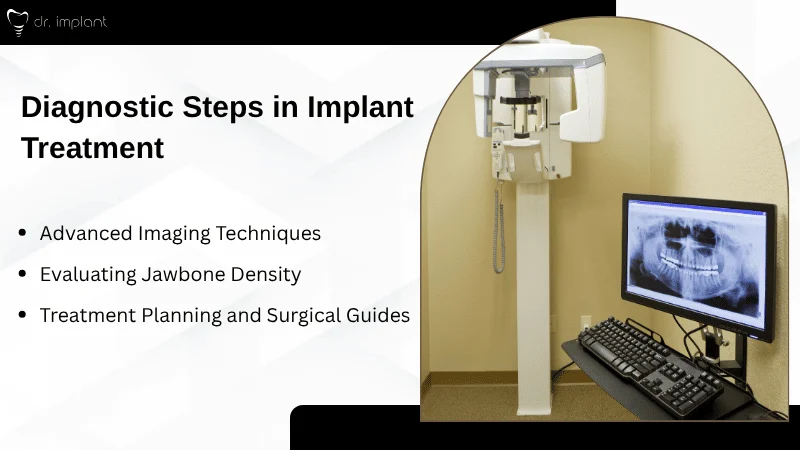
Advanced Imaging Techniques
Your dentist starts with detailed images of your jaw. Standard dental X-rays show basic bone height, but they do not show depth or exact shape.
That is why many providers use advanced imaging, especially cone beam CT (CBCT) scans. A CBCT scan creates a 3D view of your jaw. It shows bone width, height, and nearby structures like nerves and sinuses.
This level of detail matters. For example, CBCT helps your oral surgeon avoid the inferior alveolar nerve in the lower jaw and the sinus cavity in the upper jaw.
Clear imaging also helps detect early bone problems. Inflammatory conditions like peri-implant bone loss show up as changes in bone levels around implants. Radiographs can reveal bone loss greater than normal healing limits.
With 3D scans, your provider can measure exact distances in millimeters. That precision supports safer and more predictable implant dentistry.
Evaluating Jawbone Density
Bone height alone is not enough. You also need strong jawbone density to support an implant.
Dense bone holds an implant firmly during healing. Soft or thin bone may not provide enough stability, especially in the upper back jaw.
Your implant specialist reviews imaging to assess:
- Bone width and thickness
- Bone quality (dense vs. porous)
- Signs of infection or past graft failure
- Areas affected by bone resorption
Infection is one common reason for bone loss. Conditions such as periimplantitis can damage the bone around implants if not treated early.
If your bone density is low, your provider may recommend bone grafting before implant placement. This step rebuilds lost volume and improves long-term support.
Careful evaluation reduces the risk of implant movement, failure, or uneven stress on the surrounding bone.
Treatment Planning and Surgical Guides
Once your imaging and bone measurements are complete, your provider moves to treatment planning. This stage maps out implant size, angle, and exact position.
Digital software allows your oral surgeon to plan placement based on your bone shape and final tooth position. The goal is to align the implant with your bite, not just the available bone.
In many cases, your provider creates custom surgical guides. These are clear trays that fit over your teeth or gums during surgery.
Surgical guides help:
- Control drilling depth
- Maintain correct angulation
- Avoid nerves and sinuses
- Improve implant stability
Accurate planning improves osseointegration, which is the bond between bone and implant.
Research on factors affecting bone loss in dental implants shows that stress distribution and implant positioning directly affect long-term success.
When your implant dentistry team combines detailed imaging, careful bone analysis, and guided surgery, you get a treatment plan built around your specific anatomy.
Solutions for Implant Placement with Bone Loss
You can still move forward with implant placement surgery even if you have lost bone. Dentists use bone grafting, sinus lifts, and special implant designs to rebuild support and create a stable base.
Bone Grafting and Regeneration
If your jaw does not have enough height or thickness, your dentist may recommend bone grafting. This procedure adds bone to weak areas so your implant has a solid base.
A bone graft can use your own bone, donor bone, or safe synthetic material. Over time, your body replaces the graft with natural bone through bone regeneration.
In some cases, your dentist may use guided bone regeneration (GBR). With GBR, they place a small barrier membrane over the graft. This membrane keeps soft tissue out and allows bone cells to grow in the right space.
Healing can take several months. Once the graft becomes strong enough, you can move ahead with implant placement surgery.
Sinus Lifts and Ridge Augmentation
If you need implants in your upper back jaw, you may not have enough bone under the sinus. A sinus lift adds bone to this area.
During sinus lift surgery, your dentist gently raises the sinus membrane. They then place bone graft material in the space below it. This creates enough height to support an implant later.
If your jaw is too narrow, your dentist may suggest ridge augmentation. This treatment widens the bone ridge so it can hold an implant securely.
Both sinus lifts and ridge augmentation focus on building the right shape and size of bone before placing the implant.
Alternative Implant Options: Mini and Zygomatic Implants
Sometimes you can avoid large grafts by choosing a different type of implant. Mini implants are thinner than traditional implants and need less bone for support.
Because they are smaller, mini implants often require a simpler procedure. They can work well for stabilizing dentures or replacing small teeth.
However, they may not suit every case, especially if you need to handle strong biting forces.
For severe bone loss in the upper jaw, your dentist may suggest zygomatic implants. These longer implants anchor into your cheekbone instead of your jawbone.
The cheekbone keeps its density better than the upper jaw, which makes this option useful in complex cases.
Delayed and Immediate Implant Placement
The timing of your implant also matters. With delayed implant placement, your dentist first rebuilds the bone with grafting or GBR. You wait several months for healing before placing the implant.
This approach gives the graft time to become strong and stable. It often works best when bone loss is moderate to severe.
In some cases, you may qualify for immediate implant placement. This means your dentist places the implant soon after a tooth extraction.
Immediate placement can help limit further bone shrinkage, but it only works when enough healthy bone remains.
Your dentist will review scans and measurements to decide which timing gives you the safest and most stable result.
Preventing and Managing Bone Loss for Long-Term Success
You protect your implant by keeping the surrounding bone and gum tissue healthy every day. Clear home care, early treatment of inflammation, and control of medical and bite risks all help limit bone loss and support long-term stability.

Maintaining Oral Hygiene and Professional Cleanings
You need steady plaque control to protect the bone around your implant. Plaque buildup can inflame the gums and start a chain reaction that leads to bone loss.
Brush twice a day with a soft toothbrush. Clean around the implant crown and along the gumline with care.
Add tools that reach tight spaces:
- Floss or implant-specific floss
- Interdental brushes
- Water flossers
- Low-abrasive toothpaste
Professional cleanings matter just as much. Your dental team removes hardened plaque that you cannot clear at home.
Regular visits also allow your provider to check bone levels with X-rays. Studies on early marginal bone changes show that even small amounts of early bone loss can signal future risk.
Research on early marginal bone loss around dental implants highlights the value of close follow-up in the first months after loading.
Recognizing and Addressing Peri-Implantitis
Peri-implantitis is an infection that affects the tissue and bone around an implant. It always involves bone loss, not just gum redness.
You may notice:
- Bleeding when brushing
- Swelling around the implant
- Deep pockets around the crown
- Bad taste or discharge
Do not ignore these signs. Early treatment can stop further bone damage.
Diagnosis depends on both clinical exams and X-rays. Experts note that bone changes play a key role in defining peri-implant disease, as discussed in research on marginal bone loss and peri-implantitis criteria.
Your dentist may clean the area deeply, adjust the crown, or use antimicrobial treatment. In advanced cases, surgical care may be needed to reduce infection and reshape the bone.
Managing Risk Factors: Bruxism, Diabetes, and Medications
Certain health and bite factors increase your risk of bone loss.
If you grind or clench your teeth, you place extra force on the implant. This condition, called bruxism, can strain the bone and surrounding tissue.
A custom night guard or nightguard reduces pressure and protects the implant during sleep.
If you have diabetes mellitus, keep your blood sugar under control. Poorly controlled diabetes can slow healing and raise your risk of infection around implants.
Tell your dentist about any medications you take. Drugs such as bisphosphonates affect bone turnover. Your provider needs this information to plan safe treatment and monitor healing.
Clear communication helps your team adjust your care plan to lower risk and protect bone support.
Importance of Patient Education and Aftercare
You play the main role in long-term implant success. Strong patient education gives you the tools to prevent bone loss.
Ask your provider to show you how to clean around your implant. Request a review of proper brushing angles and flossing methods.
Follow your recall schedule without delay. Regular exams allow your dentist to measure pocket depth, check gum health, and review X-rays for early bone changes.
Good aftercare also includes lifestyle choices. Stop smoking, manage medical conditions, and wear your night guard if prescribed.
When you understand how bone loss develops and how to prevent it, you take clear steps to protect your implant for years to come.
Frequently Asked Questions
Bone loss around a dental implant can lead to pain, loose teeth, and even implant failure if you ignore it. Early care, proper hygiene, and the right treatment plan can often control the problem and protect your investment.
What are the most common symptoms of bone loss around a dental implant?
You may notice swelling, redness, or bleeding around the implant.
Some people feel pain when they chew. Others notice that the implant feels slightly loose. In more advanced cases, pus or a bad taste in your mouth can develop.
Bone loss can also change how your gum line looks. The metal part of the implant may become visible as the gum and bone shrink.
What typically causes bone loss around dental implants?
The most common cause is infection around the implant, often called peri-implantitis. Poor brushing and flossing allow bacteria to build up and damage the bone.
Untreated gum disease also increases your risk.
Other causes include smoking, uncontrolled diabetes, and poor implant placement. Lack of regular dental visits can make the problem worse over time.
Is it normal to lose some bone around an implant during the first year?
Yes, a small amount of bone remodeling can happen in the first year after placement.
Your body adjusts to the implant as it fuses with the bone. Dentists expect minor changes during this healing phase.
However, steady or severe bone loss is not normal. Your dentist will use X-rays to track changes and make sure the implant stays stable.
How is bone loss around a dental implant treated or repaired?
Your dentist will first check the area with X-rays and a clinical exam.
If infection is present, they will clean the implant surface and may prescribe antibiotics. In more serious cases, they may suggest a bone graft to rebuild support.
This process adds bone material to strengthen the area before further damage occurs.
Can a dental implant fail because of bone loss, and what happens next?
Yes, severe bone loss can cause implant failure.
Without enough bone, the implant cannot stay secure. You may notice movement, pain, or difficulty chewing.
If the implant fails, your dentist may remove it. After healing, they may recommend bone grafting before placing a new implant.
How much does it usually cost to treat bone loss around a dental implant?
Costs depend on how much damage you have and what treatment you need.
Simple deep cleaning around the implant costs less than surgery. Bone grafting can range from a few hundred to several thousand dollars, depending on the amount of material used and the complexity of the case.
Implant replacement, if needed, adds to the total cost. Your dental office can give you a clear estimate after an exam and X-rays.