You may worry that osteoporosis or bone medication will stop you from getting dental implants. Bone loss sounds serious, and drugs like bisphosphonates or Prolia can raise questions about healing.
It makes sense to want clear answers before you move forward.
Yes, you can often get dental implants with osteoporosis or take bone medication, but your dentist must carefully review your bone health and medical history first.
Many people with low bone density still qualify for implants with proper planning and imaging. Your dentist may adjust the treatment plan to lower risks and support healing.
Your success depends on bone quality, overall health, and the type and length of medication you take. With the right evaluation and care, implants can still be a safe and effective option for replacing missing teeth.
Key Takeaways
- Many people with osteoporosis can still qualify for dental implants with proper evaluation.
- Bone density and certain medications can affect healing and implant stability.
- Careful planning and ongoing dental care help support long-term success.
Table of Content
- How Osteoporosis and Bone Density Affect Dental Implants and Considerations
- Evaluating Eligibility for Implants With Osteoporosis
- The Impact of Bone Medications on Implant Procedures
- Advanced Techniques and Alternative Solutions
- Improving Implant Success and Maintaining Bone Health
- Frequently Asked Questions
How Osteoporosis and Bone Density Affect Dental Implants and Considerations
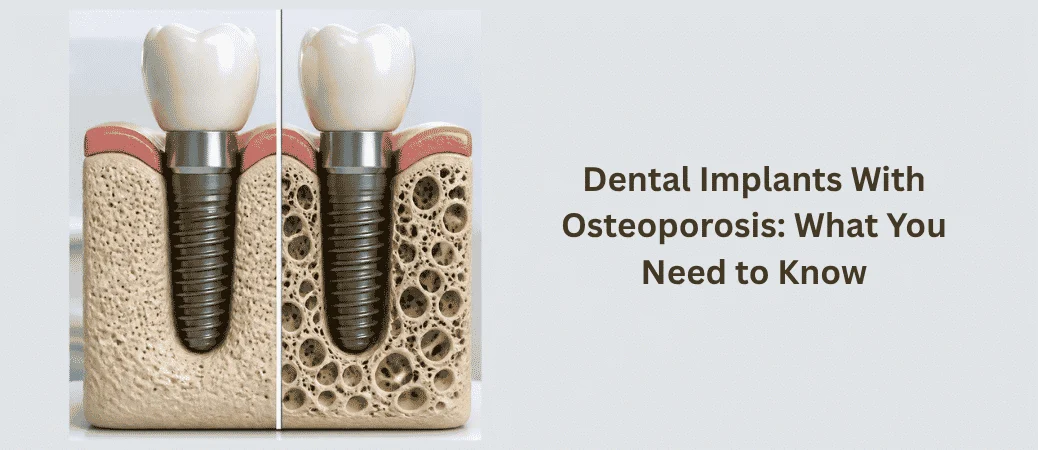
Your jawbone must hold a dental implant firmly while it heals and bonds to the bone.
When you have osteoporosis or low bone density, your bone may be thinner or weaker, which can affect implant stability and healing.
Understanding Jawbone Health and Implant Stability
Dental implants act like artificial tooth roots. Your surgeon places them into your jawbone, where they fuse with the bone in a process called osseointegration.
For this to work, you need enough healthy jawbone to anchor the implant. If your jawbone has lost density due to osteoporosis, it may not grip the implant as tightly at first.
Bone loss in the jaw can also affect nearby teeth and gum support. The American Academy of Implant Dentistry explains that osteoporosis can make the jawbone softer, which may affect how well implants stay secure over time.
Your dentist checks jawbone health with 3D scans. These images show bone height, width, and density so your provider can plan for safe placement.
Role of Bone Density in Implant Success
Bone density plays a direct role in implant success. Denser bone usually offers stronger early stability after placement.
If you have low bone density, your implant may still succeed. A large review found no major difference in implant survival or failure rates between people with osteoporosis and those without it.
However, each case is personal. Your provider will assess:
- Bone volume in the implant area
- Your overall bone health
- Healing ability
- Any history of fractures or advanced osteoporosis
If needed, your dentist may suggest bone grafting. This procedure builds up thin areas of the jawbone to improve support.
Osteoporosis and Dental Implants: Risks and Considerations
Osteoporosis does not automatically rule out dental implants. Many people with this condition still qualify after careful planning.
The key concern is whether you have enough bone to support the implant. Some experts note that reduced bone density can make implants less stable in certain cases, especially if bone loss is severe.
Bone medications also matter. Drugs such as bisphosphonates or denosumab can slow bone turnover. In rare cases, these medications link to jaw problems after invasive dental work.
Tell your dentist about all medications and how long you have taken them. With full information, your provider can lower the risk of implant failure and protect your long-term bone health.

Evaluating Eligibility for Implants With Osteoporosis
You can still qualify for dental implants if you have osteoporosis, but your dentist or oral surgeon must check your bone strength and medical history first.
Careful testing and planning lower your risk and improve long‑term stability.
Bone Density Assessments and Imaging
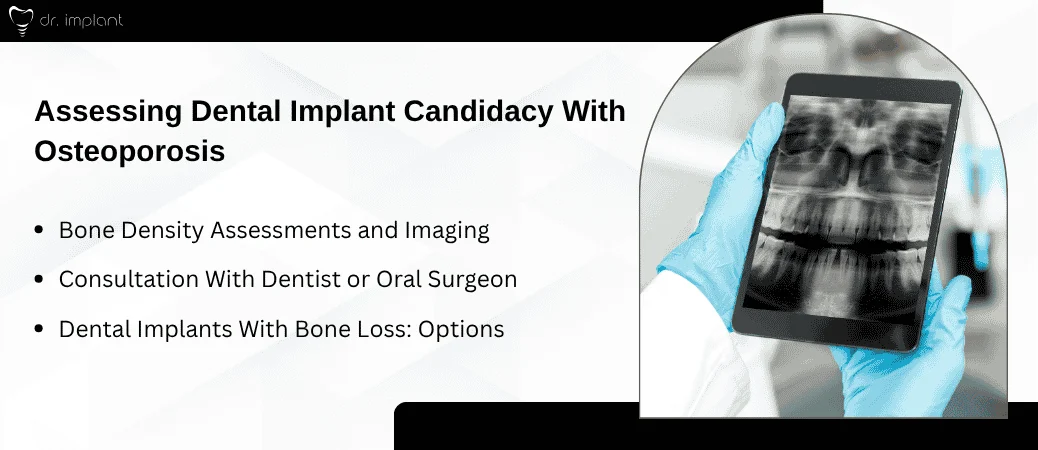
Your dentist will start with imaging tests to measure the amount and quality of bone in your jaw. These tests often include digital X‑rays or a 3D cone beam CT scan.
A CT scan shows the exact height, width, and shape of your jawbone. It also reveals thin areas that may not support an implant.
If you already have a DEXA scan for osteoporosis, your oral surgeon may review it. This scan measures overall bone density in your body.
While it does not focus on your jaw, it helps your provider understand how advanced your bone loss is.
Research shows that many people with osteoporosis can safely receive implants. A 2017 review found implants are generally safe in people with osteoporosis, though some bone loss around the implant can occur.
Your provider will combine imaging results with your medical history before deciding if you can move forward.
Consultation With Dentist or Oral Surgeon
You need a detailed consultation before treatment. During this visit, your dentist or oral surgeon will review:
- Your osteoporosis diagnosis
- The severity of bone loss
- All medications, including bisphosphonates or denosumab
- How long you have taken bone medication
- Any history of jaw problems
Some osteoporosis drugs, especially IV bisphosphonates, may raise the risk of jaw complications. Your provider must know this before surgery.
Many patients with managed health conditions still qualify. ClearChoice notes that eligibility depends on how well your condition is controlled and how treatment is planned.
Ask direct questions. For example: Can you get dental implants if you have osteoporosis at my stage? A clear answer should include risks, benefits, and possible alternatives.
Dental Implants With Bone Loss: Options
If you have dental implants with bone loss, you still have options. Your oral surgeon may recommend bone grafting before placing the implant.
A bone graft adds natural or synthetic bone material to weak areas of your jaw. Over time, your body builds new bone around the graft. This creates a stronger base for the implant.
Up to half of implant patients may need some type of bone grafting, especially if they have moderate to severe bone loss. Your provider will decide this based on your scan results.
Other options may include shorter implants or placing implants in areas with thicker bone. Careful planning helps reduce stress on the implant and improves long‑term support.
With the right tests and a skilled dentist or oral surgeon, many people with osteoporosis can move forward safely.
The Impact of Bone Medications on Implant Procedures
Bone medications can change how your jaw heals after implant surgery. Some drugs slow bone breakdown, which can help bone density but may also affect healing and raise the risk of jaw problems.
Bisphosphonates and Dental Implants
Bisphosphonates treat osteoporosis by slowing bone loss. Doctors often prescribe drugs like Fosamax, Actonel, and Boniva to protect bone strength and lower fracture risk.
If you take these medicines, you can often still get implants. Many experts report that patients with osteoporosis can receive implants safely, and stopping antiresorptive therapy is not always required before placement.
Your dentist will look at:
- How long you have taken the drug
- The dose and type (oral vs. IV)
- Your overall health
- Your jawbone density
Oral bisphosphonates for osteoporosis usually carry lower risk than high‑dose IV forms used for cancer. Careful planning and close follow‑up help reduce problems with healing and integration.
Denosumab and Other Therapies
Denosumab (brand name Prolia) also slows bone breakdown. It works differently than bisphosphonates, but it can still affect how your jaw heals.
Because denosumab changes bone turnover, timing matters. You should talk with both your dentist and prescribing doctor before implant surgery.
Unlike bisphosphonates, denosumab does not stay in bone for years. Its effects fade after you stop injections. Even so, you should never stop or delay treatment without medical advice.
Your provider may:
- Review your injection schedule
- Plan surgery between doses
- Monitor healing more closely
Clear communication between your dental and medical teams protects your safety.
Reclast and Dental Implants
Reclast is a once‑yearly IV bisphosphonate. Because it is given through a vein, it acts more strongly than most oral forms.
If you receive Reclast for osteoporosis, you may still qualify for implants. Dentists often evaluate bone density and may suggest added steps like grafting to improve stability.
Your dentist may ask:
- When was your last infusion?
- How many years have you used the drug?
- Do you have other risk factors like smoking or diabetes?
These details help lower the chance of delayed healing or infection.
Risk of Osteonecrosis of the Jaw
Osteonecrosis of the jaw (ONJ) is a rare but serious condition where jawbone tissue fails to heal and becomes exposed. It has been linked to bisphosphonates, denosumab, and similar drugs.
The risk is much higher in people who receive high doses for cancer. In patients taking low‑dose medication for osteoporosis, studies suggest implant survival can be similar to healthy patients.
You can lower your risk by:
- Treating gum disease before surgery
- Keeping excellent oral hygiene
- Attending regular follow‑ups
- Reporting any jaw pain or exposed bone right away
Early action helps prevent small problems from becoming serious ones.
Advanced Techniques and Alternative Solutions
You can still move forward with implant surgery even if you have low bone density, but your dentist may adjust the plan.
Modern tools improve osseointegration, support weak bone, and offer other tooth replacement options when implants are not the best choice.
Osseointegration and Bone Grafting Strategies
Osseointegration means your jawbone grows around the implant and locks it in place. Osteoporosis can slow this process, but it does not automatically prevent it.
Research shows that implant survival rates in people with osteoporosis can be similar to those in healthy patients, according to guidance on planning implant rehabilitations in osteoporotic patients.
Your dentist may allow a longer healing period before placing the crown. This gives your bone more time to bond with the implant.
If you have bone loss in your jaw, your dentist may suggest bone grafting. A graft adds volume and improves stability before implant placement, as explained in this review of osteoporosis dental implant eligibility.
Common graft types include:
- Autograft (your own bone)
- Allograft (donor bone)
- Synthetic materials
Your dentist will choose the option based on how much bone you need and your overall health.
Special Implant Techniques for Low Bone Density

Low bone density often means softer bone, sometimes called Type IV bone. Your surgeon may adjust the drilling technique to protect it.
They may use slower drilling speeds and strong irrigation to reduce heat during implant surgery. They may also check insertion torque and use stability tests before loading the implant.
Some implants have textured or hydrophilic surfaces. These designs aim to improve early osseointegration, especially in weaker bone. Custom implants shaped to fit your bone may also improve contact and support.
If you take medications like bisphosphonates or denosumab, your dentist may coordinate timing with your physician. In some cases, careful scheduling reduces healing risks.
Alternatives to Dental Implants for Osteoporosis
You may decide that implant surgery is not right for you. Other tooth replacement options can still restore function and appearance.
Removable partial dentures replace one or more teeth and do not require surgery.
Complete dentures replace all teeth in an arch.
Fixed dental bridges use nearby teeth for support.
These options do not rely on osseointegration. However, they may place pressure on natural teeth or gums, and they may need replacement over time.
If bone density limits implant placement, advances in care still give you several paths to restore your smile. Your dentist can help you compare stability, cost, and long-term maintenance before you choose.
Improving Implant Success and Maintaining Bone Health
You can improve implant success by staying consistent with follow-up care and protecting your bone health every day. Your dentist and oral surgeon will guide you, but your daily habits also play a big role.

Long-Term Monitoring and Care
After your implant heals, you still need regular checkups. Plan to see your dentist every 3 to 6 months, especially in the first year.
At these visits, your dentist will:
- Check implant stability
- Measure gum pockets around the implant
- Take X-rays to watch for bone loss
- Clean hard-to-reach areas
Bone changes from osteoporosis can happen slowly. Regular X-rays help your dentist spot small shifts in bone levels before they turn into bigger problems.
If you take antiresorptive drugs, your oral surgeon may coordinate care with your physician. Some medications can affect bone turnover, which matters if you ever need another dental procedure.
Daily care also protects your implant. Brush twice a day with a soft toothbrush. Clean around the implant with floss or small interdental brushes. Healthy gums support strong bone and long-term implant success.
Lifestyle and Medication Considerations
Your jawbone must have enough volume and density to support an implant. If bone is thin, your oral surgeon may suggest grafting to improve stability.
Some clinics explain how bone grafting can build up the jawbone and support implant placement in people with osteoporosis.
Medication review is critical. Drugs such as bisphosphonates or denosumab can affect healing. Research shows that osteoporosis alone does not appear to lower implant survival rates, but doctors still urge careful planning and assessment.
You should always tell your dentist and oral surgeon:
- The name of your bone medication
- How long you have taken it
- Any history of fractures
Support your bone health with weight-bearing exercise, enough calcium and vitamin D, and by avoiding smoking. These steps help protect both your natural bone and your implant over time.
Frequently Asked Questions
You can often get dental implants even if you have low bone density or take bone medication. Your dentist will review your health history, medications, and jawbone scans before making a clear plan.
Is it safe to have dental implants if I’ve been diagnosed with low bone density?
In many cases, yes. Research shows that implants can still succeed in people with osteoporosis, though you may have a slightly higher risk of bone loss around the implant.
A review discussed in this article on osteoporosis and dental implants safety found that implants are generally safe, but careful planning matters. Your dentist will check how stable your jawbone is before moving forward.
If your bone cannot support an implant on its own, your dentist may suggest added steps like bone grafting.
Which bone-strengthening medications can affect implant treatment planning?
Bisphosphonates, such as Fosamax or Reclast, can affect how your jawbone heals after surgery. These drugs slow bone breakdown, which helps treat osteoporosis but may change how your bone responds to an implant.
Intravenous bisphosphonates carry a higher risk of jaw problems than oral forms. Some patients face a rare but serious issue called osteonecrosis of the jaw.
How long should I wait after stopping certain bone medicines before getting implants?
There is no single waiting period that fits everyone. Your medical doctor and dentist must work together to decide what is safe for you.
In some cases, doctors may suggest a “drug holiday” before surgery. However, you should never stop bone medication on your own.
Your team will weigh your fracture risk against the dental benefits before setting a timeline.
What tests or scans will my dentist need to check if my jawbone can support implants?
Your dentist will usually take digital X-rays or a 3D cone beam CT scan. These images show bone height, width, and density in your jaw.
If needed, your doctor may also review a recent DEXA scan from your physician. This test measures overall bone density in your body.
Together, these tools help your dentist see whether your jaw can hold an implant securely or needs added support.
Are bone grafts or sinus lifts still possible when bone density is reduced?
Yes, many people with reduced bone density can still have bone grafts or sinus lifts. These procedures add bone or bone-like material to create a stronger base for implants.
Up to half of implant cases may need grafting. Healing time may be longer if you have osteoporosis. Your dentist will check how much bone you have before recommending these procedures.
What implant alternatives might be recommended if implants aren’t a good fit for me?
If implants are not safe for you, your dentist may suggest a fixed dental bridge. A bridge uses nearby teeth for support instead of the jawbone.
You could also consider a removable partial or full denture. These options restore your smile and chewing ability without surgery.
Your dentist will explain the pros and limits of each choice so you can decide what fits your health and goals.