Losing a tooth in the back of your mouth and losing one in the front feel like two different problems, and clinically, they are.
Understanding front vs back tooth implants starts with knowing that a single-tooth dental implant can replace either one, but the planning behind each looks quite different once your dentist maps out the space, the bone, and the way your teeth meet.
A front tooth implant is mostly a soft-tissue and appearance challenge, while a molar implant is mostly a bite-force and bone-volume challenge.
That one difference shapes almost everything else: how long treatment takes, whether you need grafting, what the crown is made of, and how much the work costs.
It is understandable to wonder whether a hidden back tooth is worth replacing at all, or whether a visible front gap needs urgent attention.
Both questions have real answers, and both depend on what that specific tooth does for your chewing and your smile.
By the end of this, you will know which questions to raise at your own consultation and why your dentist may recommend one approach for an incisor and a completely different one for a second molar.
Key Takeaways
- Front implants are judged by gum shape, symmetry, and color match; back implants are judged by how well they carry chewing load.
- Upper molars sit near the sinus and lower molars near a major nerve, so imaging and bone assessment drive posterior planning.
- Cost, healing time, and whether you need grafting all shift depending on which tooth is missing, so candidacy always requires an individual exam.
Why a Missing Tooth’s Location Changes the Decision
Each tooth in your mouth has a job, and the position of the gap tells your dentist what a replacement must do. Implants placed in different regions involve distinct functional, aesthetic, and biomechanical demands.
A missing molar quietly changes how you chew, while a missing front tooth changes how you speak, smile, and share biting force across your arch.
The Different Jobs of Incisors, Canines, Premolars, and Molars
Your incisors are the flat front teeth that cut food and shape your speech. They handle lighter forces and sit in thinner bone.
Canines are the corner teeth with long roots. They guide your jaw as it slides side to side, which helps protect the rest of your bite.
Premolars sit between the canines and molars and do a mix of tearing and grinding. Molars are the wide grinders at the back, and they take the heaviest chewing pressure in your mouth.
Because a natural tooth is held by a periodontal ligament that cushions force, and an implant fuses directly to the alveolar bone with no cushion, load control becomes a bigger design question at the back.
What Can Happen When a Front or Back Tooth Is Not Replaced
After tooth extraction, the alveolar ridge starts to shrink because the bone no longer gets stimulation from a root. Bone resorption is fastest in the first months, and it affects both regions.
In the front, ridge collapse shows up as a dip in the gum line and a shadow near the lip. In the back, neighboring teeth tend to tilt and drift, the opposing tooth can drop down, and your occlusion shifts.
Those changes affect chewing efficiency and bite stability, and in some patients they contribute to TMJ discomfort.
This is part of why the consequences of delaying tooth replacement come up early in most implant discussions.
What Makes Front Tooth Implants So Appearance-Sensitive?
A front tooth implant has to match a neighbor that is sitting right beside it, in full view, under daylight.
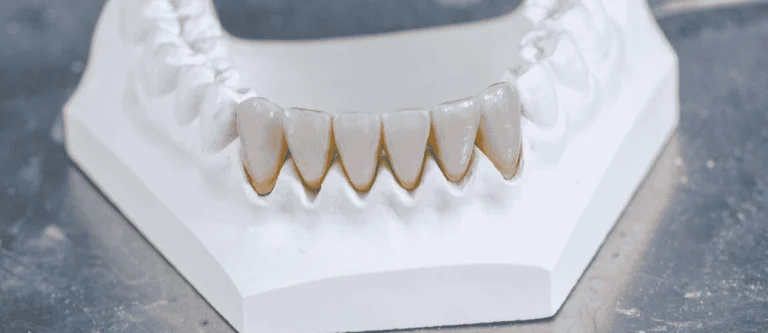
That is why the anterior region is called the esthetic zone: success is measured by gum shape and color match as much as by the implant holding firm.
Matching one natural front tooth is harder than replacing a whole row, since your eye compares the new tooth directly to the one next to it.

Managing the Gum Line, Papilla, and Smile Symmetry
The papilla is the small triangle of gum that peaks between two teeth. When it flattens, a dark shadow appears, and that is one of the first things people notice.
Front bone is often thin on the lip side, so your dentist may recommend bone grafting or ridge augmentation to rebuild width before or during placement.
Soft tissue grafting can add gum thickness so the gingiva does not look translucent over the implant.
Symmetry matters to the result, which is why some practices use digital smile design to plan tooth width, edge position, and gum height before surgery begins.
Why Implant Positioning and Temporary Crowns Matter in the Anterior Region
Implant positioning in the front is unforgiving. The implant needs to be centered in the space and angled so the crown emerges naturally, because a crown can only look as good as the position beneath it.
A custom abutment shapes the gum around the crown, which a stock abutment cannot do as precisely. That shaping is what makes the tooth look like it grows out of the gum.
You also should not walk around with a visible gap. A temporary crown supports the gum contour while healing happens, and there are several practical reasons to get a temporary dental prosthetic during that stage.
Patients replacing an incisor often ask about a zirconia implant for a front tooth for its tooth-colored appearance.
Why Molar Implants Must Handle More Force
Molar implants are engineered around load. Back teeth handle the highest bite forces in your mouth, which makes placement there more demanding, according to an implant versus bridge comparison for a missing molar.
Survival data is reassuring: a meta-analysis of 46 studies found single-crown implants survived 97.2% at five years and 95.2% at ten years, with the crowns on them at 96.3% and 89.4%.
Chewing Pressure, Occlusal Load, and Crown Design
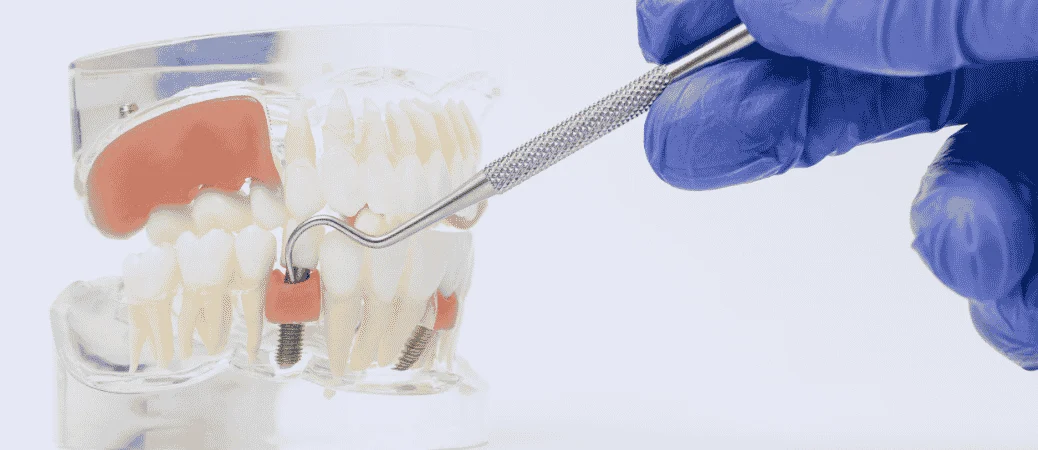
Back implant crowns are built with wider platforms and stronger materials to spread occlusal load, and molar implant posts are made wider than front implants to match the size of the natural tooth they replace.
Your dentist will also adjust the bite so the implant crown does not take the first or hardest hit. Load distribution across your arch protects both the implant and the teeth around it.
If you grind your teeth, that changes the plan. Bruxism raises the risk of crown fracture and screw loosening, and a night guard is often part of the discussion around bruxism and dental implants.
First vs. Second Molar Replacement Considerations
A first molar sits closer to the center of your chewing zone and carries steady daily load, so replacing it restores real function. Losing it also opens a gap that lets the second molar tip forward.
A second molar is the last tooth in the arch for most people, and some patients chew comfortably without one.
Whether replacing it helps you depends on your remaining bite, the opposing tooth, and how much grinding surface you have left.
Access is tighter at the back of the mouth, and bone height there can be shorter. That combination affects implant length and primary stability, the initial grip of the implant in bone that supports healthy osseointegration.
How Dentists Plan a Stable Implant in Each Location
Good implant planning starts with the finished crown and works backward.
Successful single-tooth outcomes rest on a prosthetically driven approach, where the final crown position dictates ideal implant placement within the alveolar bone, according to a clinical guide to single-tooth implant treatment planning published in the Journal of Maxillofacial and Oral Surgery.
Clinical Examination, CBCT, and Prosthetically Driven Planning
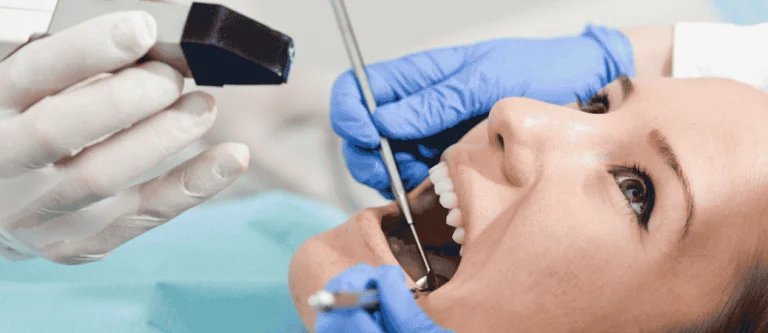
Your dental implant consultation begins with a clinical examination: gum health, bite, spacing, and the condition of neighboring teeth. Photos and models help map the space you have.
Cone beam computed tomography, or CBCT, is a 3D scan that shows bone height, width, and the exact location of nerves and sinuses. It is the tool that turns guesswork into measurement.
From that data, some cases use a surgical guide, a custom template that directs the drill to the planned position. Bringing a written list of questions to ask before dental implants makes this appointment far more productive.
Bone Quality and Anatomical Limits in the Upper and Lower Jaw
Bone density differs by region. Upper front bone is often thin from front to back, while upper molar sites can have soft bone and limited height under the maxillary sinus.
When there is not enough height there, a sinus lift raises the sinus floor so bone can be added.
Lower molar sites bring a different limit: the inferior alveolar nerve runs through the jaw, and your surgeon plans a safe margin above it.
Lower front sites often offer denser bone in what clinicians call the triangle of bone, though ridge width still needs checking.
Who May Be Involved in Implant Treatment Planning?
A single implant can involve more than one clinician. An oral surgeon or periodontist may place the implant, while a prosthodontist designs a restoration built to withstand molar chewing forces.
Many patients prefer one coordinated team from imaging through final crown.
At Dr. Implant, the goal is that surgical and restorative decisions are made together instead of in sequence, so the crown you end up with matches what was planned on day one.
Reviewing the dental implant step by step process ahead of time helps you follow what each visit is for.
Implant, Bridge, or Partial Denture: Which Option Fits?
A single implant, a dental bridge, and a removable partial denture all fill the gap, but they treat your neighboring teeth very differently.
The choice shifts depending on whether the gap is in front or back, how healthy the adjacent teeth are, and what your timeline and budget allow.
| Factor | Single implant | Dental bridge | Partial denture |
| Affects neighboring teeth | No | Yes, requires reshaping | Clasps rest on them |
| Preserves jawbone at site | Yes | No | No |
| Typical time to finish | 3 to 7 months | 2 to 4 weeks | 2 to 4 weeks |
| Removable | No | No | Yes |
| Best fit at the back | Strong | Depends on anchor teeth | Least stable |
When a Standalone Implant May Protect Neighboring Teeth
An implant stands on its own, so healthy teeth beside the gap stay untouched. A bridge requires reshaping those teeth for crowns, which is a fair trade when they already need crown work, and a real cost when they are intact.
Implants also stimulate bone the way a root does, which helps limit shrinkage at the site. That is a common reason patients choose dental implants to replace teeth over fixed bridgework.
How Costs, Insurance, and Healing Time Affect the Choice
The cost of a single back tooth implant depends on the implant, abutment, crown, and whether additional procedures such as bone grafting are needed.
The treatment timeline also varies based on healing needs and the complexity of the case.
Front tooth implants often cost more because of the added esthetic work, custom abutments, and grafting that appearance-sensitive sites require.
Dental insurance coverage varies by plan, and most dental insurance providers are accepted. Patients can also explore in-house and third-party financing options, including CareCredit.
Reviewing dental implant financing options before treatment can help you understand the payment options available for your care.
Long-Term Care and Risks to Discuss Before Treatment
Implants need the same daily care as teeth: brushing, flossing or interdental brushes around the crown, and regular checkups.
Peri-implantitis, an infection of the gum and bone around an implant, is the main long-term threat.
Smoking, uncontrolled diabetes, and existing gum disease raise the risk of implant failure, and the link between dental implants and gum disease is worth raising at your consultation.
Ask what warning signs to watch for and how often you should be seen.
Matching the Treatment Plan to the Tooth and Your Bite
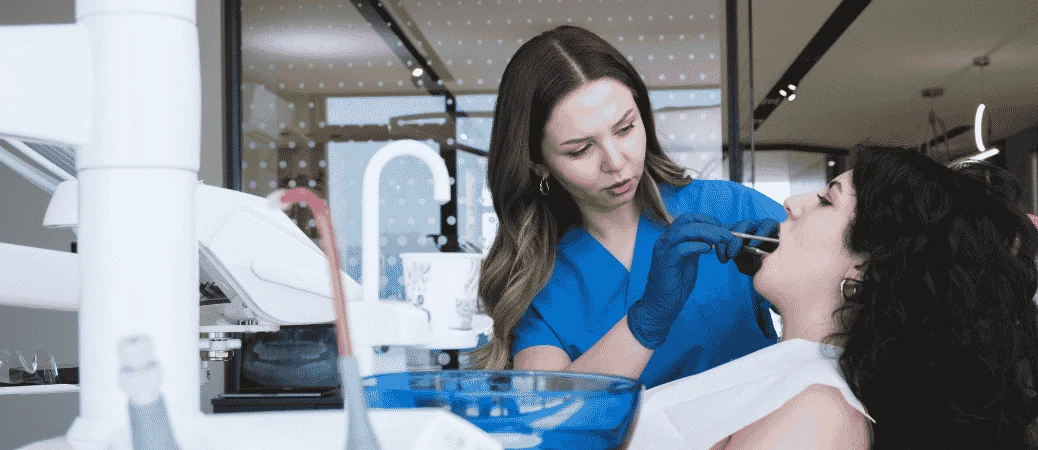
A single-tooth dental implant works in either region, and the plan behind it should not look the same in both.
Front tooth replacement is built around gum contour, symmetry, and color; molar replacement is built around bone volume, implant stability, and how force travels through your bite.
Bring the specifics to your exam: which tooth is missing, how long the gap has been there, whether you grind, and what bothers you most about it.
A CBCT scan and a look at your occlusion will show whether grafting or a sinus lift belongs in the plan.
Your dentist can walk you through single tooth implants and what your own bone and bite allow, and candidacy is always confirmed with an individual examination rather than a general rule.
Frequently Asked Questions
Is a single tooth implant worth it for a missing molar?
For many people missing a first molar, replacing it can restore an important chewing surface and help prevent neighboring teeth from shifting.
The cost depends on the implant, abutment, crown, and whether additional procedures are needed. Your bone height and bite pattern help determine whether a molar implant is the right option for you.
Is a front tooth implant harder than a molar implant?
Front tooth implants are harder to make look right, while molar implants are harder to load safely.
The anterior site has thin bone and visible gum tissue, so millimeter-level positioning and custom abutments matter; the posterior site demands wider implants and careful bite adjustment.
Do I need a bone graft for a front or back tooth implant?
Not everyone does, and it depends on how much bone remains at the site. Front sites often need ridge width added because the outer bone plate is thin, while upper back sites more commonly need a sinus lift for height.
A CBCT scan answers this before surgery is scheduled.
Can a second molar be left unreplaced?
Some patients do fine without a second molar, since it sits at the very end of the arch and the first molar carries much of the chewing load.
Leaving it out becomes a problem when the opposing tooth drifts or your bite starts to feel uneven. Your dentist will check how many grinding surfaces you still have in contact.
How much does an incisor implant cost compared with a molar implant?
An incisor implant usually costs more than a molar implant despite being a smaller tooth, because of the custom abutment, esthetic crown work, and grafting that visible sites often require.
Practices price these individually, so ask for an itemized estimate that separates surgery, abutment, crown, and any grafting.
Can I get a temporary tooth while a front tooth implant heals?
Yes, and it is standard practice for visible teeth. A temporary crown fills the gap and helps shape the gum tissue during healing, so the final crown emerges naturally.
Your dental implant consultation is the right time to confirm what type of temporary you will wear and for how long.