You already know your body pretty well, so if metal jewelry makes your skin itch or a past surgery didn’t heal the way it should have, it makes sense to wonder about the implant your surgeon plans to use.
Titanium is widely used for dental implants because most people tolerate it well. Still, reactions have been reported.
If you suspect a metal allergy, titanium hypersensitivity is usually checked with a skin patch test, a blood-based lymphocyte reaction test like MELISA before surgery, or both, since patch testing alone often misses titanium reactions. That gap matters.
Titanium allergy testing isn’t something every dental implant patient needs, but it may be worth discussing if you have a history of metal reactions or a previous dental implant that developed unexplained problems.
Knowing your options ahead of time can help you and your dental team decide whether additional testing or an alternative implant material should be considered.
Key Takeaways
- Talk to your surgeon about metal hypersensitivity testing if you have reacted to metals before or had hardware fail without explanation.
- Patch testing checks skin-level reactions, while blood-based lymphocyte tests may catch titanium reactions that skin testing misses.
- If pain, swelling, or loosening shows up after surgery, testing and imaging can help sort out allergy from infection.
What Happens in a Delayed Metal Reaction
A metal reaction from an implant usually isn’t the fast, hives-and-swelling kind of allergy you might picture.
It builds slowly as your immune cells learn to recognize metal ions released from the implant surface, and the type of alloy in that implant changes which metals your body is actually exposed to.

Type IV Hypersensitivity and T-Cell Memory
Reactions to implanted metal are almost always type IV hypersensitivity, also called delayed-type hypersensitivity. Instead of antibodies, your T cells drive the immune response.
Here’s the basic sequence:
- Metal ions leak from the implant and bind to proteins in your tissue.
- Your immune system treats that metal-protein pair as something foreign.
- T cells multiply and release chemical signals like IL-1, IL-6, and interferon-gamma.
- Inflammation builds around the implant over weeks or months.
The important part for testing is memory. Once your T cells have reacted, some of them stay in your blood ready to respond again.
That’s why lab tests look at lymphocyte reactivity in a blood sample rather than just a skin patch. Skin tests can miss reactions happening in deeper tissue around the implant.
Titanium Ions, Wear, and Corrosion
Titanium doesn’t sit in your body untouched. Two processes free up metal ions: slow corrosion of the surface, and wear from movement and friction between parts.
Those titanium ions bind to your proteins, which is the first step in a sensitivity reaction. Tiny wear particles also get swallowed up by immune cells called macrophages.
Titanium particles and ions may contribute to inflammatory reactions in surrounding tissues, although implant complications can have many other biological and mechanical causes.
Symptoms tend to be quiet at first: aching, stiffness, swelling, or a rash that doesn’t have another clear cause.
Titanium Alloys and Other Potential Allergens
“Titanium implant” rarely means pure titanium. Most hardware is a titanium alloy blended with other metals, and those additions matter a lot.
| Common alloy component | Why it matters |
| Aluminum, vanadium | Components of Ti-6Al-4V, a titanium alloy used in some dental implant systems |
| Nickel | A common metal allergen that may be relevant when evaluating a patient’s history of metal sensitivity |
| Cobalt, chromium | Metals used in some dental alloys and restorations that can trigger hypersensitivity in sensitized patients |
Nickel, cobalt, and chromium are more commonly associated with metal hypersensitivity than titanium.
That is why a history of reactions to these metals can still matter when you are being evaluated for dental implant treatment.
Patch testing may include nickel sulfate, cobalt chloride, and potassium dichromate for chromium.
If you have a known or suspected metal allergy, ask your dental team which materials are present in the implant system and restoration so your allergist can determine which metals are relevant to test.
Patch Testing for Suspected Metal Allergy
If you tell your surgeon you react to jewelry or belt buckles, you will probably be sent for a skin patch test.
It is the standard way doctors check for delayed metal reactions, and it works well for some metals and poorly for others.
How Patch Testing Is Performed
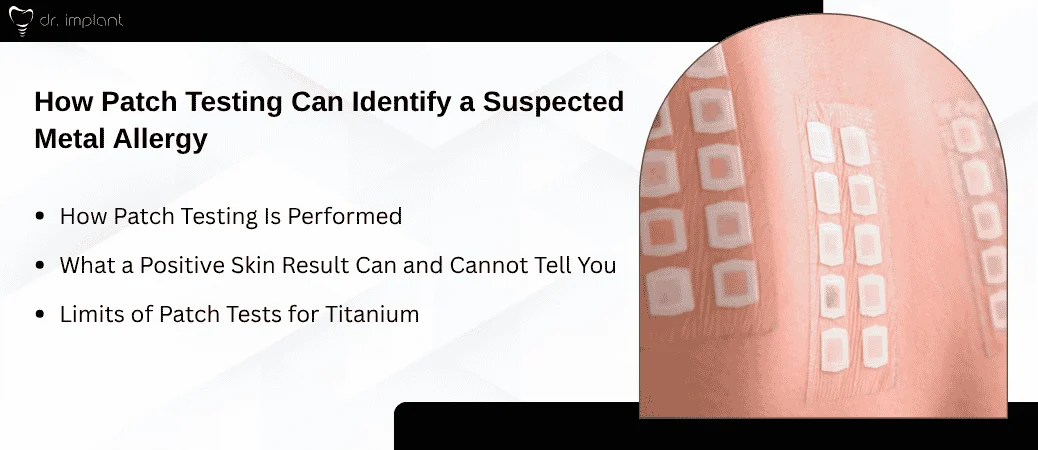
A dermatologist or allergist tapes small chambers to your upper back. Each chamber holds a tiny amount of a suspected allergen mixed in petrolatum.
Most clinics start with a baseline panel that includes nickel sulfate, cobalt chloride, and potassium dichromate. Extra metals, such as titanium salts, vanadium, or palladium, can be added when an implant is planned.
The patches stay on for 48 hours. You keep your back dry during that time, then return so the patches can be removed and read.
Your skin is checked again at 72 or 96 hours, and sometimes as late as day 7, because delayed-type hypersensitivity reactions often show up slowly.
What a Positive Skin Result Can and Cannot Tell You
A positive spot is red, slightly raised, and often itchy or bumpy. That pattern points to allergic contact dermatitis from that specific metal.
The reading scale matters. Doctors separate true allergic responses from irritant reactions, which look sharp-edged, appear fast, and fade quickly once the patch comes off.
Here is the honest limit: a positive result tells you your skin is sensitized. It does not predict that a screw or plate placed near bone will fail.
Testing also cuts both ways. One study of dental implant patients found no clear link between reported metal allergy history and titanium sensitization, so your history alone will not settle the question.
Limits of Patch Tests for Titanium
Titanium is the weak spot. The salts used in patch chambers do not penetrate skin well, and results are frequently negative even in people who later have trouble.
Reactions can happen in deep tissue around the implant while your skin stays quiet.
One review of foot and ankle cases noted that patch testing often misses these deep tissue reactions, while blood-based lymphocyte testing picked up more cases.
Because of this gap, routine testing is not recommended for people with no history of metal reactions or past implant problems.
If you do have a clear history, ask about pairing patch testing with a lymphocyte-based test rather than relying on skin alone.
Making a Preoperative Plan With Your Care Team
Good planning starts with three simple things: knowing exactly what metals are in your implant, discussing backup materials if needed, and understanding what testing can and cannot promise.
Reviewing the Exact Implant Materials
Ask your dental implant team for the brand and material composition of the implant system being considered. This information can help your allergist determine which metals, if any, are relevant to evaluate.
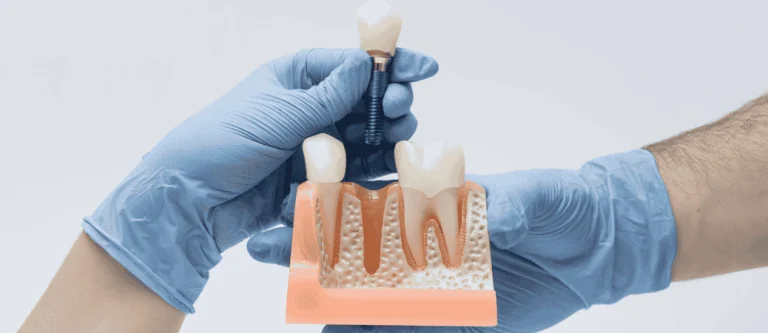
A dental implant system may involve more than the implant fixture itself.
The abutment and final restoration can contain different materials, so reviewing the complete treatment plan is more useful than focusing only on the word “titanium.”
| Material | Why it may be relevant |
| Titanium | Commonly used for dental implant fixtures and components |
| Aluminum, vanadium | Components of Ti-6Al-4V used in some titanium dental implant systems |
| Cobalt, chromium | May be present in certain dental alloys and restorations |
| Nickel | A common metal allergen that may be relevant when reviewing a patie |
Considering Alternative Materials When Appropriate
If your history and test results raise concerns about metal hypersensitivity, your dental implant team can discuss whether another implant material is appropriate.
Zirconia dental implants provide a metal-free alternative to titanium in selected cases.
However, the right material depends on factors such as implant location, available bone, bite forces, and the restoration you need.
An alternative material is not automatically the better choice simply because you are concerned about titanium sensitivity.
Ask about cost, availability, and long-term wear data before you decide. Alternatives are not always stronger or better for every joint.
Keeping Expectations Realistic About Implant Outcomes
Titanium reactions are uncommon. A study reported allergy to titanium ions sits around 0.6% to 1.0% of people, and the metal is not tested often, so that number may be low.
No test is perfect. Patch testing can miss deep tissue reactions, and readings taken on day seven help catch delayed responses that a two-day check would miss.
Testing makes the most sense if you have a history of metal hypersensitivity, asthma, or autoimmune disease, or if a prior implant failed without a clear reason.
A negative result does not fully rule out a reaction, and a positive result does not guarantee implant failure. Treat testing as one piece of information that guides your plan, not a final verdict.
Symptoms After Surgery and Next Diagnostic Steps
Pain, swelling, or a rash weeks or months after your implant goes in doesn’t automatically mean you have a metal allergy.
The harder job is ruling out the more common causes first, then deciding whether allergy testing and a specialist opinion will actually change your treatment plan.
Separating Allergy From Infection, Loosening, and Other Causes
Metal hypersensitivity and infection can look almost identical from the outside. Both can cause swelling, warmth, ongoing pain, and poor healing at the surgical site.
Your surgeon usually works through the more likely explanations first:
| Possible cause | Common clues |
| Peri-implant infection or inflammation | Redness, swelling, bleeding, drainage, tenderness, or bone loss around the implant |
| Implant or restoration problem | Movement, discomfort when chewing, a changed bite, or a loose implant component |
| Metal hypersensitivity | Persistent unexplained tissue irritation or inflammation after more common causes have been investigated |
Allergy becomes a serious possibility when cultures come back clean, imaging looks fine, and the skin over your titanium implant stays irritated.
Reported cases of titanium hypersensitivity in patients with implants share that pattern: positive allergy testing plus no better explanation.
When Specialist Evaluation May Help
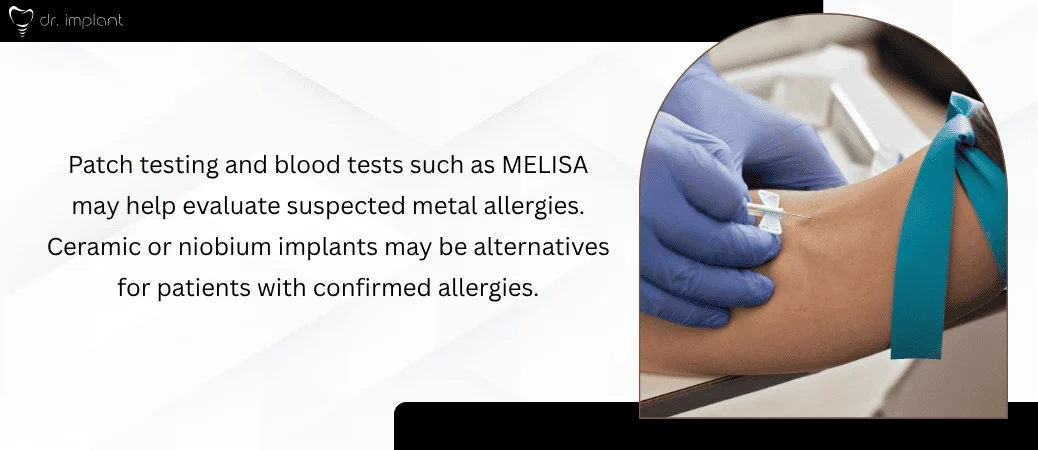
If your symptoms don’t fit an infection or a mechanical problem, ask for a referral. An allergist or dermatologist can run patch testing, and some clinics order blood-based lymphocyte testing.
Patch testing checks your skin’s reaction, but it can miss deep tissue responses. That’s one reason the MELISA lymphocyte test is used after surgery to look for a titanium-specific immune response in the blood.
A systematic review comparing patch testing and MELISA found MELISA more accurate for titanium, and noted that ceramic or niobium implants may suit patients with known metal allergies.
Why Testing Is Only One Part of the Decision
Your surgeon weighs the test result against your symptoms, your imaging, how well the bone has healed, and the risk of a second operation.
Sometimes the answer is topical steroids and watchful waiting.
Other times, when symptoms are severe and every other cause has been excluded, removing or replacing the hardware is what finally resolves the reaction and prevents ongoing implant failure.
Frequently Asked Questions
Titanium allergy is uncommon, affecting an estimated 0.6% to 1.0% of people, but it can cause ongoing swelling, pain, and even implant failure when it does happen.
How can I find out if I’m allergic to titanium before surgery?
Start by telling your surgeon about any past reactions to metal, including jewelry, braces, or older hardware. That history matters more than most people realize.
From there, you can ask about blood-based lymphocyte testing.
Pre-surgery metal sensitivity testing may be discussed if you have a history of skin reactions to metals or a previous dental implant that developed unexplained complications.
One helpful step: ask for the exact metal makeup of the implant your surgeon plans to use. Most “titanium” implants are alloys that also contain aluminum, vanadium, or nickel, so you may want testing for those metals too.
What symptoms might suggest a titanium hypersensitivity reaction?
Reactions usually show up slowly, not right away. Common signs include:
- Skin rash, hives, or eczema near the implant site
- Swelling and warmth that does not go away
- Pain that gets worse instead of better over weeks
- Fluid buildup or drainage with no infection found
- Loose hardware or poor bone healing around the implant
Some people also report tiredness or a general unwell feeling. Because these signs overlap with infection and mechanical problems, your care team will want to rule out other causes first.
Reviews of titanium reactions and implant intolerance explain how doctors tell an allergy apart from infection or simple irritation.
Which tests are used to check for titanium allergy, and how reliable are they?
Two main options exist: skin patch testing and blood lymphocyte testing, such as MELISA or the lymphocyte transformation test.
Titanium allergy is a type IV, or delayed, reaction. Your T cells respond to titanium ions released from the implant, which means the response takes days rather than minutes.
Allergy specialists agree there is credible evidence supporting delayed hypersensitivity testing for metals as a way to spot contact allergy.
Still, no test is perfect, so results should always be read alongside your symptoms and imaging.
Is patch testing effective for detecting a possible titanium allergy?
Patch testing works reasonably well for metals like nickel, but it has real limits with titanium.
Titanium salts used on patches often do not absorb well through the skin, so a negative result can be misleading.
Research on titanium implants and type IV hypersensitivity found that patch testing frequently misses reactions happening in deeper tissue around an implant.
So a clear patch test does not fully rule out sensitivity. It can still be useful for checking the other metals in an alloy.
How accurate is the MELISA test for titanium sensitivity?
MELISA is a blood test that measures how your white blood cells respond when exposed to specific metals in the lab.
Studies comparing methods report it detects titanium reactions more accurately than patch testing, especially deep tissue responses.
You can arrange MELISA testing for titanium hypersensitivity through a partner clinic or by sending a blood sample to a lab.
Keep expectations realistic. A positive result shows sensitization, not a guarantee that your implant will fail, so your doctor will weigh it with everything else.
What should I do if I’ve reacted to titanium or other metals before?
Write down what happened and when. Note the item, how long before symptoms started, and what the reaction looked like. Photos help a lot.
Bring that record to your pre-surgery visit and ask directly about testing. Reported allergy rates may be underreported because titanium is rarely tested, so speaking up matters.
If testing raises concerns about titanium sensitivity, ask your dental implant team whether a metal-free option such as zirconia may be appropriate for your case.