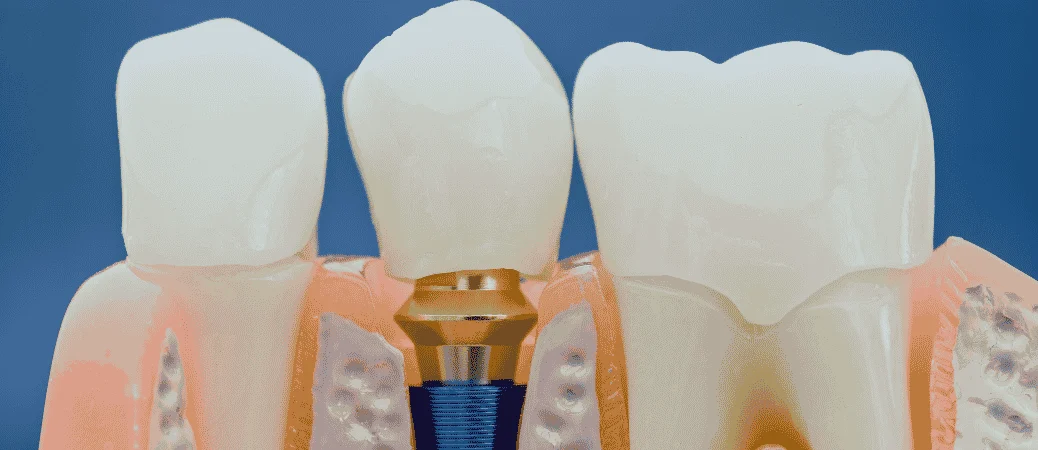
If your upper denture fits comfortably but your lower one keeps slipping when you eat or speak, you may not need to replace both.
Exploring implant options for lower denture stability can help you find a more secure solution while keeping your existing upper denture.
A loose lower denture happens for anatomical reasons, not because of anything you did wrong. The lower jaw simply doesn’t offer the same flat, wide surface the roof of your mouth does, so there’s less natural suction to hold things steady.
Add in a tongue that’s constantly moving, and even a well-made denture can start to feel like it has a mind of its own.
Dental implants placed just in the lower jaw can change that, often with as few as two implants supporting a removable “snap-in” denture.
Treating only the lower arch is a real option for people whose upper denture already fits well, as long as a dentist confirms the bite between the two arches will still work together.
Key Takeaways
- A loose lower denture is usually caused by jaw anatomy and bone loss, not improper denture care.
- Relines, adjustments, and adhesives may improve a loose lower denture, while implant-supported options can provide greater retention and stability when conventional solutions are not enough.
- Treating only the lower arch with implants is often possible while keeping a well-fitting upper denture, once your dentist checks your bite.
Why Does the Lower Denture Move When the Upper Fits?
The lower denture moves because it sits on a narrow ridge of bone with no equivalent to the roof of the mouth to create suction. Upper dentures cover a broad area that forms a natural seal, almost like a suction cup.
The lower arch has nothing comparable, which is why lower dentures are sometimes called “floating” dentures.
Missing teeth and the bone loss that follows can make denture stability worse over time. Once teeth are gone, the jawbone that supported their roots begins to shrink, a process called bone resorption.
Both jaws can lose bone, and changes in the lower ridge may leave less surface area to support the denture.
Why Does the Lower Jaw Provide Less Suction?
Upper dentures rely on a wide palate to create a tight seal against the gum tissue. The lower jaw has a much smaller, U-shaped ridge, and the center of that space is taken up by the tongue instead of solid bone or tissue.
There’s simply less surface area for a seal to form, which is one reason a stable upper denture can usually be made more easily than a stable lower one.
How Do Tongue Movement and Jawbone Changes Affect Fit?
Your tongue moves constantly while you eat, talk, and swallow, and every movement puts pressure on the lower denture from underneath. Muscles in the floor of your mouth add to that pressure throughout the day.
As bone resorption continues, the ridge gets flatter and provides even less support for the denture.
Understanding bone loss before dental implants can help explain why a denture that once fit comfortably may become loose as the jaw changes shape.
Can You Stabilize the Lower Denture Without Implants?
Yes, some patients get real improvement from a reline, an adjustment, or a denture adhesive, depending on how much the bone and gum tissue have changed.
These options work best when the looseness is mild to moderate and the denture itself is still in reasonably good shape.

When Will an Adjustment or Reline Help?
A denture reline adds new material to the inside of the denture so it matches your current gum shape more closely.
This is worth considering if your conventional denture has not been updated in a few years, or if it fit well initially but has grown looser as your gums changed shape.
A reline is often one of the more affordable ways to extend the life of loose dentures before considering a bigger change.
An adjustment, which reshapes the denture’s borders or bite surface, can also help if the discomfort comes from pressure points rather than the overall fit. Neither option reverses significant bone loss, though.
What Can Adhesive Do, and When Is It Not Enough?
Denture adhesives can fill small gaps between the denture and gum tissue, creating temporary extra grip for daily tasks like eating and speaking.
They’re inexpensive and easy to try, which makes them a reasonable first step for mild looseness.
Adhesive isn’t a long-term fix if you’re using more and more of it just to get through a meal.
That pattern usually means the bone or fit has changed enough that a reline or implant-supported option would serve you better than another tube of denture cream.
How Do Implants Support Just the Lower Denture?
Dental implants are placed in the lower jawbone to provide a secure foundation for a removable or fixed restoration.
A removable implant overdenture connects to attachments on the implants while still receiving some support from the gums. A fixed restoration is secured to the implants and stays in place during everyday activities.
A removable implant-supported lower denture commonly uses two to four implants, while a fixed full-arch restoration often requires four or more.
The exact number and placement depend on available bone, the restoration design, and your overall treatment needs.
Implants may also help maintain bone around the implant sites by transferring chewing forces to the surrounding jawbone. However, they cannot prevent all bone loss across the lower jaw, especially in areas without implants.
Removable Snap-In Dentures vs. Fixed Implant Restorations
Removable snap-in dentures connect to two or more implants using specialized attachments, such as locator-style, ball, or bar systems. You can remove the denture for daily cleaning.
Fixed implant restorations are secured to multiple implants and remain in place during normal use. Options such as a zirconia fixed bridge may be considered depending on your treatment needs.
These restorations are not removed at home, although a dental professional can remove certain designs when necessary for maintenance or repairs.
| Feature | Snap-In (Removable) | Fixed Restoration |
| Implants commonly used | 2–4 | Often 4 or more |
| Removable for cleaning | Yes, by the patient | No, professional removal when needed |
| Stability during chewing | Improved retention, some movement possible | Generally greater stability |
| Daily care | Remove and clean the denture and attachments | Clean around and beneath the restoration |
Both options improve chewing ability compared with a traditional denture resting on the gums alone.
The right choice depends on how much bone is available and how much stability you want day to day, something your dentist can walk through using imaging of your jaw.
Can You Keep Your Well-Fitting Upper Denture?
In many cases, yes, a well-fitting upper denture can stay in place while implants are added only to the lower jaw. The key step is making sure your dentist checks how the two arches meet when you bite down.
An upper denture that isn’t causing problems doesn’t need to be replaced just because the lower arch is getting implants.
Your dentist will look at wear patterns, how evenly your bite comes together, and whether the upper denture’s fit has held up over time before finalizing a plan for the lower arch alone.
What Determines the Right Lower-Arch Treatment?
The right treatment for loose lower dentures depends on how much bone remains, how your current denture fits, and how your upper and lower teeth meet when you bite.
No single option works for every patient, which is why an exam comes before any recommendation.
How Are Bone, Denture Fit, and Bite Evaluated?

Your dentist examines your jawbone and may use X-rays or a CBCT scan to assess the available bone height, width, and surrounding anatomy.
These findings help determine whether implants can be placed safely or whether additional procedures, such as bone grafting, may be needed.
Imaging is one part of the evaluation, alongside your medical history and oral examination.
Next comes a look at your current denture: is the acrylic cracked, has the fit changed significantly, or is the problem more about missing suction than structural wear?
Finally, your dentist checks your bite to confirm the lower restoration, whatever form it takes, will meet your upper denture evenly. A mismatch here can create sore spots or uneven wear on both arches.
What Should You Expect for Treatment, Cost, and Maintenance?
Treatment often takes several months, including the healing period after implant placement. The timeline depends on your bone health, whether additional procedures are needed, and the type of restoration you choose.
Costs vary based on the number of implants, whether your existing denture can be adapted, the restoration materials, and any additional treatment.
A removable snap-in denture generally requires a different treatment plan and cost structure than a fixed full-arch restoration. Your dentist can provide a personalized estimate and explain available dental implant financing options to help you plan for treatment.
Removable implant dentures need daily cleaning, including care around the implants and attachments.
Fixed restorations require careful brushing and cleaning beneath the prosthesis, along with regular professional examinations.
Understanding the maintenance of full-mouth dental implants can help you prepare for long-term care.
Your dentist will determine whether professional removal is necessary based on the restoration design and maintenance findings.
A More Secure Lower Denture Without Replacing the Upper
A loose lower denture doesn’t mean you need to replace both arches or live with constant slipping.
Anatomy explains most of the difference between your upper and lower dentures, from the lack of suction on the bottom arch to the steady pressure your tongue places on it.
Simpler fixes like a reline or adjustment solve the problem for some people, while others get lasting relief only from implants anchored into the lower jawbone.
Whichever path fits your situation, the decision comes down to your bone health, your current denture’s condition, and how your bite comes together between arches.
Frequently Asked Questions
Can I get implants for my lower denture and keep my upper denture?
Yes, this is a common and reasonable approach when your upper denture already fits well. Your dentist will still need to check your bite to make sure the two arches work together properly once the lower side is stabilized with implants.
How many implants does a lower denture usually need?
A removable, snap-in style lower denture often uses two to four implants, while a fixed restoration typically uses four or more. The exact number depends on your bone density and how much stability you want from the finished restoration.
Can my existing lower denture attach to implants?
Sometimes an existing denture can be adapted to snap onto implants, but this depends on its current condition and design. A dentist needs to examine the denture to see if it’s a good candidate for retrofitting or if a new one would work better.
What can I do if my lower denture won’t stay in place without implants?
A denture reline, adjustment, or adhesive can provide meaningful relief for mild to moderate looseness.
If you find yourself relying on growing amounts of adhesive just to get through meals, that’s usually a sign implants would offer a more lasting solution.
Will an implant-supported lower denture work if I have bone loss?
Implants can often still be placed even with some bone loss, though the amount of remaining bone affects how many implants are needed and whether grafting comes first.
Your dentist will use imaging to assess your bone before recommending a specific plan.