
Getting full mouth implants changes your life by giving you back a complete, functional smile. But your work doesn’t end when you leave the dental office.
Taking care of your full mouth dental implants properly can help them last for decades, while poor maintenance can lead to expensive complications and even implant failure.
The good news is that caring for dental implants is similar to caring for natural teeth, with just a few extra steps.
You’ll need to clean them daily, visit your dentist regularly, and make some simple lifestyle choices to protect your investment.
Whether you have All-on-4 implants or another type of full mouth restoration, following the right maintenance routine keeps your smile healthy and strong.
This guide walks you through everything you need to know about long-term implant care.
You’ll learn which daily cleaning tools work best, how often you need professional checkups, what warning signs to watch for, and how to avoid common problems that threaten implant health.
Key Takeaways
- Clean your full mouth implants daily with specialized tools like interdental brushes and water flossers to prevent complications
- Schedule professional dental visits every 3-6 months for cleaning and to check implant stability
- Avoid smoking and protect your implants from grinding to help them last for decades
Learn the maintenance of full mouth dental implants and protect your long-term results
Daily Oral Hygiene Essentials for Full Mouth Implants
Your daily oral hygiene routine is the foundation of successful implant care. Proper brushing, flossing, and rinsing with the right products will help you prevent biofilm buildup and keep your implants healthy for decades.
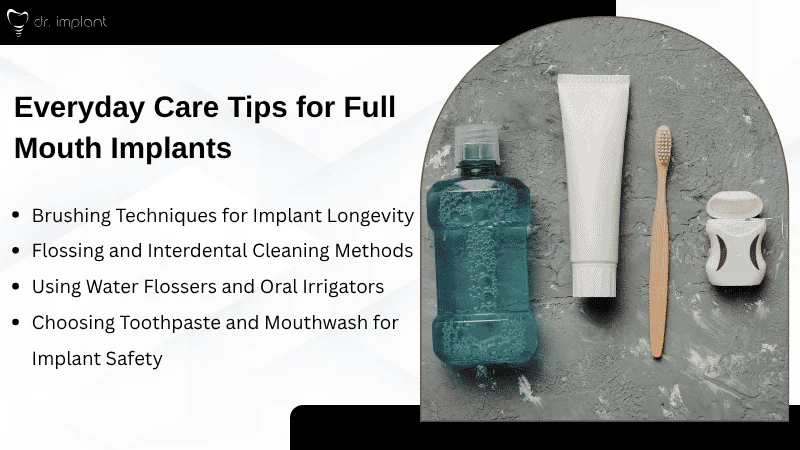
Brushing Techniques for Implant Longevity
Use a soft-bristled toothbrush to clean your implants at least twice daily. Hard bristles can scratch the implant surface and damage the gum tissue around your restoration.
An electric toothbrush with a pressure sensor is an excellent choice. It provides a thorough clean while preventing you from applying too much force.
Pay special attention to where your implants meet the gum line. This area collects the most bacteria and requires gentle circular motions to clean effectively.
Hold your brush at a 45-degree angle to the gum line. Brush for two minutes each session, spending equal time on all areas of your mouth.
Replace your toothbrush or brush head every three months. Worn bristles lose their effectiveness and can harbor bacteria that threaten your dental implant care routine.
Flossing and Interdental Cleaning Methods
Daily flossing removes plaque and food particles from areas your toothbrush cannot reach. These spaces between your implants are where problems often start if left uncleaned.
Use unwaxed tape or implant-specific floss to clean around each restoration. A floss threader helps you navigate under bridges and between tight spaces more easily.
Interdental brushes are highly effective tools for cleaning between implants and adjacent teeth. Choose brushes with nylon-coated wire to avoid scratching your implant surfaces.
Slide the interdental brush gently between each space once daily. Use a back-and-forth motion rather than forcing it through tight areas.
Using Water Flossers and Oral Irrigators
A water flosser or oral irrigator uses pressurized water to flush out debris from hard-to-reach areas. This tool is especially valuable for full mouth implants because it cleans beneath the prosthetic arch where food particles accumulate.
Set your water flosser to medium pressure to start. Hold the tip at a 90-degree angle to your gum line and trace along each implant slowly.
Use your water flosser at least once daily, preferably before bedtime. This removes the biofilm that has built up throughout the day.
Water flossers complement but don’t replace traditional flossing. Use both methods together for the most complete cleaning routine.
Choosing Toothpaste and Mouthwash for Implant Safety
Select a non-abrasive toothpaste specifically designed for implants or sensitive teeth. Abrasive toothpastes containing baking soda or whitening agents can scratch titanium surfaces and create areas where bacteria collect.
Look for toothpaste with fluoride to protect any remaining natural teeth. The fluoride won’t harm your implants and provides important protection for your overall oral health.
Choose an alcohol-free mouthwash to rinse after brushing and flossing. Alcohol-based rinses can dry out your mouth and irritate the soft tissue around your implants.
Rinse for 30 seconds with antimicrobial mouthwash once or twice daily. This helps reduce bacteria levels and keeps your breath fresh between brushing sessions.
Professional Maintenance and Check-Up Schedule
Regular professional care is essential for keeping your full mouth implants healthy and functional.
Your dentist uses specialized tools and techniques to clean areas you can’t reach at home and catch potential problems before they become serious.
Frequency of Professional Cleanings
You should schedule professional cleanings every three to six months to maintain your implants. These visits are more frequent than the typical twice-yearly cleanings recommended for natural teeth.
Your dentist will determine the exact schedule based on your oral health and how well you maintain your implants at home.
Some people need cleanings every three months, especially during the first year after implant placement. Others with excellent home care routines may extend to six-month intervals.
During these appointments, your dental team removes plaque and calculus buildup that regular brushing and flossing miss.
This prevents peri-implantitis, a serious infection that can damage the bone supporting your implants and lead to implant failure.
Examinations and Early Detection of Issues
Your dentist examines your implants at each visit to check for signs of problems. They look for inflammation, bleeding, bone loss, and whether your implants remain stable in your jaw.
Early detection is critical for preventing implant failure. Your dentist checks the tissue around your implants for redness or swelling that might indicate infection.
They also measure pocket depths around each implant to track your gum health over time.
X-rays taken during these visits show how well osseointegration is maintained and whether any bone loss has occurred.
Catching issues early means simpler, less expensive treatments that protect your investment in full mouth implants.
Specialized Tools for Implant Cleaning
Your dental team uses special instruments designed specifically for implant maintenance that won’t scratch or damage the implant surface. Metal tools used on natural teeth can create tiny grooves where bacteria accumulate.
Common tools include plastic or carbon fiber scalers, ultrasonic cleaners with special tips, and air polishing devices. These tools effectively remove plaque and calculus without harming the implant or surrounding tissues.
Your hygienist may also use antimicrobial rinses during cleaning to reduce bacteria levels around your implants.
These professional-grade products help maintain healthy gum tissue and prevent infections that threaten your dental implant maintenance routine.
Contact us for guidance on maintaining full mouth dental implants.
Preventing and Managing Complications
Catching problems early and knowing what warning signs to watch for can save your implants from serious damage.
Understanding conditions like peri-implantitis and taking quick action when issues arise protects both your investment and your oral health.
Recognizing Signs of Peri-Implantitis
Peri-implantitis is a serious infection that affects the gums and bone around your dental implants. This condition happens when bacteria and biofilm build up around the implant, causing inflammation that can lead to bone loss.
Watch for these key warning signs:
- Bleeding gums when you brush or floss around the implant
- Swelling or redness in the gum tissue near the implant
- Bad breath that doesn’t go away with regular brushing
- Pus coming from around the implant
- Loosening of the implant or crown
You might not feel pain in the early stages, which makes regular check-ups critical. Proper implant maintenance helps prevent this condition from developing.
If you notice any of these symptoms, contact your dentist right away. Early treatment can often reverse the damage and save your implant from failure.
Addressing Implant Failure Early
Implant failure doesn’t happen overnight. Catching problems in their early stages gives you the best chance of saving your implant.
Your dentist will check for mobility during regular visits. A healthy implant should feel completely solid and not move at all. If your implant starts to feel loose or shifts when you touch it, schedule an appointment immediately.
Early intervention options include:
- Deep cleaning to remove infection
- Antibiotic treatment to fight bacteria
- Bone grafting to rebuild lost bone
- Adjusting your bite to reduce pressure
Don’t ignore changes in how your implant feels or functions. Sometimes addressing implant issues requires professional intervention beyond routine care.
The sooner you act, the more treatment options you have available. Waiting too long can mean the difference between saving and losing your implant.
Maintaining Gum Health for Implant Stability
Your gums create a protective seal around your implants that keeps bacteria out. Healthy gums are essential for long-term implant success.
Focus on cleaning the gumline where your implant meets the tissue. This area collects plaque and bacteria that can trigger inflammation.
Use a soft-bristled brush at a 45-degree angle to gently clean along the gums twice daily.
A water flosser works especially well for maintaining All-on-4 dental implants since it can reach underneath the prosthetic arch. The pulsating water removes food particles and biofilm from hard-to-reach spots.
Your dentist should measure the depth of the pockets around your implants during check-ups. Shallow pockets mean healthy attachment.
Deeper pockets indicate gum recession or infection that needs treatment. Professional cleanings every 3-6 months remove hardened plaque that your home care misses and help keep your gum tissue healthy and stable.
Lifestyle Habits to Protect Full Mouth Implants
Your daily choices play a big role in how long your implants last. What you eat, whether you use tobacco, and how you manage teeth grinding all affect the tissue and bone around your implants.
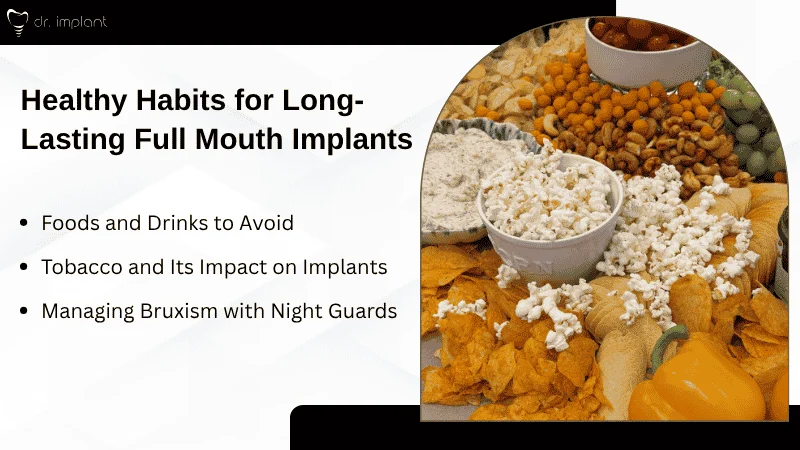
Foods and Drinks to Avoid
Certain foods can damage your full mouth implants or the prosthesis attached to them. Hard foods like ice, hard candies, and unpopped popcorn kernels can crack or chip the prosthetic teeth.
Raw carrots, hard nuts, and crusty bread can also put too much stress on your restoration.
Sticky foods like caramel and taffy can pull on the prosthesis and loosen components over time. Very acidic drinks like soda and citrus juices can irritate the gum tissue around your implants if you drink them often.
You don’t need to give up every hard food forever. Just cut them into smaller pieces or cook them until they’re softer. This simple change helps you protect your investment while still enjoying the foods you love.
Tobacco and Its Impact on Implants
Tobacco use is one of the biggest risk factors for implant problems. Smoking and chewing tobacco reduce blood flow to your gums, which makes it harder for tissue to stay healthy around your implants.
Tobacco use increases your risk of developing infections and complications that can lead to bone loss. People who smoke have much higher rates of implant failure than non-smokers.
If you currently use tobacco, quitting is the best thing you can do for your oral health. Talk to your dentist about cessation programs that can help you stop.
Managing Bruxism with Night Guards
Bruxism means grinding or clenching your teeth, usually while you sleep. This puts a lot of force on your implants and can wear down the prosthetic teeth faster than normal.
A night guard is a custom-made appliance that fits over your teeth while you sleep. It protects your full mouth implants by absorbing the pressure from grinding and clenching.
If you wake up with jaw pain or headaches, you might have bruxism. Tell your dental team right away so they can make you a protective night guard. This simple device can add years to the life of your restoration.
Special Considerations for All-On-4 and Full Mouth Implant Systems
All-on-4 implants and full mouth dental implants need different care than single implants because they support an entire arch of teeth on just a few posts.
The bridge design creates spaces where food and bacteria can hide, and each component needs regular attention to work properly for years to come.
Daily Cleaning Under Full Arch Prostheses
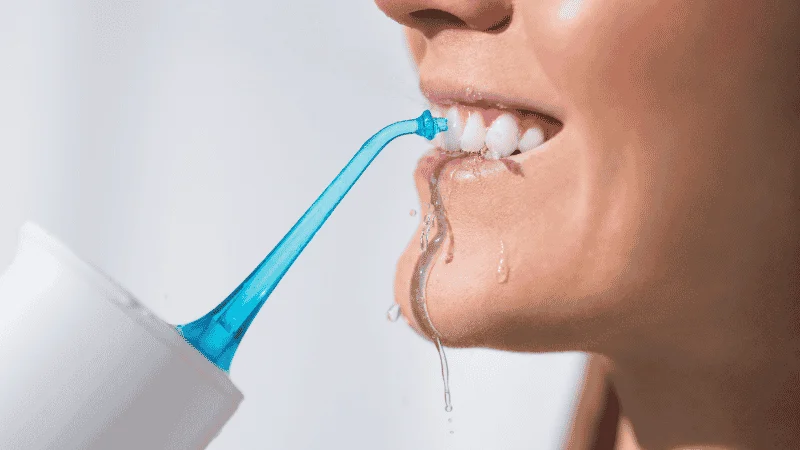
The area under your full arch bridge is the most important place to clean every day. Food particles and bacteria gather in the gap between the bridge and your gum tissue, which can lead to infection if not removed.
Use a water flosser on medium or low setting to flush debris from under the bridge. Aim the stream from either the tongue side or lip side, whichever feels more comfortable. This should be done at least once daily.
Thread dental floss under the bridge using Super Floss or a floss threader. The stiff end helps you get the floss into position, while the spongy middle section grabs more particles.
Pull the floss through gently to avoid damaging the bridge or irritating your gums.
A sulcus brush works well for cleaning along the gumline where the bridge meets your soft tissue. This small brush is about one-third the width of a regular toothbrush and reaches tight spaces that other tools miss.
Component Maintenance and Expected Longevity
Your full mouth implants have multiple parts that work together. The implant post sits in your jawbone, the abutment connects to the post, and the bridge attaches to the abutments.
Each component has a different lifespan. The titanium posts can last 20-30 years or longer with proper care. The bridge typically needs replacement every 10-15 years due to normal wear.
Abutments usually last as long as the posts but may need adjustments over time.
Watch for these signs that components need attention:
- Clicking or movement when you chew
- Changes in how your teeth fit together
- Discomfort around specific implant sites
- Visible gaps between the bridge and gums
Schedule professional cleanings every three months instead of the standard six months. Your hygienist will check all components and use special scaling tools to clean your implant bridge thoroughly.
Monitoring and Caring for Abutment Connections
The abutment connection is where your bridge attaches to the implant posts. These connections can loosen over time from normal chewing forces.
Check for loose abutments by paying attention to how your bridge feels. If you notice any movement, clicking sounds, or changes in your bite, contact your dentist right away.
A loose abutment caught early is a simple fix, but ignoring it can damage the implant.
Your dentist will tighten abutment screws during regular maintenance visits. This is a normal part of all-on-4 implant maintenance and helps prevent bigger problems.
Avoid habits that put extra stress on abutment connections. Don’t chew ice, bite your nails, or use your teeth to open packages. These actions create sideways forces that can loosen the connection between components.
Frequently Asked Questions
Caring for full mouth implants raises common questions about daily cleaning routines, the right tools to use, and how to spot potential problems early.
Understanding proper maintenance techniques helps you protect your investment and keep your smile healthy for decades.
What daily routine should I follow to keep my full-arch dental implants clean and healthy?
You should brush your implants at least twice a day using a soft-bristled toothbrush and non-abrasive toothpaste.
Pay special attention to the area where your implants meet your gumline, as this is where bacteria tend to gather.
Flossing once daily is just as important as brushing. You need to clean around each implant abutment and under your prosthetic arch to remove food particles and plaque that your toothbrush can’t reach.
Finish your routine by rinsing with an antibacterial mouthwash. This helps kill any remaining bacteria and keeps your gums healthy around your implants.
Which cleaning tools work best for cleaning around implant bridges and under the gumline?
A water flosser is one of the most effective tools for cleaning All-on-4 dental implants because it reaches the hard-to-clean areas beneath your prosthetic arch.
The pressurized water stream flushes out food debris and bacteria that collect in these tight spaces.
Interdental brushes with nylon-coated wire work well for cleaning between implants and around abutments. These small brushes slide easily into gaps where regular floss might not fit.
An electric toothbrush with a pressure sensor can provide a thorough clean without damaging your implants. The gentle vibrations help remove plaque while the sensor prevents you from brushing too hard.
How do I use a Waterpik safely and effectively with dental implants?
Start by filling your Waterpik reservoir with lukewarm water or an antibacterial rinse recommended by your dentist. Set the pressure to a medium or low setting, especially when you’re first starting out.
Lean over the sink and place the tip in your mouth before turning on the device. Aim the stream at a 90-degree angle toward your gumline and let the water flow from your mouth into the sink.
Move the tip along your gumline, pausing briefly between each tooth and around each implant. Spend extra time cleaning under your prosthetic bridge where food particles commonly get trapped.
What’s the best way to clean permanent implant teeth at home if I have limited dexterity?
An electric toothbrush with a thick handle is easier to grip and requires less manual movement than a regular toothbrush. Look for models with ergonomic designs that fit comfortably in your hand.
A water flosser eliminates the need for traditional flossing, which can be difficult if you have arthritis or limited hand mobility. You just need to guide the tip along your gumline without complex threading motions.
Floss holders or interdental brush handles with extended grips give you better control. These adaptive tools help you reach all areas of your mouth without straining your hands or wrists.
How often should I schedule professional cleanings and checkups for implant-supported teeth?
You should visit your dentist for professional cleanings every three to six months to maintain your full mouth implants.
Your dentist will determine the exact frequency based on your oral health and how well you’re maintaining your implants at home.
These regular appointments allow your hygienist to remove hardened plaque and tartar that you can’t eliminate with daily brushing.
They use specialized plastic or titanium instruments that clean your implants thoroughly without scratching the surfaces.
Your dentist will also take X-rays during checkups to monitor the bone around your implants. Early detection of any issues helps prevent serious complications down the road.
What warning signs might mean my implants need attention to prevent long-term problems?
Bleeding or swollen gums around your implants signal inflammation that needs immediate attention. While some minor bleeding can occur during cleaning, persistent or heavy bleeding indicates a problem.
Loose implants or movement in your prosthetic bridge require urgent evaluation by your dentist. Your implants should feel as stable as natural teeth, so any shifting or wiggling isn’t normal.
Pain, tenderness, or a bad taste in your mouth around your implants may point to infection. Contact your dentist right away if you notice these symptoms, as untreated infections can lead to bone loss and implant failure.