If you just started Ozempic, Wegovy, Mounjaro, Zepbound, or another GLP-1 medication and you have a dental implant planned on the calendar, you may wonder whether the medication could affect your procedure or recovery.
More adults than ever are on these medications, with 18% of U.S. adults reporting GLP-1 use as of late 2025.
At the same time, dental implant treatment depends on careful anesthesia planning and steady tissue and bone healing.
Understanding GLP-1 medications and dental implant healing starts with two important considerations: anesthesia planning and your ability to maintain adequate nutrition, hydration, and blood sugar control during recovery.
This does not mean you should stop your medication on your own. Your prescribing clinician and surgical team can determine what is appropriate based on your medication, symptoms, and planned anesthesia.
Key Takeaways
- Starting a GLP-1 medication changes how your stomach empties, which matters most in the weeks around anesthesia and during the dose-escalation phase.
- Healing implanted tissue needs steady protein, fluids, and blood sugar, so appetite loss or nausea after surgery deserves quick attention.
- Restarting your GLP-1 medication after surgery depends on recovery signs like eating normally and having regular bowel function, not a fixed number of days.
Why Starting a GLP-1 Medication Can Change Surgical Planning
Starting a GLP-1 medication close to a planned implant surgery changes how your care team needs to prepare, mostly because these drugs slow digestion and can still affect your stomach even after a normal fasting period.
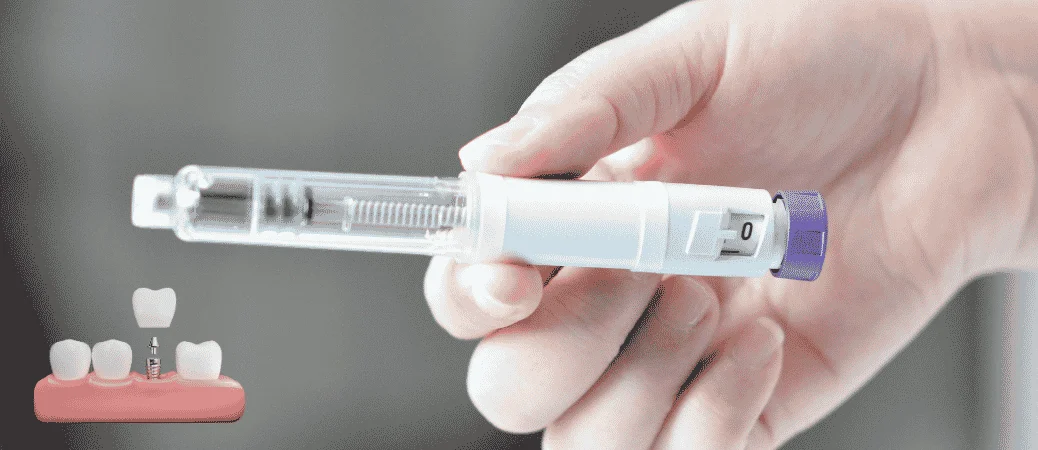
Semaglutide (found in Ozempic, Wegovy, and Rybelsus) and tirzepatide (found in Mounjaro and Zepbound) both work by mimicking a natural gut hormone, and older drugs like liraglutide (Saxenda) and dulaglutide (Trulicity) work in a similar way.
Whether you take a brand name, oral semaglutide, or a compounded semagludite or tirzepatide version, the underlying digestive effect is the same.
How Semaglutide and Tirzepatide Affect Appetite and Digestion
These medications slow stomach emptying and reduce appetite, which is exactly why they help with blood sugar and weight.
The tradeoff is that food and liquid can sit in your stomach longer than expected, sometimes described as slow digestion or, in more pronounced cases, gastroparesis.
Why the Dose-Escalation Phase Deserves Extra Attention
The dose-escalation phase, when your prescribing clinician is raising you toward a maintenance dose, tends to bring the most noticeable nausea, vomiting, bloating, and constipation.
Digestive side effects are usually strongest right after a dose increase and calm down as your body adjusts.
If your implant surgery falls near a dose change, mention that timing to your surgical team early, since GLP-1 half-life also means a single weekly injection can still be affecting your system days later.
Which GLP-1 Symptoms Should Be Reported Before Surgical Clearance
Report ongoing nausea, vomiting, reflux, constipation, or abdominal pain before your pre-surgical clearance appointment.
These symptoms can signal that your stomach isn’t emptying on a predictable schedule, which is exactly the information your anesthesiologist needs to plan safely.
Anesthesia, Gastric Emptying, and Aspiration Risk
The main concern with GLP-1 medications and surgery is that they can delay stomach emptying enough that residual stomach contents remain even after a standard fasting period, raising the risk of aspiration during anesthesia.
This has become one of the most studied safety questions in surgery today, and guidance continues to evolve as more data comes in.
Why Standard Fasting May Not Fully Empty the Stomach
Standard fasting rules were written before GLP-1 medications became common, and they assume a stomach that empties at a typical pace.
On a GLP-1 medication, food and liquid can remain in the stomach longer than expected, even after a normal fasting window.
During general anesthesia, the reflexes that normally keep stomach contents down are suppressed, so leftover food or liquid can travel back up and into the lungs, a problem called pulmonary aspiration that can lead to aspiration pneumonitis or pneumonia.
What the Anesthesiologist Needs to Know Before an Elective Procedure
Your anesthesiologist needs your exact GLP-1 medication name, dose, and the date of your last dose before any elective procedure.
The American Society of Anesthesiologists first recommended in 2023 holding weekly GLP-1 injections for one week and daily oral versions for one day before surgery, though newer multi-society guidance from late 2024 takes a more individualized, symptom-based approach rather than a single fixed schedule.
Some surgical teams now use a bedside stomach ultrasound to check for retained contents when there’s uncertainty, a simple, painless scan that shows whether food or fluid is still present.
How Planning Differs for Local Anesthesia, Deep Sedation, and General Anesthesia
Local anesthesia carries a much lower aspiration concern since your natural airway reflexes stay active.
Deep sedation and general anesthesia both suppress those reflexes to different degrees, which is why the type of anesthesia planned for your implant surgery changes how strictly your surgical team may want to manage GLP-1 timing beforehand.
This is a conversation worth having directly with your anesthesiologist, since two patients on the same medication and dose can still need different plans based on the sedation level involved.
What Happens if Emergency Surgery Cannot Be Delayed
Emergency surgery cannot wait for a GLP-1 washout period, so the surgical team treats every patient on these medications as though they may have a fuller stomach than usual.
That typically means extra precautions during airway management, regardless of when the last dose was taken.
What Implant Healing Needs During Recovery
Dental implant healing depends on adequate protein, fluids, blood sugar control, and healthy tissue repair during the days and weeks after your procedure.
GLP-1 medications can make it harder to meet those needs simply because they reduce appetite and slow digestion, which is worth planning for rather than worrying about.
Why Protein, Calories, and Hydration Matter for Tissue Repair
Tissue repair after implant surgery runs on protein, adequate calories, and good hydration.
Wound healing is an active biological process that needs building blocks, and low protein intake or dehydration can slow that process down.
Sipping fluids consistently and choosing protein-rich foods, even in smaller portions, supports the same soft tissue and bone healing that dental patients rely on during the recovery time for dental implants.
Can Appetite Suppression Make Post-Operative Nutrition Harder?

Appetite suppression from a GLP-1 medication can absolutely make it harder to eat enough after surgery, especially in the first few days when swelling or soreness already limits your interest in food.
This combination, reduced hunger plus a healing surgical site, is worth flagging to your care team so they can suggest small, frequent, protein-forward meals instead of relying on three large ones.
Following the specific diet guidance for after dental implant surgery becomes even more important when appetite is already low.
How Blood Sugar Control Influences Wound Healing
Steady blood sugar supports better wound healing, while swings in glucose control, whether from skipped meals, illness, or medication changes, can slow tissue repair and raise infection risk.
This matters most for patients managing type 2 diabetes with insulin or metformin alongside a GLP-1 medication, since post-surgical appetite changes can throw off usual dosing and increase hypoglycemia risk.
Patients managing diabetes and considering dental implants already know that glucose control plays a direct role in how well an implant integrates.
When Nausea, Dehydration, or Ileus Requires a Call to the Surgical Team
Persistent nausea, signs of dehydration, or a slow-moving gut (sometimes called ileus) after surgery are reasons to call your surgical team, not wait it out.
These symptoms can overlap with normal GLP-1 side effects, which makes it easy to dismiss them, but your team needs to know if they’re interfering with your ability to eat, drink, or take medications during recovery.
When Can You Restart Ozempic After Implant Surgery?
Ozempic and other GLP-1 medications are typically restarted once you’re tolerating regular food and liquids, your bowel function has returned to normal, and your surgical team has confirmed you’re clear of complications like nausea, vomiting, or unresolved gastrointestinal symptoms.
There isn’t one universal day count that applies to every patient or every type of implant surgery.
The Recovery Signs That Matter More Than a Set Number of Days
Reliable oral intake, normal bowel movements, and stable hydration matter more than counting days on a calendar.
Your prescribing clinician and surgical team should determine when to restart your GLP-1 medication based on your ability to eat and drink normally, hydration, bowel function, symptoms, and recovery.
What to Ask if You Missed Several Doses or Use a Compounded Medication
Ask your prescribing clinician whether you need a lower restart dose if you’ve missed several doses, since GLP-1 agonists are often reintroduced gradually rather than at your prior maintenance dose.
If you use a compounded GLP-1 medication through telehealth, tell your surgical team the exact compound and dose, since compounded products aren’t standardized the same way as FDA-approved semaglutide formulations.
A Coordinated Plan Protects Both Recovery and Long-Term Progress

At Dr. Implant, careful treatment planning starts with understanding your complete medication and health history, including any GLP-1 medication you take before dental implant surgery.
Your surgeon knows the implant and procedure, your anesthesiologist knows the airway and sedation plan, and your prescribing clinician knows your GLP-1 medication history and dosing pattern.
Telling all three groups about every medication you take, including compounded or telehealth-prescribed GLP-1 drugs, gives them what they need to build a plan around your specific situation.
This kind of coordination isn’t about extra caution for its own sake. It’s about making sure the medication that’s helping your metabolic health doesn’t get sidelined by a preventable surgical complication, and that your implant gets the steady healing conditions it needs.
Frequently Asked Questions
Should I delay implant surgery if I just started Ozempic?
Not necessarily, but tell your surgical team the exact date you started and your current dose.
If you’re still in the dose-escalation phase with active nausea or vomiting, your team may want to wait until symptoms settle or adjust your anesthesia plan accordingly.
Can I take Wegovy or Mounjaro before anesthesia for implant surgery?
This depends on your dose, your symptoms, and the type of anesthesia planned, so it needs a direct conversation with your anesthesiologist.
Many surgical teams follow a hold period around your last dose, but current guidance favors an individualized, symptom-based approach over one fixed rule for everyone.
When is it safe to restart a GLP-1 medication after implant surgery?
Restarting depends on your recovery, medication, and how long treatment has been interrupted. Your prescribing clinician can tell you when to restart and whether your dose needs to be adjusted.
Can Ozempic cause poor wound healing or implant failure?
Ozempic itself hasn’t been shown to directly cause implant failure, but the appetite suppression, nausea, and reduced food intake that sometimes come with it can slow wound healing if protein and calories fall too low.
Steady nutrition and blood sugar control matter more to healing than the medication alone.
What should I do if I have nausea or cannot eat enough after surgery?
Contact your surgical team if nausea, vomiting, or poor intake is persistent, worsening, or interfering with your ability to stay hydrated or take necessary medications.
Do I need to tell my surgeon about compounded semaglutide or tirzepatide?
Yes, tell your surgeon and anesthesiologist about any compounded GLP-1 medication, along with the exact dose and last date taken.
Compounded formulations aren’t standardized the same way as FDA-approved products, so your care team needs full details to plan your anesthesia and recovery safely.