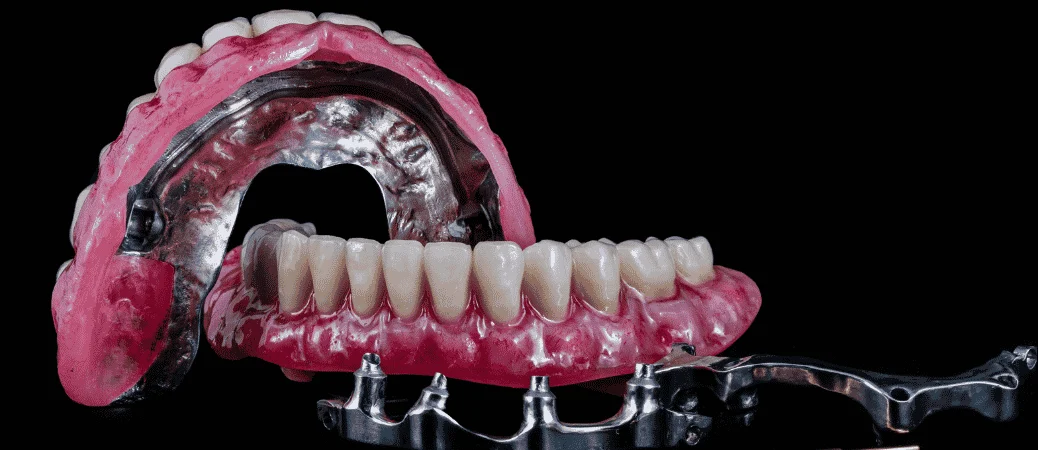
Your acrylic All-on-4 bridge may have served you well for years, but worn teeth, stubborn stains, or repeated chips can leave you wondering whether it’s time for an upgrade.
The good news is that you may be able to switch to a zirconia bridge without replacing your existing dental implants.
When comparing acrylic vs zirconia All-on-4 restorations, the biggest differences go beyond strength and appearance.
Zirconia offers greater resistance to staining and wear, but upgrading depends on whether your existing implants are healthy, stable, and compatible with the new bridge.
For many patients, the process involves replacing the restoration rather than repeating implant surgery. However, your dentist must first evaluate the supporting bone, implant connections, available space, and bite alignment.
This guide explains when upgrading makes sense, how the replacement process works, what changes you may notice, and how the costs and maintenance requirements compare, so you can make an informed decision about your existing All-on-4 bridge.
Key Takeaways
- Many patients can upgrade from acrylic to zirconia using their existing implants, provided an exam confirms the implants and connections are in good shape.
- The process involves removing the old bridge, checking the implants, then designing and fitting a new zirconia bridge, often with a temporary in between.
- Bridge-only upgrade costs are separate from original implant costs, and zirconia’s higher price is usually weighed against lower long-term repair needs.
Can Your Existing Implants Support a New Bridge?
Your existing implants may support a new zirconia bridge if they’re stable, properly positioned, and free of active infection or progressive bone loss. Only a clinical examination and appropriate imaging can confirm this.
Your dentist will assess the bone supporting each implant, check for complications, and determine whether the existing implant connections can accommodate the new bridge.
What Must Be Checked Before Reusing the Implants?
Your dentist will examine the bone levels around each implant, check for looseness, and look for signs of inflammation or infection.
If peri-implantitis is detected, peri-implantitis treatment may be needed before upgrading the bridge. X-rays or a 3D scan can help assess the supporting bone and identify changes since your original surgery.
Healthy implants with no signs of peri-implant disease are generally considered good candidates for a new bridge, which is consistent with findings in a documented clinical case where a cracked acrylic bridge was replaced on implants that showed no disease or failure.
Do the Implant Connections and Available Space Fit the New Design?
The connectors on top of your implants, called abutments, need to match what a zirconia bridge requires, and the vertical space between your gum line and your bite also matters.
Zirconia bridges need enough room to be strong without being bulky, and a CAD/CAM zirconia design generally requires less prosthetic space than older acrylic-over-metal builds.
If your bite height has changed over the years, as sometimes happens when acrylic teeth wear down, that measurement gets corrected before the new bridge is built.
How Does Teeth Grinding Affect the Plan?
Teeth grinding changes how your dentist plans a zirconia upgrade, since a rigid bridge transmits more force to the implants than acrylic does.
If you clench or grind, expect a conversation about a night guard and a bite design that spreads force evenly across all four implants, rather than concentrating it on one or two.
Understanding the relationship between bruxism and dental implants can help you see why your dentist may recommend a night guard and careful bite adjustments before upgrading to zirconia.
What Happens When You Replace the Acrylic Bridge?
Replacing an acrylic bridge with zirconia is a staged process that starts with removing the old bridge and ends with a new one screwed onto the same implants.
The switch from acrylic to zirconia typically unfolds over several appointments rather than a single visit, since the new bridge has to be designed, milled, and checked for fit before it’s permanently attached.
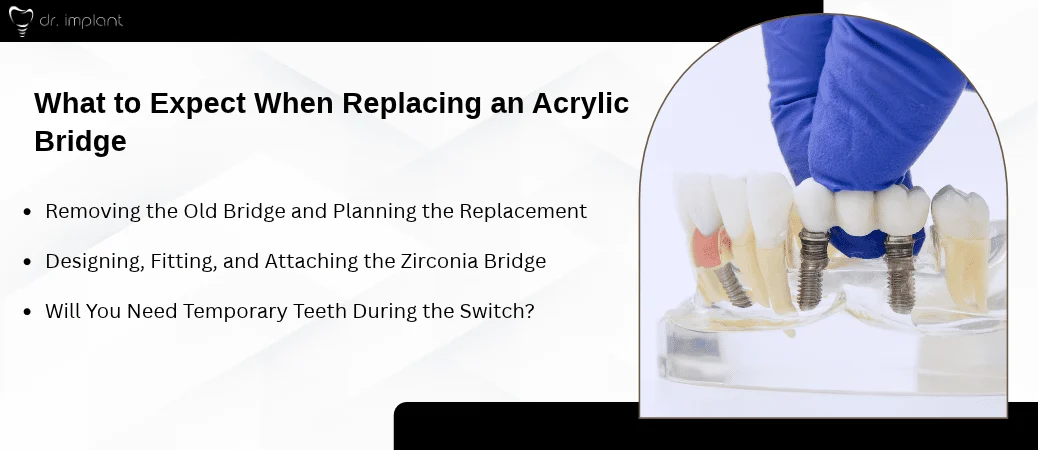
Removing the Old Bridge and Planning the Replacement
Since All-on-4 bridges are screwed onto the implants rather than glued or snapped in place, only a dentist can remove them.
Once the old acrylic bridge comes off, your dentist examines the implants directly, takes new scans, and plans the new full-arch zirconia bridge based on your current bite, gum shape, and smile line.
Designing, Fitting, and Attaching the Zirconia Bridge
A zirconia All-on-4 bridge is digitally designed using scans of your existing implants, gums, and bite.
Depending on the restoration, your dentist may recommend a monolithic zirconia bridge or a design that combines zirconia with titanium components.
The best option depends on implant positioning, available space, and how biting forces will be distributed across the bridge.
After milling, the bridge is stained and glazed to match natural tooth color, then tried in your mouth to check fit, bite contact, and appearance before it’s permanently screwed into place.
Monolithic zirconia, where the entire piece is one solid block, tends to hold up to grinding better than versions with a porcelain layer on top, since there’s no separate layer to chip.
Will You Need Temporary Teeth During the Switch?
Many patients wear a temporary bridge while the final zirconia piece is designed and milled, especially if your bite height needs adjusting first.
In one documented case, a patient wore two sets of 3D-printed temporary bridges over several weeks to fine-tune bite height and appearance before committing to the final zirconia restoration, with the entire process from first visit to final bridge taking about three months.
Not every case needs that many steps. If your bite hasn’t shifted and your implants check out quickly, your dentist may move straight from old bridge to new one with a shorter try-in phase.
What Will Feel Different After the Upgrade?
Your new zirconia bridge will likely feel heavier, harder, and smoother than the acrylic bridge you’re used to, and that’s expected rather than a sign something went wrong.
Most patients adjust to the new feel within days, but it helps to know what’s changing before it happens.
Wear, Staining, and Appearance
Acrylic resin teeth and the pink acrylic gum material wear down and pick up stains from coffee, tea, and food over time, which is part of why you’re considering a change.
Zirconia resists staining and holds its shade far longer under normal biting, and multilayer zirconia designs add subtle color gradients near the gum line so the bridge doesn’t look like one flat, uniform white block.
Weight, Bite Feel, and Opposing Teeth
Zirconia bridges are generally harder and more rigid than acrylic restorations, so your bite may feel different after the upgrade.
However, opposing-tooth wear depends on surface smoothness, polishing, bite alignment, and grinding habits, not hardness alone.
Your dentist should carefully adjust and polish the restoration to help limit unnecessary wear on natural teeth.
Cleaning, Repairs, and Ongoing Checkups
Zirconia has a smooth, dense surface that can make cleaning easier, but plaque can still accumulate around the bridge and implants.
Daily cleaning beneath the restoration and regular professional maintenance remain important regardless of the material.
Repairs look different too. A chipped acrylic tooth can sometimes be repaired during a dental visit, while a cracked zirconia bridge may require laboratory evaluation or replacement of the restoration, depending on the extent of the damage.
Keeping up with maintenance of full mouth dental implants matters regardless of which material you choose, since the implants themselves need ongoing care.
How Much Does a Bridge Upgrade Cost?
Upgrading from an acrylic to a zirconia all-on-4 bridge costs more upfront than keeping or replacing an acrylic bridge, but that price covers the prosthetic work only, not new implants.
Keeping those two costs separate in your head makes it much easier to compare quotes.
What Should a Bridge-Only Quote Include?
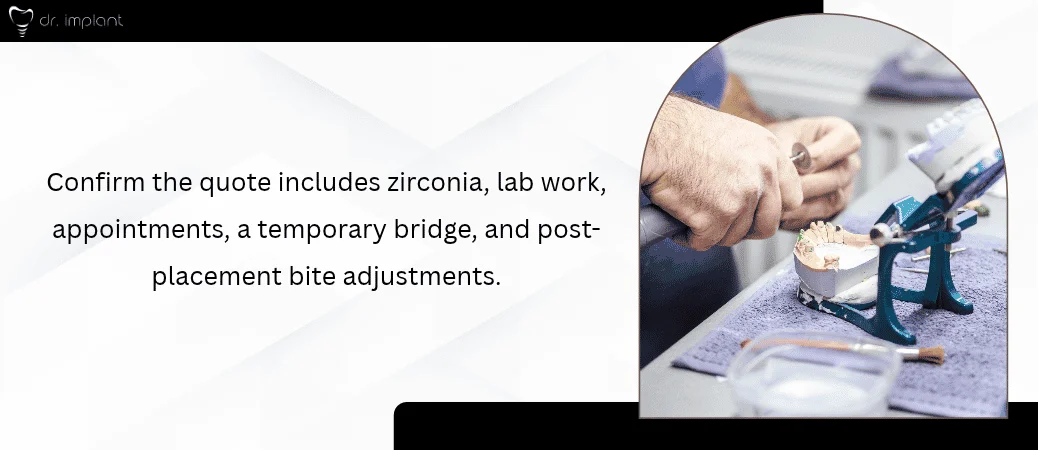
A bridge-only quote should spell out the material, the lab work, the number of appointments, and whether a temporary bridge is included while the final zirconia piece is made.
Ask whether the price covers adjustments after delivery, since a bite that needs fine-tuning in the weeks after placement is common with a new, more rigid material.
When Could Additional Treatment Change the Price?
If your exam turns up bone loss, a loose implant, or a connection that doesn’t match the new bridge design, the price can shift because additional treatment gets added to the plan.
A failed or failing implant, for example, may need to be addressed before any new bridge goes on top of it, which is a different conversation than a straightforward bridge swap.
How Do Upfront Cost and Future Repairs Compare?
Zirconia bridges generally cost more upfront, while acrylic bridges may need repairs or replacement as their teeth and gum-colored material wear down.
There are differences in long-term complications and restoration survival, but results vary by bridge design, materials, and patient factors.
Compare the expected maintenance, repair options, and total cost of each restoration with your dentist rather than relying on one survival percentage.
Reviewing these factors alongside your budget and bite history can help you and your dentist decide which material makes the most sense for your situation.
Deciding When a New Bridge Makes Sense

A new bridge makes sense when your current one is wearing down, chipping repeatedly, or no longer matching your bite the way it used to, not simply because zirconia exists as an option.
If your acrylic all-on-4 bridge is still functioning well, fits properly, and shows only minor cosmetic wear, there’s no clinical reason to rush into a replacement.
Signs that it’s worth scheduling an evaluation include a bridge that has chipped more than once, visible staining that no longer polishes out, a bite that feels different than it used to, or looseness anywhere in the structure.
Years of wear on a full-arch prosthesis is normal, not a sign anything went wrong the first time around.
If you’re on the fence, a consultation that includes updated imaging will tell you more than guessing from how things look or feel day to day.
At Dr. Implant, that kind of exam is the starting point for anyone exploring a zirconia fixed bridge on implants placed years earlier, since the implants’ current condition drives every decision that follows.
Frequently Asked Questions
Can I keep my original All-on-4 implants and just replace the acrylic teeth?
In many cases, yes. Your dentist must first confirm that the implants are stable, the surrounding bone and gums are healthy, and the implant connections can support the new bridge.
Some bone remodeling around implants is normal, but progressive bone loss or active infection may require treatment before replacing the restoration.
Do I need surgery to switch from an acrylic bridge to zirconia?
In many cases, no additional surgery is necessary. If your existing implants are healthy, stable, and compatible with the new restoration, your dentist may be able to replace the acrylic bridge without placing new implants.
However, implant failure, significant bone loss, or other complications may require additional treatment before the upgrade.
What if one of my implants has failed?
A failed implant needs to be addressed separately before a new bridge can be fitted, since the bridge relies on every implant being stable.
Your dentist will explain whether that means removing and replacing the implant or adjusting the design to work around it.
How long might a full-arch zirconia bridge last?
Full-arch zirconia bridges can last for many years, but their lifespan depends on the restoration design, bite forces, grinding habits, and ongoing maintenance.
Regular dental evaluations help identify wear or complications early. No dentist can guarantee an exact lifespan for every patient.
What are the downsides of upgrading to zirconia?
Zirconia generally costs more upfront than acrylic and may feel different because of its greater rigidity. It also requires careful bite adjustment and polishing, particularly when opposing natural teeth are present.
If the bridge fractures, repairs may be more complicated and sometimes require replacement. These factors should be weighed against zirconia’s strength and resistance to staining.