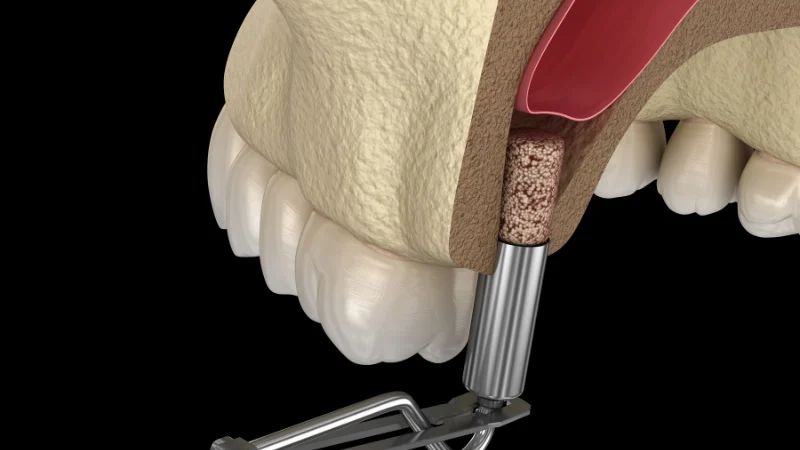
You want dental implants, but your dentist mentions bone grafting. That can feel like a setback. You may wonder if it is truly necessary or just an extra step.
Bone grafting becomes absolutely necessary when your jawbone does not have enough height, width, or density to hold dental implants securely and keep them stable long term.
If you lost a tooth years ago, have gum disease, or experienced trauma, your jawbone may have shrunk. Without enough strong bone, implants can loosen or fail.
Understanding when you truly need a bone graft helps you plan with confidence. When you know what your jawbone needs and why, you can move forward with implants that have the right foundation for lasting support.
Key Takeaways
- You need bone grafting when your jawbone cannot securely support dental implants.
- Dentists use exams and imaging to measure bone height, width, and density.
- Proper preparation improves implant stability and long-term success.
Learn when bone grafting is needed for dental implants and explore your treatment options
Essential Reasons Bone Grafting Is Needed Before Dental Implants
You need enough strong jawbone to hold dental implants in place. When bone loss, injury, or long-term tooth loss reduces bone density, a bone graft for dental implants may become necessary to create a stable base.
Insufficient Bone After Tooth Loss
When you lose a tooth, your jawbone no longer receives pressure from chewing. Without that stimulation, the body begins bone resorption, which means the bone slowly shrinks.
This process can start within months after tooth loss. Over time, the bone becomes thinner and shorter. If you wait too long, the area may not have enough bone density to support implant placement.
Dental implants act like artificial roots. They must fuse with the jawbone in a process called osseointegration. If the bone is too weak or too thin, the implant may not bond well or may fail.
A dental bone graft adds new bone material to the area. This graft supports bone regeneration and rebuilds the height and width needed for a secure implant.
Bone Loss from Gum Disease or Periodontal Disease
Gum disease, also called periodontal disease, damages more than your gums. It attacks the tissues and bone that hold your teeth in place.
As the infection spreads, it destroys bone around the tooth roots. You may not notice this bone loss right away, but X-rays often show reduced bone levels.
If you lost teeth because of gum disease, you likely also lost supporting jawbone. This makes implant placement risky without first rebuilding the area.
In these cases, a bone graft for dental implants restores lost bone and improves stability. Strong bone helps your implant stay firm when you chew or speak.
Treating active gum disease must come first. Once the infection is under control, your dentist can plan bone regeneration and implant placement safely.
Jawbone Trauma and Defects
Injuries to your face or jaw can damage the jawbone. Car accidents, sports injuries, or falls may cause fractures or bone defects.
When bone heals unevenly or a section is missing, you may not have a solid base for dental implants. Even if the gums look normal, the bone underneath may lack strength or proper shape.
Some people also have natural jawbone defects. Others lose bone during cyst removal or other oral surgery.
A dental bone graft fills in these gaps and restores normal bone structure. It can rebuild both thickness and height so your implant has firm support.
In certain cases, your surgeon may place a small graft and the implant during the same visit. This approach depends on how much bone is missing and whether the area can stay stable during healing.
Long-Term Tooth Extraction and Bone Resorption
If you had a tooth extracted years ago and never replaced it, bone resorption likely reduced the size of your jawbone in that area.
Your body removes bone it no longer needs. Without a tooth root, the jawbone shrinks slowly over time. This change can affect both appearance and function.
You may notice that nearby teeth shift or that dentures feel loose. Beneath the surface, bone density continues to decline.
When the bone becomes too thin or too soft, it cannot hold implants securely. Placing an implant without enough bone increases the risk of movement or failure.
A bone graft for dental implants rebuilds the lost volume. After healing, the new bone integrates with your natural jawbone and creates a stable foundation for long-term implant success.
How Dentists Determine the Need for Bone Grafting
Your dentist does not guess when it comes to dental bone grafting. They use detailed scans, hands-on exams, and clear warning signs to decide if your jawbone can hold an implant safely.

CBCT Scans and Imaging Techniques
Your dentist often starts with CBCT scans, also called a cone beam CT scan. This 3D scan shows your jawbone from every angle. It gives more detail than a regular dental X-ray.
A CBCT scan helps measure:
- Bone height
- Bone width
- Bone density
- Distance to nerves and sinuses
These details matter during implant planning. If the scan shows thin bone or low bone density, your dentist may recommend dental bone grafting before placing the implant.
The scan also shows areas of bone shrinkage after tooth loss. When a tooth has been missing for months or years, the jawbone in that spot often becomes smaller.
A clear 3D image lets your oral surgeon see if you have enough support for a stable implant.
Clinical Assessment of Bone Volume and Quality
Scans are important, but your dentist also checks your mouth in person. During your exam, they look at your gums, bite, and the shape of your jawbone.
They check for:
- Gum disease
- Signs of past infection
- Bone loss around nearby teeth
If you have had long-term tooth loss or advanced gum disease, you may have insufficient bone in that area. Your dentist may gently probe the site to assess bone support and tissue thickness.
Bone quality also matters. Strong, dense bone holds implants better than soft bone. Even if your jaw looks wide enough, low bone density can still increase the risk of implant failure.
That is why your dentist combines imaging with a physical exam before making a final decision.
Signs and Indicators of Insufficient Jawbone
Certain signs often point to an insufficient jawbone. You may notice changes yourself, especially if a tooth has been missing for a while.
Common indicators include:
- A sunken or collapsed look in the area of tooth loss
- Loose nearby teeth
- Dentures that no longer fit well
- A narrow ridge where the tooth used to be
Your dentist may confirm these signs through imaging and exam findings. In some cases, the bone sits too close to the sinus in the upper jaw, which limits implant placement without added support.
If tests show insufficient jawbone, your oral surgeon may suggest dental bone grafting to rebuild volume. This step creates a stable base so your implant can bond securely with your jawbone.
Types of Bone Grafts and Graft Materials Used in Implant Dentistry
Dentists use several types of bone grafts to rebuild your jaw before placing implants. Each graft material works in a different way, and your provider chooses it based on your bone loss, health history, and treatment goals.
Autograft and Allograft Options
An autograft uses bone taken from your own body. During bone graft surgery, your dentist may collect bone from your chin, jaw, or another area.
Because the bone comes from you, it contains living cells and natural growth factors. This helps support strong bone regeneration. Your body also accepts it well since it is your own tissue.
The main drawback is that it requires a second surgical site. That can mean more healing time and discomfort.
An allograft uses donor bone from another person. Tissue banks process and sterilize this bone to make it safe.
Allografts avoid a second surgical site, which many patients prefer. They act as a framework that allows your own bone to grow into the area.
Xenograft and Synthetic Alternatives
A xenograft comes from animal bone, often bovine. Manufacturers treat the bone so only the mineral structure remains.
This structure supports new bone growth by acting as a scaffold. Your body gradually replaces it with your own bone over time. Xenografts are widely used in sinus lifts and ridge augmentation.
An alloplast, also called a synthetic bone graft, uses man-made materials. These may include calcium phosphate, calcium sulfate, or other lab-created compounds.
Growth Factors and Bioactive Glass
Some graft materials include growth factors that help speed up bone formation. These proteins signal your body to produce new bone cells at the graft site.
Dentists may combine growth factors with autografts, allografts, or synthetic bone graft materials. This approach can improve healing in areas with severe bone loss.
Bioactive glass is a type of synthetic material that bonds with bone. When placed in the jaw, it reacts with body fluids and forms a surface that supports new bone growth.
Choosing the Right Material for Bone Regeneration
Your dentist does not pick a graft material at random. They review your bone volume, density, and the size of the defect.
They also consider your medical history, smoking status, and how soon you want the implant placed. The choice often depends on patient needs and surgical goals.
In some cases, your provider may combine materials. For example, they may mix donor bone with a synthetic graft or add growth factors.
The goal stays simple: rebuild enough stable bone so your dental implant can fuse securely and function under normal chewing forces.
Key Bone Grafting Procedures for Implant Preparation
Dentists use several specific techniques to rebuild bone before placing implants. Each method targets a different type of bone loss and prepares a stable base for long-term implant support.
Ridge Augmentation for Bone Volume Enhancement
If your jaw ridge has become too thin or too short, your dentist may recommend ridge augmentation. This bone graft procedure rebuilds the natural contour of the jaw so it can hold an implant securely.
After tooth loss, the ridge often shrinks in width. Ridge augmentation adds bone graft material to widen or raise the area. Your provider may use donor bone, synthetic material, or your own bone, depending on your case.
During the procedure, your dentist lifts the gum tissue, places the graft, and may cover it with a protective membrane. Healing usually takes several months before implant placement.
Sinus Lift for Upper Jaw Implants
If you need implants in your upper back jaw, you may not have enough bone height because of the sinus cavity. In this case, your dentist may perform a sinus lift.
A sinus lift gently raises the sinus membrane and places bone graft material beneath it. This creates more vertical bone so the implant does not extend into the sinus space.
This type of bone graft before implants is common for upper molars and premolars. Healing often takes 4 to 6 months, though some cases allow implant placement at the same time.
Socket Preservation After Tooth Extraction
When you remove a tooth, the surrounding bone starts to shrink quickly. Socket preservation helps stop that bone loss before it begins.
Right after extraction, your dentist places bone graft material into the empty socket. This simple bone graft before implant placement helps maintain width and height in the area.
Without socket preservation, you may need a more complex graft later. Studies show that the jaw can lose a large amount of width in the first year after tooth loss, which makes early action important.
Block Grafts for Severe Bone Loss
If you have severe bone loss, your dentist may suggest a block graft. This method uses a solid piece of bone instead of loose particles.
Your provider often takes the block from your own jaw or another area of your body. They secure it to the weak site with small screws. Over time, your natural bone fuses with the graft.
Block grafts work well when the ridge is extremely thin or damaged. They provide strong structural support for future implants.
Because this is a more advanced bone graft procedure, careful planning and healing time are critical.
Bone Grafting Process, Healing Time, and Implant Success
Bone grafting prepares your jaw to support a dental implant by rebuilding lost bone. You need to understand the surgery steps, healing time, and how your body bonds with the implant to protect your long-term results.
Bone Graft Surgery Steps
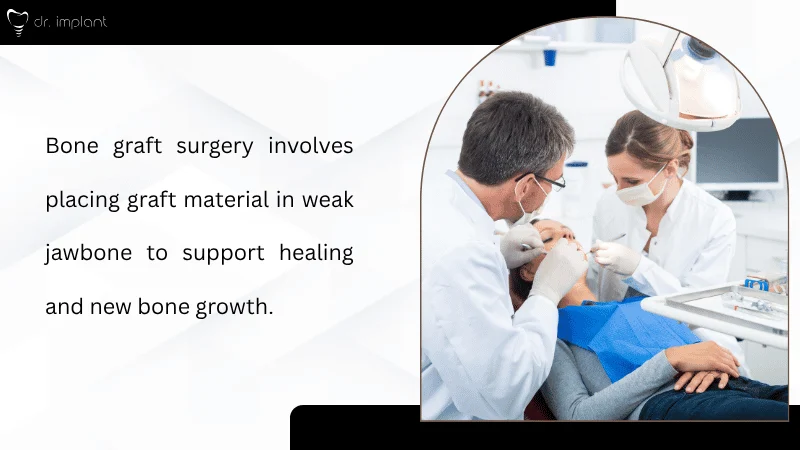
Your dentist or oral surgeon starts bone graft surgery by numbing the area with local anesthesia. You stay awake, but you should not feel pain.
They make a small incision in your gum to reach the jawbone. If you have damaged tissue, they clean the area first. Then they place graft material in the weak or thin section of bone.
The graft may come from processed donor bone, synthetic material, or your own bone. Over time, your body builds new bone around this material and strengthens the site.
Your surgeon may place a membrane over the graft to protect it. Then they close the gum with stitches so healing can begin.
Healing Timeline and Osseointegration
Bone graft healing takes time, and you cannot rush it. Initial soreness and swelling often improve within about a week.
However, the bone itself needs much longer to heal. Smaller grafts often need at least three months, while larger grafts can take nine to twelve months to fully mature.
During this period, your body replaces the graft material with natural bone. Once your dentist places the implant, a process called osseointegration begins. This means your jawbone grows tightly around the implant post.
Osseointegration usually takes several more months. Strong bonding between bone and implant is key for implant stability and long-term implant success.
Recovery After Bone Grafting
You can expect mild to moderate swelling, bruising, and tenderness for several days. These are normal parts of bone graft recovery.
You may notice tiny bone particles in your mouth during the first few days. These often look like small grains of sand and usually are not a problem.
To protect the graft site:
- Eat soft foods for several days
- Avoid heavy exercise for at least 48 hours
- Do not smoke or vape
- Keep the area clean as directed
You should also avoid strong rinsing or spitting. Following these steps lowers your risk of infection and helps the graft heal without movement.
Ensuring Long-Term Implant Stability

After your graft heals, timing matters. If you wait too long to move forward with implant surgery, the new bone can slowly shrink.
Many dentists recommend placing your implant within six to twelve months after the graft has healed. This helps preserve bone density and supports strong implant stability.
You also protect your results by keeping regular dental visits and maintaining good oral hygiene. Healthy gums and stable bone give your implant the support it needs for long-term implant success.
When you follow your provider’s plan and allow proper healing time, you give your implant the best chance to last for many years.
Frequently Asked Questions
You need clear answers about bone loss, healing time, costs, and timing. These details help you plan implant treatment with fewer surprises.
What signs show there isn’t enough jawbone to support a dental implant?
You may not notice bone loss on your own. Dentists usually find it with X-rays or 3D scans.
Common causes include long-term tooth loss, gum disease, or injury. When a tooth has been missing for years, the bone in that area often shrinks.
If your jaw looks thinner on a scan or lacks height or width, your dentist may recommend grafting.
How long should I wait after a bone graft before getting a dental implant?
You usually wait 3 to 6 months after a bone graft before placing the implant.
During this time, your natural bone grows into the graft material. This process creates a stronger base for the implant post.
Smaller grafts may heal closer to three months. Larger grafts or sinus lifts often need more time.
What’s the maximum time you can wait between a bone graft and placing an implant?
There is no strict maximum, but dentists often place the implant within 6 to 12 months after healing.
If you wait too long, your body may start reshaping the area again. Bone can shrink if it does not receive pressure or stimulation.
Your dentist checks the grafted site before moving forward. A quick scan shows if the bone still has enough thickness and height.
How long can a bone graft last if you don’t place an implant afterward?
A bone graft can remain stable for years, but it works best when it supports an implant.
Bone stays stronger when it handles pressure from chewing. Without that pressure, the area may slowly lose volume again.
What are the typical healing stages after a dental bone graft?
Healing starts with mild swelling and soreness during the first week. Most people manage this with over-the-counter pain relief.
In the next few weeks, soft tissue closes over the area. The graft begins to join with your natural bone.
Over the next few months, the bone becomes denser and more stable. Your dentist confirms healing with imaging before placing the implant.
What does dental bone grafting usually cost, including the total cost with implants?
A simple bone graft may cost a few hundred to a few thousand dollars, depending on size and material.
More complex grafts, such as sinus lifts, cost more. Dental implants themselves often range from a few thousand dollars per tooth.
Your total cost depends on the number of implants, the type of graft, imaging, and follow-up visits. Dental insurance sometimes covers part of the graft but rarely covers the full implant procedure.