Many seniors worry that their age makes dental implants too risky or that they’ve missed their chance for this tooth replacement option.
The good news is that age alone doesn’t prevent you from getting dental implants, and older adults can be excellent candidates for this procedure.
Dental implants are safe for seniors, with studies showing a 97% success rate at 10 years and only a 2% failure rate in patients over 65 years old.
People over 65 and younger groups found similar results for both age ranges. Your overall health and bone density matter more than the number of candles on your birthday cake.
Understanding what makes you a good candidate and what to expect from the process can help you make an informed decision about whether dental implants are right for you.
From the procedure itself to costs and long-term care, there are important factors to consider before moving forward with treatment.
Key Takeaways
- Seniors can safely receive dental implants with success rates comparable to younger patients
- Good overall health and adequate jawbone density are more important than age when determining candidacy
- Dental implants offer a permanent solution that can last decades with proper care and maintenance
Explore dental implants for seniors and find the best tooth replacement solutions
Understanding Dental Implants for Seniors
Dental implants work as permanent replacements for missing teeth by using a titanium post that acts as an artificial root in your jawbone.
The complete system includes multiple parts that work together to give you a stable, natural-looking tooth.
What Are Dental Implants?
Dental implants are artificial tooth roots that your dental surgeon places into your jawbone to replace missing teeth. They look like small screws made from titanium, a metal that your body accepts well and won’t reject.
When you lose a tooth, the implant takes the place of the natural root that used to be there. Your jawbone actually grows around this titanium post over time, which creates a strong foundation for your replacement tooth.
Unlike dentures that sit on top of your gums, tooth implants become a permanent part of your mouth. They don’t slip or move around when you eat or talk.
This makes them feel much more like your natural teeth than other options.
How Tooth Replacement Works
The tooth replacement process happens in stages over several months. First, your oral surgeon embeds the titanium post into your jawbone during a minor surgical procedure.
Your jawbone needs time to heal and bond with the implant. This healing period typically takes a few months. During this time, your bone grows around the post to hold it firmly in place.
After healing is complete, your dentist attaches a connector piece to the implant. Then they place a custom-made crown on top that matches the color and shape of your other teeth.
The crown is the visible part that looks and works like a real tooth.
Types of Dental Implants
There are two main types of dental implants available: endosteal and subperiosteal. Endosteal implants are the most common type and go directly into your jawbone.
Your surgeon places these standard implants into the bone where they fuse over time. Most people with healthy jawbones can get endosteal implants without any problems.
Subperiosteal implants work differently because they sit on top of your jawbone rather than inside it. You might need this type if you don’t have enough bone height in your jaw.
These implants rest under your gum tissue but above the bone, using a metal frame to stay in place.
Key Components: Abutment and Artificial Tooth Root
The artificial tooth root is the titanium post that serves as the foundation of your dental implant. This screw-shaped piece replaces the root of your natural tooth that was lost.
Between the root and your visible tooth sits the abutment, which is a small connector piece. Your dentist screws or cements the abutment onto the implant after your jaw has healed.
This piece pokes through your gum line to hold the crown.
The crown is the final piece that sits on top of the abutment. Your dentist creates this custom piece to match your bite pattern and the shade of your surrounding teeth. Together, these three components create a complete tooth replacement that functions like your natural teeth.
Book your dental implant consultation for seniors in Miami, Pembroke Pines, and Delray Beach today.
Safety and Effectiveness of Dental Implants in Seniors
Dental implants have proven to be both safe and effective for older adults when proper health assessments are completed.
Recent research shows that seniors over 75 actually experience higher success rates than younger elderly patients, with proper care and treatment planning being more important than age alone.
Are Dental Implants Safe for Seniors?
Dental implants are safe for seniors when your overall health supports the procedure. Your body’s ability to heal and fight infection matters more than the number on your birth certificate.
The safety of implant surgery depends on several health factors.
Your bone metabolism, blood circulation, and systemic health all play critical roles in determining whether you’re a good candidate. These factors can be evaluated through medical diagnostics before treatment begins.
Key safety factors include:
- Adequate bone density in your jaw
- Well-controlled chronic conditions like diabetes or heart disease
- Good oral hygiene habits
- Absence of active gum disease
- Ability to undergo minor surgery safely
Your dentist will review your medical history and current medications. Some health conditions need to be managed before dental implant surgery, but they don’t automatically disqualify you from treatment.
Success Rates and Longevity
The implant survival rates for seniors are encouraging based on recent clinical data.
Adults over 75 years old achieved a five-year survival rate of 96.8%, which was actually higher than the 92.1% rate seen in patients aged 65-75.
Your implants can last 20 years or longer with proper care. The bone around your implants remains stable even as you age, though you may experience slightly more plaque buildup and gum bleeding than younger patients.
Factors that improve how long dental implants last:
- Regular dental cleanings every 3-6 months
- Daily brushing and flossing around implants
- Avoiding smoking or tobacco use
- Managing health conditions like diabetes
- Using the right type of restoration for your needs
If you wear implant overdentures, the connection type matters. Implants connected with a bar system have 5.6 times higher survival rates than single attachments in patients over 65.
Risks and Contraindications
While implants for seniors are generally safe, certain conditions can increase your risk of complications.
Uncontrolled diabetes, active cancer treatment, or severe osteoporosis may require additional planning or treatment delays.
Conditions that may affect your eligibility:
- Unmanaged high blood pressure
- Recent heart attack or stroke
- Severe bone loss in the jaw
- Radiation therapy to the head or neck
- Certain medications that affect bone healing
- Active periodontal disease
You’re not automatically excluded if you have these conditions. Many can be managed or controlled before your oral surgeon proceeds with treatment.
Your dental surgeon will work with your medical doctor to ensure the timing is right.
Smoking significantly reduces implant success rates. If you smoke, quitting at least two weeks before surgery improves your healing ability and reduces infection risk.
Experienced Implant Dentist and Oral Surgeon Importance
Working with an experienced implant dentist makes a substantial difference in your treatment outcome. Dental professionals who regularly place implants in older adults understand the unique challenges you may face.
Your oral surgeon should evaluate your bone quality using 3D imaging before surgery. This technology allows precise planning and reduces complications during the procedure.
An experienced dental surgeon can also identify potential problems early and adjust the treatment plan accordingly.
Look for a provider who has specific training in implant dentistry. Ask how many implant procedures they perform each year and their success rates with patients in your age group.
Your implant dentist should also have a clear plan for managing any complications that might arise during or after surgery.
Contact us to learn more about dental implants for seniors.
Dental Implant Procedure and Special Considerations for Seniors
The dental implant procedure involves multiple stages over several months, with each step designed to ensure the implant integrates properly with your jawbone.
Understanding what happens during each phase helps you prepare for treatment and recovery.
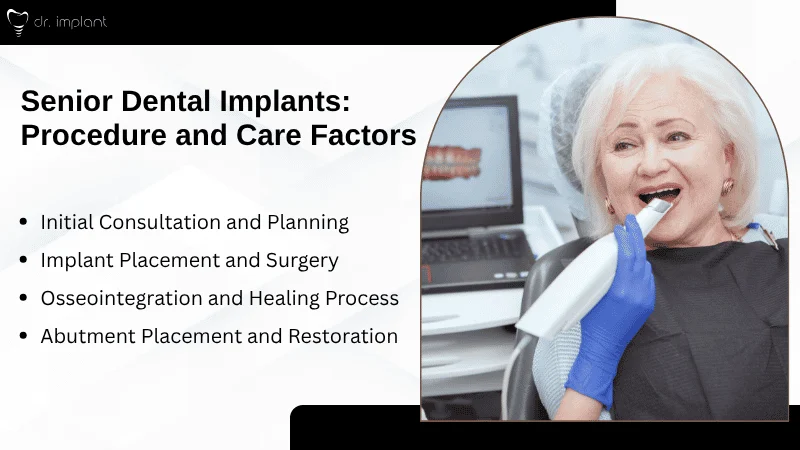
Initial Consultation and Planning
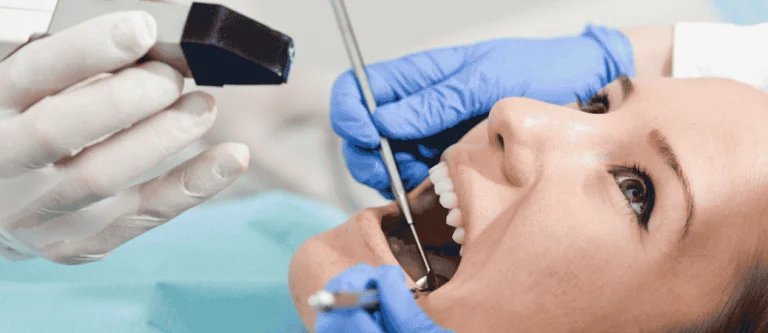
Your dentist will start with a complete examination of your mouth and jaw. This includes X-rays or CT scans to check your bone density and measure how much bone is available for implant placement.
You’ll discuss your medical history in detail. Your dentist needs to know about conditions like diabetes or heart disease and any medications you take. Some medicines can affect healing after implant surgery.
The dentist will create a treatment plan specific to your needs. This plan shows where implants will go and whether you need any prep work first. Some seniors need bone grafts if their jawbone has gotten too thin.
Your dentist will also discuss which type of restoration you’ll get. Options include single crowns, an implant-supported bridge for multiple missing teeth, or implant-supported dentures for a full arch.
Implant Placement and Surgery
During implant surgery, your dentist numbs the area with local anesthesia. You can also request sedation if you feel anxious about the procedure.
The surgeon makes a small cut in your gum to expose the bone. They drill a hole and insert the titanium post into your jawbone. This post acts as an artificial tooth root.
The entire surgery usually takes one to two hours per implant. Most seniors report minimal discomfort during the actual procedure.
After dental implant placement, you might have some swelling and minor bleeding. Your dentist will give you care instructions to follow at home. You’ll need to eat soft foods for a few days and avoid the implant site when brushing.
Osseointegration and Healing Process
Osseointegration is when your jawbone grows around and fuses with the implant. This process makes the implant stable and permanent.
The healing typically takes three to six months. Older adults sometimes need a bit more time compared to younger patients. Your bone needs to bond completely with the implant before moving to the next step.
You’ll have regular dental check-ups during this time. Your dentist monitors implant stability and watches for any signs of problems. Good oral hygiene is critical during this phase.
Don’t smoke during healing because it slows bone growth. Keep taking any prescribed antibiotics to prevent infection.
Abutment Placement and Restoration
Once osseointegration is complete, you return for abutment placement. The abutment is a connector piece that sits on top of the implant and holds your crown.
Your dentist reopens the gum to attach the abutment to the implant. This is a minor procedure that heals in about two weeks.
After your gums heal, the dentist takes impressions of your mouth. A dental lab uses these to create your custom crown, bridge, or denture. The final restoration is designed to match your other teeth in color and shape.
Your dentist attaches the crown to the abutment at your last appointment. They’ll check your bite and make adjustments so everything fits comfortably. You can then use your new tooth just like a natural one.
Bone Health, Grafting, and Tooth Replacement Options
Jawbone density plays a major role in whether dental implants will work for you. When bone loss is present, procedures like bone grafts can prepare your jaw for successful implant placement.
Jawbone Density and Implant Stability
Your jawbone needs enough density and height to hold implants securely. The implant post fuses with your bone through a process that creates a stable foundation for your replacement tooth.
When you’ve been missing teeth for a long time, your jawbone naturally begins to shrink.
This bone loss happens because your jaw no longer receives the stimulation it got from your natural tooth roots. Seniors who have worn dentures for years often experience significant jawbone deterioration.
Your dentist will take X-rays or CT scans to measure your current bone density.
Good bone density means:
- Better implant stability
- Faster healing times
- Higher success rates
- Fewer complications
If your bone density is low, you may still qualify for implants with additional procedures.
Bone Graft and Sinus Lift Procedures
A bone graft adds material to your jaw to increase its volume and strength. Your dentist uses bone from another part of your body, a donor, or synthetic material.
This procedure gives your jaw the foundation it needs to support an implant.
The healing process after a bone graft typically takes three to six months. During this time, the graft material integrates with your existing bone. A sinus lift is a specific type of bone graft for your upper jaw.
Your sinuses sit just above your upper back teeth. When bone loss occurs in this area, your sinus cavity can be too close to place an implant safely.
The sinus lift procedure raises the sinus membrane and adds bone beneath it.
Many seniors successfully receive dental implants after bone grafting procedures that restore adequate jawbone structure.
Implant Solutions for Severe Bone Loss
You have options even with advanced bone loss. The All-on-4 technique uses just four implants to support a full arch of replacement teeth.
These implants are placed at specific angles to maximize contact with your existing bone.
This approach often avoids the need for bone grafts entirely. Implant-supported dentures attach to several implants placed in your jaw, providing much better stability than traditional dentures.
They snap into place and can be removed for cleaning.
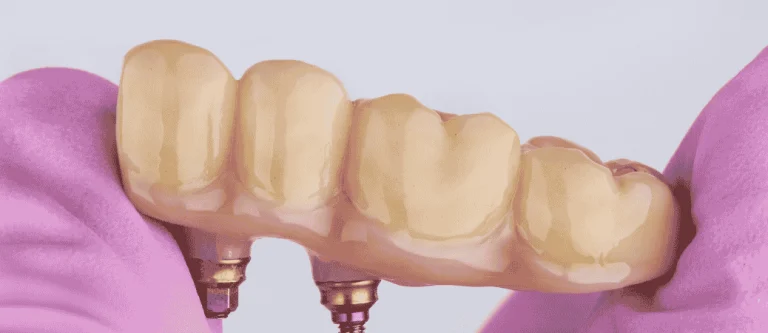
An implant-supported bridge connects multiple replacement teeth to two or more implants. This works well when you’re missing several teeth in a row.
These solutions require less bone density than individual implants for each missing tooth.
Alternatives: Tooth Replacement Options
Traditional dentures remain a common choice for seniors. They’re removable appliances that replace multiple missing teeth without surgery.
Dentures cost significantly less than implants but need replacement every five to seven years.
Partial dentures fill gaps when you still have some natural teeth remaining. Dental bridges attach replacement teeth to your existing teeth on either side of the gap.
Your dentist must file down the neighboring teeth to place crowns that hold the bridge.
Comparison of main options:
| Option | Surgery Required | Lifespan | Bone Preservation |
| Dental implants | Yes | 10+ years | Yes |
| Dentures | No | 5-7 years | No |
| Bridges | No | 5-15 years | No |
Dental implants offer better long-term outcomes compared to other tooth replacement methods, though they require higher upfront costs.
Your specific health conditions, budget, and preferences will guide which option works best for you.
Benefits and Long-Term Care of Dental Implants for Seniors
Dental implants offer seniors lasting advantages that go beyond just replacing missing teeth, and proper care helps these benefits continue for decades.
Understanding what makes implants valuable and how to maintain them ensures the best possible outcomes.
Benefits of Dental Implants
Dental implants provide multiple advantages that make them worth considering. They help you chew food properly, which supports better nutrition and digestion.
Unlike dentures that can slip, implants stay firmly in place while you eat and speak.
Dental implants help prevent jawbone deterioration, which naturally occurs after tooth loss.
This preservation of bone helps maintain your facial structure and prevents the sunken appearance that sometimes develops with missing teeth.
Key benefits include:
- Stabilizing neighboring teeth and preventing them from shifting
- Supporting continued mouth health
- Improving facial appearance
- Restoring confidence in social situations
- Functioning like natural teeth
Implants also offer impressive durability. They have a success rate of 97% at 10 years and 75% at 20 years, making them a more permanent solution than dentures.
Improving Quality of Life
Dental implants provide a reliable way to eat comfortably and speak clearly. You won’t need to worry about your teeth slipping during conversations or meals with family and friends.
Fixed restorations simplify your daily routine. You brush and floss them just like natural teeth, without the hassle of removing dentures for cleaning. This makes oral hygiene easier to manage as you age.
Eating becomes more enjoyable because implants let you bite into foods that might be difficult with dentures. You can enjoy crunchy vegetables, fresh fruits, and other nutritious foods without concern.
This improved ability to eat a varied diet supports your overall health and well-being.
Regular Dental Check-Ups

Maintaining your implants requires consistent dental visits. You should see your dentist at least twice a year for professional cleanings and examinations.
These appointments let your dental team check that your implants remain stable and healthy.
During check-ups, your dentist will examine the tissue around your implants for signs of inflammation or infection.
They’ll also verify that all mechanical components, like screws and abutments, remain tight and functional.
Professional cleanings remove buildup that regular brushing might miss. Your dental hygienist uses special tools designed for implants to avoid damaging the surfaces.
You should promptly report any looseness or pain to your provider between scheduled visits. Early detection of problems leads to simpler solutions.
Managing Complications and Peri-Implantitis
While complications are rare, knowing how to prevent and address them protects your investment. Peri-implantitis is an infection that affects the tissue and bone around implants.
It happens when bacteria accumulate around the implant, similar to gum disease around natural teeth.
Prevention steps:
- Brush at least twice daily with a soft-bristled toothbrush
- Floss daily around implants using specialized floss or interdental brushes
- Avoid smoking, which slows healing and increases infection risk
- Control diabetes carefully, as high blood sugar increases infection risk
Watch for warning signs like swelling, redness, bleeding gums, or discomfort around the implant. These symptoms need immediate attention from your dentist.
If peri-implantitis develops, your dentist may prescribe antibiotics or perform a deep cleaning around the affected implant.
Catching problems early makes treatment more effective and helps preserve your implant for the long term.
Cost and Insurance Considerations for Seniors
Dental implant costs vary widely based on multiple factors, and most seniors find that standard Medicare doesn’t cover these procedures.
Understanding pricing structures and available payment options helps you plan for this investment in your oral health.
Factors Affecting Dental Implant Cost
A single dental implant typically costs between $3,000 and $6,000, but your final price depends on several variables. Your location plays a big role, with urban areas generally charging more than rural practices.
The complexity of your case affects pricing too. If you need bone grafting before implant placement, expect to add $500 to $3,000 to your bill.
Some seniors require additional medical clearances due to health conditions, which can cost $200 to $500.
Full-mouth solutions offer different price points. All-on-4 implants range from $15,000 to $30,000 per arch, while implant-supported dentures cost $6,000 to $20,000 per arch.
Mini dental implants present a more affordable option at $500 to $1,500 per implant, making them attractive if you’re on a fixed income.
Insurance and Payment Options
Original Medicare doesn’t cover dental implants in most situations. However, some Medicare Advantage plans include limited dental benefits that might help with costs.
Seniors can reduce dental implant expenses through Medicare Advantage plans, Medicaid if dual-eligible, and FED VIP high option coverage. You should check whether your plan offers any dental coverage before scheduling treatment.
Many dental practices offer senior-specific financing options. Extended payment plans with longer terms mean lower monthly payments that fit better with fixed incomes.
AARP members may receive 5-20% discounts at participating dental offices.
Dental schools provide another cost-saving avenue. Students perform procedures under expert supervision at significantly reduced rates.
Weighing Long-Term Value
When you compare dental implant costs to other tooth replacement options, consider the lifespan of each solution. Traditional dentures need replacement every 5-7 years, while implants can last 20 years or longer with proper care.
Your ability to eat nutritious foods improves with implants, potentially reducing other health costs. Better nutrition means fewer complications from conditions like diabetes or heart disease.
The stability of implants also prevents the bone loss that occurs with dentures, which can lead to additional dental expenses down the road.
Calculate the total cost over your expected lifespan rather than just the initial price. While dentures seem cheaper upfront, you’ll pay for adjustments, repairs, adhesives, and replacements over time.
Frequently Asked Questions
Many seniors have questions about dental implants, from age limits to costs and health concerns. Understanding these common topics can help you make an informed decision about tooth replacement.
Are dental implants a good option for someone in their 70s or 80s?
Dental implants can work well for people in their 70s and 80s. Your overall health matters more than your age when it comes to getting implants.
A 2019 study compared 400 patients over 65 years old with a younger group. The research found only a 2% failure rate across both age groups over 10 years.
Even participants over 80 years old had good results, though they experienced slightly more complications.
Dental implants have a high success rate of 97% at 10 years and 75% at 20 years. Your dentist will evaluate your specific health situation to determine if implants are right for you.
Can a person in their 90s still get dental implants safely?
You can get dental implants in your 90s if you’re in good overall health. Age alone shouldn’t stop you from considering this option.
Your dentist will look at factors like bone density, healing ability, and any medical conditions you have. The evaluation process is the same regardless of whether you’re 70 or 90.
Age alone should never be a reason to dismiss dental implants. What matters most is having enough jawbone to support the implant and being healthy enough to heal after surgery.
What health conditions might make dental implants risky for older adults?
Certain health conditions can increase your risk of complications with dental implants. Diabetes is one of the main concerns because it can lead to infections after implant placement.
Smoking slows down healing and can cause implant failure. If you smoke, your dentist may recommend quitting before getting implants.
Other conditions that might affect your implants include gum disease, low bone density, and problems maintaining oral hygiene. Your dentist will review your medical history to identify any risk factors.
How much do dental implants typically cost for seniors, and what affects the price?
A single tooth implant could cost as much as $6,000 without insurance coverage. A full mouth of implants will be much more expensive.
Several factors affect the total price you’ll pay. These include how many implants you need, which type of implant works best for your situation, and where in your jaw the implant will be placed.
You might also need preparatory procedures that add to the cost. For example, bone grafting or treatment for gum disease can increase your total expenses.
Does Medicare pay for dental implants, or are there any coverage options available?
Medicare typically doesn’t cover dental implants because it considers them a dental procedure. You’ll need to check if your specific plan offers any dental benefits.
If you have private health insurance, you should review your plan benefits carefully. Some plans may cover part of the cost or offer coinsurance for dental implants.
The coverage you receive can vary widely between insurance plans. Contact your insurance provider directly to understand what they’ll pay for and what you’ll owe out of pocket.
What are the best implant options for seniors with bone loss?
You have options even if you’ve experienced bone loss in your jaw. The two main types of dental implants are endosteal and subperiosteal.
Endosteal implants go directly into your jawbone. Subperiosteal implants are placed on top of the jaw and work better for people with lower jawbone height.
If you have significant bone loss, you might need bone grafting before getting implants. This procedure builds up your jawbone so it can support the implant properly.
Your dentist will examine your jawbone and recommend the best approach for your situation.