If you need to replace a missing tooth, choosing between titanium and zirconia dental implants can feel overwhelming. Both materials work well and last for many years, but they have different strengths.
Titanium implants have been used since 1965 and offer greater strength and flexibility, while zirconia implants are newer, metal-free, and look more natural.
Titanium implants have a 10-year survival rate of 98.8%, compared to 95% for zirconia over seven years. Titanium is stronger and more resistant to fractures, which makes it better for full mouth replacements.
Zirconia appeals to people who want a metal-free option or have metal allergies.
The right choice depends on your specific needs, budget, and where the implant will go in your mouth. Understanding the differences between these materials helps you make a confident decision with your dentist.
Key Takeaways
- Titanium implants are stronger and have higher long-term success rates than zirconia implants
- Zirconia bridges are metal-free and offer better aesthetics with no risk of allergic reactions
- Your best choice depends on whether you need single or multiple implants and if you have metal sensitivities
Get personalized implant treatment across Miami, Pembroke Pines, and Delray Beach, FL today.
Titanium vs. Zirconia Implants: Key Differences
The materials used in dental implants affect how they’re built, how they bond with your jawbone, and how long they last in your mouth. Titanium and zirconia work in different ways to replace missing teeth.
Overview of Implant Materials
Titanium implants are made from metal that has been used in dentistry since the 1960s. Most titanium dental implants use either pure titanium or titanium alloys that contain small amounts of other metals like aluminum and vanadium for extra strength.
Zirconia implants consist of zirconium dioxide, a white ceramic material. This makes them a metal-free option for people who want to avoid metal in their bodies. The ceramic composition gives zirconia implants their natural tooth color.
Key material differences:
- Titanium is gray metal while zirconia is white ceramic
- Titanium alloys offer proven durability over decades
- Zirconia provides a metal-free alternative
- Both materials are biocompatible with human tissue
Design and Construction Variations
Titanium implants typically come in two-piece designs. The implant post goes into your jawbone, and your dentist attaches a separate abutment and crown on top. This design lets your dentist adjust angles and customize the final result.
Zirconia implants usually come as one solid piece. The post and abutment are connected, which means fewer parts but less flexibility during placement. Two-piece zirconia options exist but are less common than the one-piece design.
The construction difference affects how your dentist places the implant. Two-piece titanium designs allow for adjustments during the restoration process. One-piece zirconia requires more precise planning before surgery.
Mechanism of Osseointegration
Osseointegration is how your jawbone grows around and fuses with the implant post. Titanium forms a thin oxide layer on its surface that helps bone cells attach directly to the metal.
Your bone cells grow onto the titanium and create a strong bond in three to six months.
Zirconia also integrates with bone, but the process works differently. The ceramic surface encourages bone growth through mechanical bonding rather than direct fusion.
Studies show both materials achieve good stability, though titanium has more long-term research data.
Both dental implant materials require adequate bone density for successful osseointegration. Your healing time depends on your bone quality and overall health rather than just the material choice.
Visit our specialists in Florida for expert guidance on titanium vs zirconia implants.
Strength, Durability, and Longevity
Both materials offer reliable performance, but they differ in how they handle force and wear over time. Titanium provides flexibility under pressure, while zirconia delivers hardness and a natural appearance.

Mechanical Performance Comparison
Titanium dental implants have higher tensile strength than zirconia, which means they can bend slightly without breaking. This flexibility helps them absorb the forces from chewing and biting.
Titanium alloys used in implants can withstand about 900 MPa of stress.
Zirconia dental implants are harder and more rigid. They resist scratching and wear better than titanium. However, this hardness also makes them less flexible, which can be a concern in areas where your jaw experiences heavy force.
Key mechanical differences:
- Titanium: Flexible, absorbs impact, tensile strength around 900 MPa
- Zirconia: Hard, scratch-resistant, more brittle under extreme stress
Your bone density can affect which material works better for you. If you have lower bone density, titanium’s flexibility may help distribute forces more evenly.
Long-Term Success and Survival Rates
A recent study found that titanium implants had a 96% survival rate after 5 years, compared to 94% for zirconia implants. Both materials show strong long-term performance.
Titanium implants can last 20 years or more with proper care. They have decades of clinical data supporting their reliability. Zirconia is newer to dentistry, so long-term data beyond 10 years is still limited.
Bone integration happens successfully with both materials. Titanium naturally bonds with bone through a process called osseointegration. Zirconia also integrates well and may cause less inflammation around the gum tissue.
Resistance to Fracture and Corrosion
Titanium offers excellent corrosion resistance in your mouth. It doesn’t rust or degrade when exposed to saliva, food, and bacteria. The metal surface naturally forms a protective layer that prevents breakdown.
Zirconia cannot corrode because it’s a ceramic material, not a metal. This complete resistance to corrosion makes it ideal if you’re concerned about metal sensitivity.
Fracture risk differs between the two. Titanium’s flexibility means it rarely breaks, even under extreme force. Zirconia can fracture if subjected to very high impact forces, though modern zirconia formulations have improved significantly in this area.
Book your consultation today to choose between titanium and zirconia dental implants.
Biocompatibility and Gum Health
Both materials interact with your gum tissue differently, affecting everything from inflammation levels to long-term tissue health.
Your body’s response to the implant material can influence healing time, the risk of complications, and even the appearance of your gums.
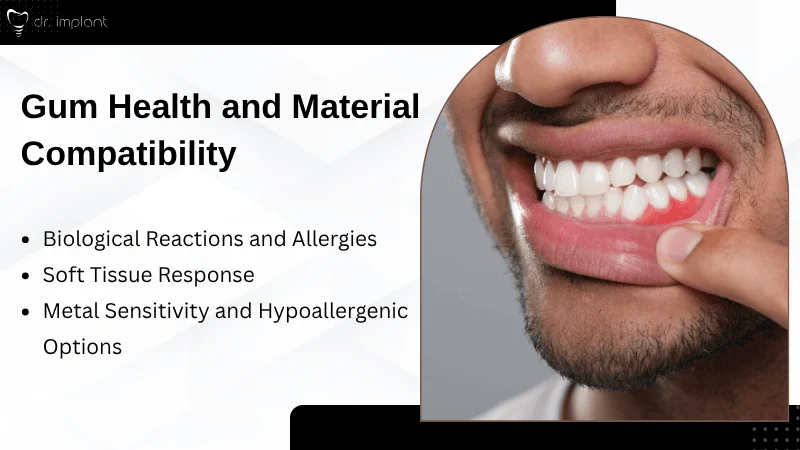
Biological Reactions and Allergies
Your immune system responds to titanium and zirconia in distinct ways. When you receive a titanium implant, your body forms a protective oxide layer on the surface.
This layer generally works well, but it can break down when exposed to acidic conditions or fluoride in your mouth.
Some people develop sensitivities to titanium over time. While true titanium allergies are rare, metal sensitivity can trigger inflammatory responses that affect your gum health. If you have a history of metal allergies or reactions to jewelry, you might be at higher risk.
Zirconia offers a different profile. The material is bio-inert, meaning it doesn’t release ions into your surrounding tissue. This stability reduces the risk of triggering adverse tissue responses, which is particularly important if you’re concerned about long-term biocompatibility.
Soft Tissue Response
Your gum tissue responds more favorably to zirconia in several measurable ways. Studies show that zirconia has lower bacterial adhesion compared to titanium, which helps reduce plaque buildup around the implant site.
The way your gums attach to the implant matters for preventing peri-implantitis.
Zirconia promotes better blood flow and encourages perpendicular collagen fiber formation, similar to what grows around your natural teeth. This creates a stronger seal between your gum tissue and the implant.
Titanium can cause gum discoloration in some cases. If you have a thin gingival biotype, the gray metal may show through your gums, creating a shadowy appearance. Zirconia’s white color blends naturally with your tissue, avoiding this aesthetic concern entirely.
Metal Sensitivity and Hypoallergenic Options
If you’re among the growing number of people seeking metal-free dental solutions, zirconia provides a hypoallergenic alternative that eliminates concerns about metal ion release.
Nearly 80% of patients prefer zirconia when given the choice, citing reduced allergenicity as a key factor.
Your genetic makeup can influence how you respond to titanium. Some people have predispositions that make them more likely to experience heightened inflammatory reactions to titanium particles.
This can complicate healing after bone grafting procedures or increase your risk of developing peri-implantitis.
Zirconia’s minimal inflammatory response makes it especially suitable if you have autoimmune conditions or heightened sensitivities. The material won’t corrode or release particles, even in challenging oral environments with varying pH levels.
Aesthetics and Appearance
Zirconia implants offer a white, tooth-colored base that blends naturally with your smile, while titanium implants have a gray metallic appearance that can sometimes show through thin gum tissue or at the gum line.

Natural Look and Color
Zirconia implants are made from white ceramic material that closely matches the color of natural teeth. This makes them blend seamlessly with your smile right from the implant post itself.
Titanium implants have a gray metallic color. In most cases, this isn’t visible because the dental crown covers the top portion. However, if you have thin gums or experience gum recession over time, the gray titanium can show through.
The white color of zirconia vs titanium implants makes a noticeable difference in aesthetic areas. Zirconia eliminates the risk of a dark shadow appearing at the gum line. This is especially important if your gums are naturally thin or translucent.
Impact on Gum Line and Smile
Gum discoloration is a concern with titanium implants in some patients. Tiny metal particles can sometimes cause the gum tissue to take on a grayish tint. This doesn’t happen with zirconia because it’s a ceramic material.
Your smile’s appearance depends partly on how your gums frame your teeth. Zirconia’s smooth surface may promote healthier gum tissue attachment. The white color also ensures that even if your gums pull back slightly, no dark metal shows through.
For tooth replacement in visible areas, zirconia maintains a natural appearance regardless of lighting conditions. Titanium can work well too, but it requires careful placement and adequate gum thickness to prevent any metal from showing.
Comparison in Front vs. Back Teeth
Front teeth require the highest level of aesthetics because they’re visible when you smile, talk, and laugh.
Zirconia implants excel in appearance for front teeth since the white ceramic blends with surrounding teeth and eliminates any chance of gray showing through.
Back teeth, like molars, aren’t as visible during normal activities. Titanium implants work perfectly well in these areas because appearance is less critical. The dental crown on top provides the tooth color regardless of the implant material underneath.
If you’re replacing a front tooth, zirconia offers superior aesthetics. For back teeth where strength under heavy chewing forces matters more, titanium remains the standard choice for most patients.
Cost, Accessibility, and Practical Considerations
Zirconia implants typically cost 20-30% more than titanium options, and availability varies by location. Understanding these practical differences helps you budget properly and find qualified providers for your specific implant material choice.
Cost Comparison
Titanium implants usually range from $1,500-$2,500 per implant. A single zirconia implant may cost $2,000-$3,000.
The zirconia implants cost reflects newer technology and more complex manufacturing processes. Your total expense depends on several factors beyond just the implant material itself.
Additional procedures like bone grafts or a sinus lift add to your final bill. These preparatory treatments cost similar amounts regardless of which implant material you choose.
Insurance coverage works the same for both types, with most dental plans covering part of the cost regardless of the material.
Prosthetic crowns need replacement every 10-15 years for both materials. This means your long-term maintenance costs stay similar even though zirconia has higher upfront costs.
Availability and Dental Tourism
Titanium implants are more widely available because dentists have used them for over 50 years. You can find experienced titanium implant providers in most dental practices.
Zirconia implants require dentists with specific training and equipment. Fewer practitioners offer zirconia options, especially in smaller cities or rural areas.
Some patients consider dental tourism to reduce costs. Prices vary significantly by location and dentist experience.
Research any provider thoroughly before traveling for implant placement, as follow-up care becomes more difficult when your dentist is far from home.
Treatment Planning and Placement
Your dentist evaluates your bone quality, jaw structure, and tooth location during treatment planning. Implant placement techniques differ slightly between materials.
Titanium’s two-piece design gives your dentist more flexibility to adjust angles during placement. This proves helpful in challenging cases or when working around existing teeth.
Zirconia’s one-piece design limits adjustment options but can make surgery simpler in straightforward cases. Your dentist might recommend titanium if you need complex angle corrections or have limited bone density.
The healing timeline stays similar for both materials, typically taking three to six months for complete osseointegration.
How to Decide: Which Dental Implant Material Is Right for You?
Choosing between titanium and zirconia for your dental implant depends on your health history, aesthetic goals, and how each material fits your daily life.
Your dentist will help you weigh factors like bone density, metal sensitivities, and whether you need a one-piece or two-piece implant.
Personal Health Factors
Your body’s unique characteristics play a major role in determining whether titanium or zirconia is the right choice for you. If you have a history of metal allergies, zirconia offers a metal-free option that eliminates the risk of allergic reactions to titanium.
Some people with autoimmune conditions like rheumatoid arthritis, Crohn’s disease, or diabetes may experience inflammation from metal ions released by titanium implants.
Your bone density matters too. Titanium implants have a longer track record of successful integration with bone tissue. If you have thinner gum tissue in the front of your mouth, a zirconia implant might be better for aesthetics since titanium can show through as a dark line.
The type of implant you need also depends on your jaw structure. If you require a two-piece implant with an angled abutment to correct alignment issues, titanium is typically your only option since zirconia usually comes in one-piece designs.
Lifestyle and Maintenance
Both materials require similar care routines, but your lifestyle habits affect their long-term success. If you smoke, you should know that smoking reduces the success rate of any dental implant.
Good oral hygiene is essential regardless of which material you choose.
Zirconia implants attract less bacteria than titanium, which may benefit you if you struggle with gum disease. However, zirconia can develop tiny cracks over time and cannot be adjusted after placement. Any grinding on the surface weakens its strength.
Titanium implants offer more flexibility if you need adjustments later. They resist corrosion better in the long run. With proper care, 95% of implants last at least five years, though most last much longer.
Consultation and Final Selection
Your dentist will evaluate your specific situation through X-rays and a physical examination. Be honest about your medical history, including any metal allergies or autoimmune conditions. Ask about the success rates your dentist has experienced with each material.
Cost is another factor to discuss with your insurance provider. The comparison between titanium vs zirconia implants includes price differences that vary by location and provider.
Titanium generally costs less and has decades of research supporting its reliability.
Your aesthetic priorities matter too. If you’re replacing a front tooth where appearance is critical, zirconia’s natural white color might be your preference.
For back teeth where strength matters more than looks, titanium’s proven durability could be the better pick. Your dentist can show you examples and explain what results to expect based on your mouth’s specific anatomy.
Frequently Asked Questions
Both titanium and zirconia implants offer solid options for replacing missing teeth, but they each come with different strengths and trade-offs. Cost differences, safety profiles, and long-term performance vary between the two materials.
What are the pros and cons of titanium and zirconia for dental implants?
Titanium implants are known for their exceptional strength and flexibility. They can handle heavy bite forces well, making them ideal for back teeth.
Titanium also has decades of research backing its use, so dentists have a lot of data on how it performs over time.
The main downside is that titanium is a metal. Its gray color can sometimes show through your gums, especially if you have thin tissue. This can affect the appearance of your smile in visible areas.
Zirconia implants are ceramic and completely metal-free. They’re white, so they blend naturally with your teeth and won’t cause gray shadows at the gum line. Zirconia is also hypoallergenic, which makes it a better choice if you have metal sensitivities.
However, zirconia is slightly less flexible than titanium. It often comes in a one-piece design, which limits adjustments during placement and requires more precise planning.
How do the costs of zirconia implants compare to titanium implants?
Zirconia implants typically cost more than titanium implants. The ceramic material itself is more expensive to produce, and the placement process requires more precision. The one-piece design means your dentist needs to get everything right the first time.
Titanium implants are generally more affordable. They’ve been used longer, so the manufacturing process is well-established and efficient. The two-piece design also allows for more flexibility during treatment, which can reduce complexity and cost.
Your final cost will depend on factors like your location, the complexity of your case, and whether you need additional procedures like bone grafting. Insurance coverage may also affect what you pay out of pocket.
Are there any long-term health considerations with titanium dental implants?
Titanium implants have been used for decades with excellent safety records. Most people tolerate titanium very well since it’s biocompatible with human tissue. The material fuses directly with your jawbone through a process called osseointegration.
True titanium allergies are extremely rare. Most reactions to dental implants are caused by other factors like infection or improper placement, not the titanium itself.
Some patients prefer to avoid metal in their bodies for personal or philosophical reasons. If this describes you, zirconia might align better with your preferences even though titanium poses minimal health risks for most people.
Can you discuss the durability of zirconia implants versus titanium ones?
Titanium implants have the longest track record for durability. Clinical studies show they can last 20 years or more with proper care. The metal’s flexibility helps it absorb and distribute bite forces without breaking.
Zirconia implants are strong and have shown good success rates in recent years. However, because zirconia is a ceramic material, it may be more susceptible to breaking under heavy pressure compared to titanium. This makes placement location important.
For molars and areas with high chewing forces, titanium often performs better over time. For front teeth where forces are lighter, zirconia’s durability is usually sufficient.
Your oral hygiene habits and regular dental checkups affect longevity regardless of which material you choose.
What are common complications that can arise with zirconia dental implants?
Zirconia implants can fracture under excessive force more easily than titanium. The ceramic material is hard but less flexible, so it doesn’t absorb impact as well. This risk is higher in back teeth where you do most of your heavy chewing.
The one-piece design can create challenges during placement. If the angle or position needs adjustment, your dentist has fewer options to correct it compared to titanium’s two-piece system. This means planning must be extremely precise.
Like any implant, zirconia can fail if infection develops or if it doesn’t integrate properly with your bone. Poor oral hygiene, smoking, and certain medical conditions increase these risks. Following your dentist’s aftercare instructions helps prevent complications.
Which dental implant material is generally considered to be the safest?
Both titanium and zirconia are considered safe materials for dental implants. Titanium has the longest history of use and the most extensive research supporting its safety. Millions of successful titanium implants have been placed worldwide.
Zirconia offers excellent biocompatibility and eliminates concerns about metal exposure. For patients with documented metal allergies or sensitivities, zirconia provides peace of mind. The material is inert and doesn’t corrode in your mouth.
Safety also depends on proper placement by a skilled dentist. The best material for you is the one that matches your oral anatomy, health status, and treatment goals.
Your dentist can evaluate your specific situation and recommend the safest option based on your individual needs.