If you wear dentures, you know the daily struggles. They slip when you eat, click when you talk, and often need adhesive just to stay in place.
Implant-supported dentures attach to dental implants in your jawbone, providing a stable alternative that eliminates slipping and reduces many of the frustrations that come with traditional dentures.
The good news is that when you replace loose dentures with implants, you can improve both comfort and function.
Implant-supported dentures work differently than regular dentures because they anchor to posts placed in your jaw. This means no more worrying about your teeth moving at the wrong moment.
Understanding whether you’re a good candidate for this option depends on several factors, including your bone density, overall health, and budget.
This guide will help you figure out if implant-supported dentures are right for you and what to expect from the process.
Key Takeaways
- Implant-supported dentures attach to your jawbone for better stability than traditional dentures that rest on your gums
- Good candidates have adequate bone density and overall health that allows for minor oral surgery and proper healing
- The procedure involves placing implant posts, a healing period of several months, and then attaching the final denture
Recognizing the Limitations of Traditional Dentures
Traditional dentures can restore your smile after tooth loss, but they come with daily challenges that affect eating, speaking, and comfort.
Jawbone changes over time make these issues worse, and even the best adhesives only provide temporary fixes.
Common Issues Faced by Denture Wearers
If you wear removable dentures, you probably know the frustration of dealing with slipping and movement. Your dentures might shift when you’re eating certain foods or speaking in social situations.
This can make you feel self-conscious during meals or conversations.
Many denture wearers struggle with sore spots where the denture rubs against gum tissue. These pressure points can make wearing your dentures painful, especially during the first few hours of the day.
You might also notice clicking sounds when you talk or laugh.
Chewing tough or sticky foods becomes difficult with traditional dentures. Foods like steak, raw vegetables, and crusty bread may be off-limits because your dentures don’t provide enough bite force.
Some people report they can only use about 25% of the chewing power they had with natural teeth.
Speech changes are another common problem. You might slur certain sounds or develop a lisp, particularly with “s” and “th” sounds.
Effects of Jawbone Loss on Denture Fit
When you lose teeth, your jawbone begins to shrink because it no longer receives stimulation from tooth roots. This bone loss happens gradually but continuously, changing the shape of your jaw over time.
As your jawbone changes, your dentures stop fitting properly. What once felt secure becomes loose and uncomfortable.
The ridge that supports your dentures gets smaller and flatter, leaving less surface area for your dentures to rest on.
This process means you’ll need frequent adjustments and relines to maintain a proper fit. Some people need new dentures every five to seven years as their jaw structure continues to change.
The bone loss also affects your facial appearance, making your face look sunken or aged.
The Role of Denture Adhesive and Maintenance
Denture adhesive becomes a daily necessity for many people trying to keep their dentures stable. You apply paste or strips each morning, hoping they’ll hold throughout the day.
The adhesive can be messy and requires careful application to work effectively.
Even with adhesive, you still need to be careful about what you eat. The paste doesn’t prevent all movement, and you might still experience shifting during meals.
You also need to clean off the old adhesive before applying new product, which adds extra steps to your oral health routine.
Your removable dentures require daily cleaning and proper storage. You must remove them at night to give your gums a rest and soak them in cleaning solution.
This routine takes time and can feel inconvenient, especially when traveling or staying away from home.
Comparing Implant-Supported Dentures and Dentures
Implant-supported dentures attach to posts placed in your jawbone, while traditional dentures rest on your gums. This difference affects how secure they feel, how well you can eat, and how long they last.
How Implant-Supported Dentures Work
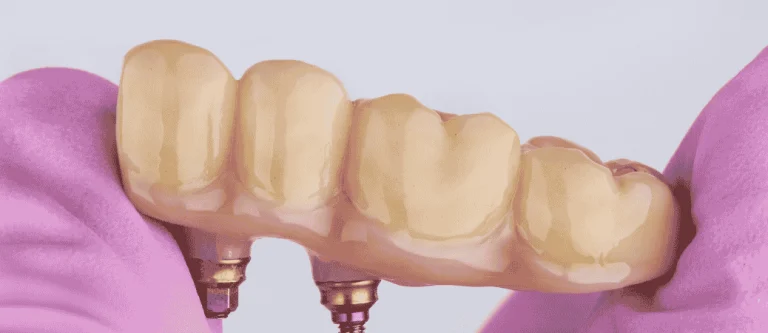
Implant dentures connect to titanium posts that your dentist surgically places into your jawbone. These posts act as artificial tooth roots.
Over several months, your bone grows around the implants through a process called osseointegration.
Once the implants bond with your jawbone, your dentist attaches the denture to these posts. This creates a stable tooth replacement that doesn’t rely on suction or adhesive.
The implants stimulate your jawbone just like natural teeth do. This helps prevent the bone loss that often happens with traditional removable dentures. Your facial structure stays better supported over time.
Most people need between two and six implants per arch. The exact number depends on your bone density and which type of implant-retained dentures you choose.
Types: Snap-On, Fixed, and Removable Options
Snap-on dentures use ball-shaped or bar-shaped attachments that click onto your implants. You can remove them yourself for cleaning.
These typically require two to five implants per arch and cost between $7,000 and $20,000.
Fixed dentures screw directly onto your implants and stay in place permanently. Only your dentist can remove them. Fixed options like All-on-4 use four implants per arch and cost $12,000 to $25,000.
Bar-retained dentures connect to a metal bar that runs along your jaw and attaches to multiple implants. Your denture clips onto this bar.
You can take them out for oral hygiene but they offer more stability than traditional dentures.
Benefits in Comfort, Function, and Appearance
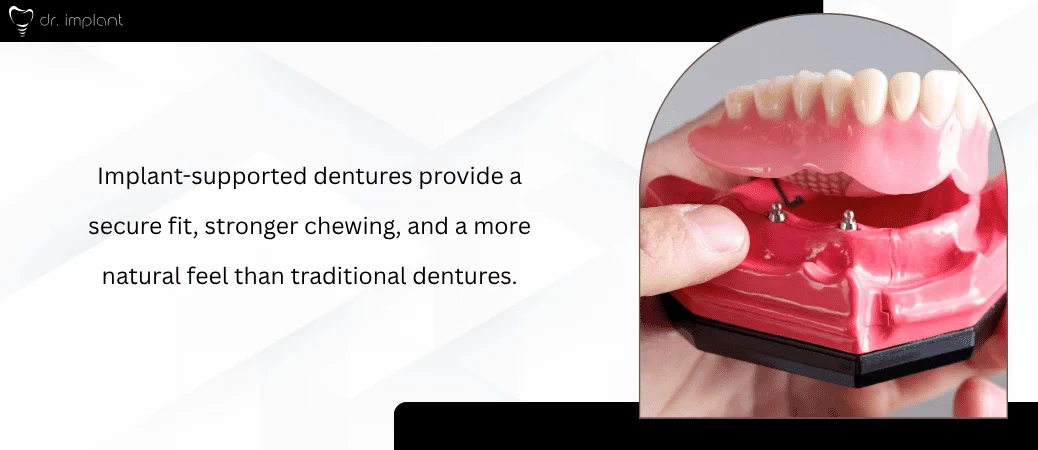
Implant-supported dentures provide better grip and lower gum pressure than traditional options. They don’t slip when you talk or eat.
Your bite force improves significantly. You can eat tougher foods like steak and raw vegetables without worry. Traditional dentures typically allow only about 25% of normal biting strength.
There’s no need for messy adhesives. Your dentures stay securely in place throughout the day.
These dentures look more natural because they don’t require the bulky base that traditional dentures need for suction. They feel more like your original teeth.
Cleaning is simpler too. Fixed versions require brushing and flossing around the implants. Removable snap-on options come out for easy cleaning at night.
Evaluating Candidacy for Implant-Supported Dentures
Your jawbone health and overall dental condition determine whether you’re ready for implant-supported dentures. Most people qualify for treatment, but some need preparatory procedures to strengthen their jawbone first.
Assessing Bone Density and Jawbone Health
Your dentist will evaluate your bone density using 3D imaging before recommending implant-supported dentures.
Years of wearing traditional dentures or living with missing teeth often leads to jawbone loss that makes implant placement more difficult.
Key factors your dentist will examine:
- Bone height and width at potential implant sites
- Bone quality and density throughout your jaw
- Location of nerves and sinuses that could affect implant placement
- Overall jawbone health and any signs of infection or disease
If you’ve worn dentures for many years, you may have less bone density than someone who recently lost their teeth.
This doesn’t automatically disqualify you. It just means you might need additional procedures before getting implants.
Your prosthodontist can often work with less-than-ideal bone density by choosing specific implant types or placement angles.
Mini dental implants require less bone than standard implants, making them an option when bone loss is moderate.
Understanding Bone Grafting and Sinus Lift Procedures
A bone graft adds material to your jaw to create enough support for dental implants. Your dentist may recommend bone grafting if there’s not enough bone to hold the implant posts securely.
Common bone grafting materials include:
- Your own bone from another area
- Donated human bone tissue
- Animal-derived bone material
- Synthetic bone substitutes
The bone grafting process typically adds three to six months to your treatment timeline. The graft needs time to integrate with your existing bone before implants can be placed.
A sinus lift becomes necessary when you need upper back implants but don’t have enough bone height. The procedure lifts the sinus membrane and adds bone material underneath.
This creates more space for implant posts without interfering with your sinus cavity.
Both procedures sound more complicated than they are. Most patients report minimal discomfort and return to normal activities within a few days.
Who Should Consider All-on-4 or Mini Dental Implants
All-on-4 uses four strategically angled implants to support a full arch of teeth. This approach works well if you have moderate bone loss because the angled placement uses available bone more effectively.
You often don’t need bone grafting with All-on-4.
All-on-4 may be right for you if:
- You’re missing most or all teeth in one or both arches
- You want a fixed solution that doesn’t come out
- You prefer faster treatment with fewer surgical appointments
- Your bone density is moderate but not severe
Mini dental implants measure about half the diameter of standard implants. They require less bone density and involve a simpler placement procedure. Recovery time is typically shorter than with regular-sized implants.
Mini implants work best for stabilizing lower dentures or when you have significant bone loss. They cost less than standard implants but may not be as strong for heavy chewing forces.
Your prosthodontist can help you decide which option matches your bone density and budget.
Implant Surgery and What to Expect During Placement
The surgical process involves placing titanium posts into your jawbone, followed by a healing period where the bone fuses with the implants.
Understanding each phase helps you prepare for treatment and know what recovery will look like.
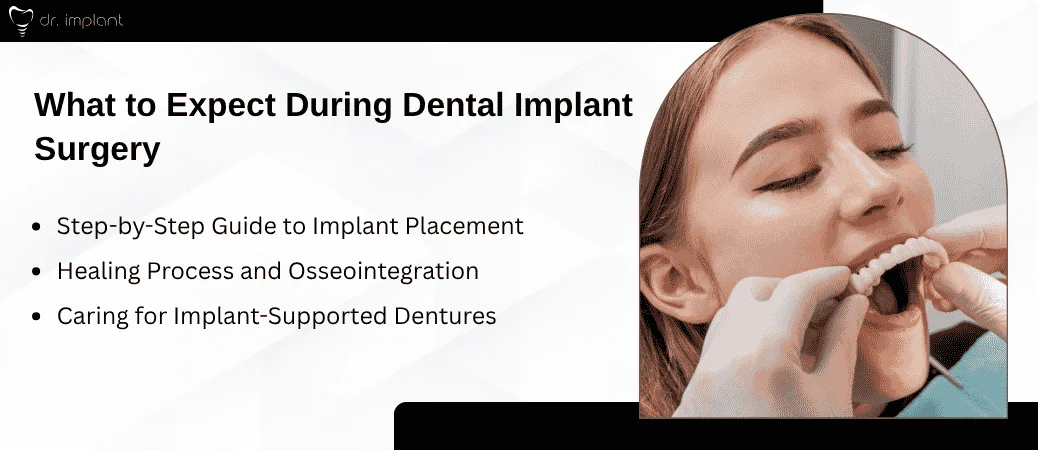
Step-by-Step Guide to Implant Placement
Your dentist will start with a full dental exam that includes X-rays and 3D imaging of your jaw. This helps them plan exactly where to place each implant for the best support.
During the implant placement surgery, your oral surgeon makes small cuts in your gums to expose the jawbone. They then drill precise holes into the bone where the metal posts will go.
Since these posts act as tooth roots, they’re placed deep into the bone for stability.
You’ll receive local anesthesia to numb the area, though sedation or general anesthesia are options if you prefer. The procedure is typically done as an outpatient surgery, meaning you go home the same day.
Most patients need 4 to 6 dental implants to support a full arch of dentures. Your surgeon may place temporary dentures right away for appearance, though some situations require waiting until healing is complete.
Healing Process and Osseointegration
After implant surgery, your jawbone needs time to grow around and fuse with the metal posts. This process is called osseointegration and usually takes 3 to 6 months.
During this healing period, your jawbone actually grows into the surface of each implant. This creates a solid foundation for your new dentures, just like natural tooth roots support real teeth.
You might experience some discomfort after surgery, including:
- Swelling of your gums and face
- Minor bleeding at the implant sites
- Bruising on your skin and gums
- Pain around the implants
Your dentist will likely prescribe pain medicine and antibiotics to prevent infection. You’ll need to eat soft foods while the surgical sites heal.
Most people can return to normal activities within a few days, though complete healing takes several months.
Once osseointegration is complete, your dentist takes digital impressions of your mouth to create custom dentures that attach securely to the implants.
Caring for Implant-Supported Dentures
Good oral hygiene keeps your implants healthy and helps them last for decades. You should brush your dentures and the areas around the implants at least twice daily.
Use a soft-bristled brush or an interdental brush designed to clean around implants. These special brushes reach the tight spaces between your dentures, gums, and metal posts where bacteria can build up.
Daily care routine:
- Brush all surfaces of your dentures
- Clean around each implant post
- Floss between teeth if your dentures are fixed
- Rinse with antimicrobial mouthwash
Visit your dentist every six months for professional cleanings and checkups. They’ll examine your implants to make sure the bone is healthy and the dentures fit properly.
Avoid chewing hard foods like ice or hard candy that could damage your dentures or natural teeth. Don’t smoke, as tobacco use increases the risk of implant failure.
If you grind your teeth at night, ask your dentist about a protective guard.
Cost, Longevity, and Oral Health Impact
Switching from traditional dentures to implant-supported options involves higher upfront costs but offers better durability and oral health benefits over time.
Understanding these differences helps you make the right choice for your budget and long-term needs.
Cost Comparison: Dentures vs. Implant-Supported Dentures
Traditional dentures cost between $1,000 and $1,500 per arch, making them the most affordable option upfront.
Implant-supported dentures require a much larger initial investment, typically ranging from $5,000 to $8,000 for a two-implant model or $8,000 to $15,000+ for a four to six-implant system.
The gap narrows when you consider ongoing costs. Regular denture wearers need relines every 18 to 24 months at $150 to $300 per visit, plus full replacements every 5 to 8 years at $2,500 to $4,500 each.
Over 15 years, traditional dentures with regular maintenance can cost $6,000 to $6,500 total.
Implant-supported dentures require minimal maintenance after the initial placement.
Most patients only need routine dental checkups and occasional adjustments, making them cost-competitive with traditional dentures over a 15 to 20 year period.
Long-Term Value and Durability
Dental implants last 10 to 15+ years with proper care, and many last 20 years or longer.
The prosthetic denture attached to the implants may need replacement every 10 to 15 years, but the implants themselves rarely require replacement.
Traditional dentures wear out faster because your jaw bone continues shrinking over time. This creates an increasingly poor fit that no amount of adhesive can fully fix.
You’ll need multiple relines and at least one complete remake during the same period that implant-supported dentures remain stable.
The stability of implant-supported dentures means less worry about slipping while eating or speaking. You won’t need daily adhesive applications or the messy cleanup that comes with it.
How Implant-Supported Dentures Support Oral Health

Dental implants slow down jaw bone loss by stimulating the bone tissue, similar to how natural tooth roots work.
Traditional dentures sit on top of your gums and don’t provide this stimulation, allowing bone loss to continue at about 25% width reduction in the first year alone.
Better stability with implant-supported dentures means you can eat a wider variety of foods, including harder and crunchier options that traditional denture wearers often avoid. This supports better nutrition and overall health.
Implant-supported options also reduce gum irritation and sore spots that commonly affect traditional denture wearers. The secure fit prevents rubbing and movement that causes inflammation and discomfort in your mouth.
Frequently Asked Questions
Loose dentures raise practical questions about costs, fit issues, and whether implants offer a better solution.
Most people wonder about the difference between fixed and removable options, pricing factors, and how their specific denture problems relate to potential implant solutions.
How can I tell if my loose dentures are a good reason to consider implant-supported dentures?
If your dentures slip when you eat, talk, or laugh, that’s a clear sign they’re not stable enough. You might also notice sore spots on your gums from constant rubbing or movement.
Many people find themselves using more denture adhesive over time. This happens because your jawbone naturally shrinks when it doesn’t have tooth roots to support.
If you’re avoiding certain foods because your dentures can’t handle them, implants could help. Implant-supported dentures allow you to bite with up to 300% more force than traditional dentures.
What are common causes of loose dentures, and what can a dentist do to improve the fit?
Your jawbone changes shape over time after tooth loss. This causes dentures that once fit well to become loose and uncomfortable.
Weight loss or gain can also affect how your dentures fit. Even normal wear and tear on the denture material itself makes them less stable over time.
Your dentist can reline your dentures to improve the fit temporarily. They add new material to the base so it matches your current gum shape better.
Sometimes a dentist will recommend denture adhesives as a short-term fix. However, if you need adhesive constantly, your dentures probably need professional adjustment or replacement.
Are implant-supported dentures removable, or do they stay fixed in place?
Both options exist, and the choice depends on your needs and preferences. Snap-in dentures attach to implants but you can remove them daily for cleaning.
Fixed dentures attach to implants permanently. Only your dentist can remove them during checkups or repairs.
Snap-in dentures typically need two to four implants to hold them securely. Fixed versions usually require more implants, sometimes eight or more, because they need extra support.
Most people choose snap-in dentures because they’re easier to clean. You can take them out at night to let your gums rest and recover.
How much do implant-supported dentures typically cost, and what factors affect the price?
Snap-in dentures cost between $3,000 and $12,000 per row of teeth before insurance. The wide price range depends on several factors.
Your location affects the price significantly. Dental work costs more in some cities and states than others.
The number of implants you need changes the total cost. More implants mean higher expenses for materials and surgery time.
Extra procedures like bone grafts add to the final bill. Some people need these grafts to build up their jawbone before implants can be placed.
The type of materials used for your dentures matters too. Higher quality materials last longer but cost more upfront.
Will implant-supported dentures cover the roof of my mouth, or will the palate be left open?
Upper snap-in dentures usually don’t need to cover your palate. The implants provide enough support without a full palate covering.
This is a big advantage over traditional upper dentures. Without plastic covering the roof of your mouth, you can taste food better and feel more comfortable.
The implants stabilize your dentures so they don’t need suction from covering your palate. This makes eating and speaking feel more natural.
Fixed implant dentures also leave your palate open. The multiple implants hold everything securely without needing extra coverage.
What’s the difference between fixed implant-supported dentures and snap-in (removable) implant dentures?
Fixed dentures attach permanently to your implants. You can’t take them out yourself for cleaning or sleeping.
Snap-in dentures attach to implants but you remove them daily. They click into place securely but come out when you want them to.
Fixed dentures require more implants because they need stronger support. You might need eight or more implants for fixed dentures, while snap-in versions typically use only two to four.
The cleaning process differs between the two types. You brush fixed dentures like natural teeth while they stay in your mouth.
Snap-in dentures get removed for thorough cleaning. This makes it easier to clean both the dentures and the implant attachments properly.
Cost varies between the options too. Fixed dentures generally cost more because they need additional implants and more complex attachment systems.