You want a new smile fast. “Teeth in 24 hours” or a same-day smile sounds simple, but your body still follows clear biological rules.
When you understand how same day dental implants work and what happens under your gums, you can make smarter choices about your care.
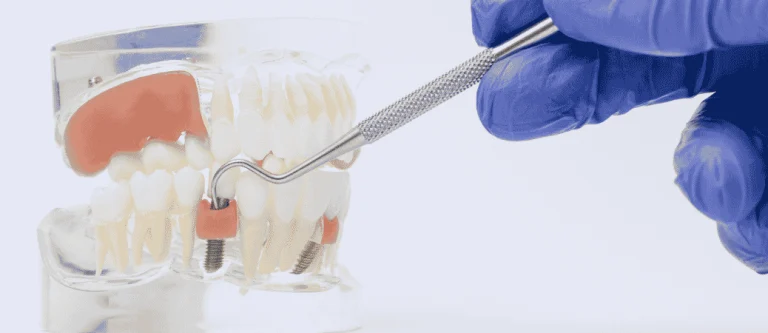
Teeth in 24 hours works by placing dental implants into your jawbone and attaching temporary teeth right away, while your bone slowly fuses to the implants over the next few months.
This process, called osseointegration, lets the implant become stable enough to support long-term teeth. The smile you leave with on day one is usually not your final set of permanent teeth in 24 hours, even if it looks complete.
You get an immediate smile, but your body still needs time to heal and adapt. Knowing how same-day smile treatment works biologically helps you weigh speed against safety and long-term success.
Key Takeaways
- Same-day implants give you temporary teeth while your jawbone heals around the implants.
- Your bone needs months to fully bond with implants before final teeth are placed.
- A fast smile works best when your treatment plan respects how your body heals.
Table of Content
- What Are 24-Hour Teeth? Fast Dental Implant Solutions Explained
- Biological Process Behind Same-Day Implants
- Role of Temporary Teeth in the Healing Journey
- Final Restoration and Achieving a Permanent Smile
- Risks of Rushing Versus Patient-First Approaches
- Choosing the Right Dental Implant Center and Financing Options
- Frequently Asked Questions
What Are 24-Hour Teeth? Fast Dental Implant Solutions Explained
You can replace missing teeth in one visit with dental implants and a fixed set of teeth placed the same day or within 24 hours.
The key differences involve whether you receive temporary teeth or permanent teeth, and whether your health and bone support allow this approach.
Defining “Teeth in a Day” and 24-Hour Teeth
“Teeth in a day” and “teeth in 24 hours” describe implant procedures where your dentist places implants and attaches a fixed set of teeth right away. You do not leave the office without teeth.
In most cases, your surgeon places full arch dental implants in the jaw. A lab then prepares a set of teeth that connects to those implants. You leave with a fixed full arch instead of a removable denture.
Some clinics use the term differently. For example, some providers explain how 24-hour dental implants work and what patients should expect during healing.
Other practices promote options such as replacement teeth in 24 hours, which may involve different materials or workflows. The main point is this: you receive attached teeth within a day, not months later.
Temporary vs. Permanent Teeth: The Realities
When you hear “permanent teeth in 24 hours,” it does not always mean the final version of your teeth goes in on day one.
In many cases, you receive temporary teeth first. These are fixed to your implants but made from lighter materials. They protect the implants while your bone heals and bonds to them.
After a few months, your dentist replaces them with permanent teeth made from stronger materials like zirconia. Some providers discuss how permanent teeth in 24 hours may be possible in certain cases.
It helps to ask:
- Are these temporary or permanent teeth?
- What material will you use?
- When will I receive the final set?
Healing time and bone quality often decide what is safe for you.
Who Is a Candidate for Same-Day Implants?
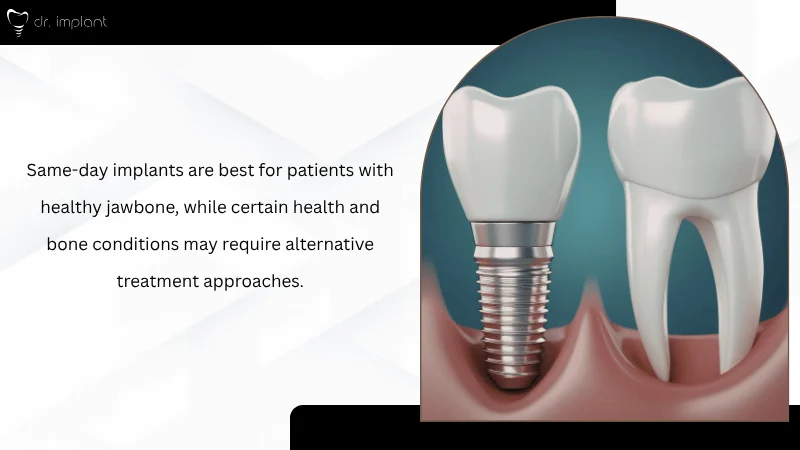
You may qualify for same-day implants if you have enough healthy jawbone to hold implants firmly at surgery. Stability on day one is critical.
People with advanced tooth loss, failing teeth, or severe decay often choose this option. It works well for patients who need a fixed full arch instead of a removable denture.
You may not qualify if you have:
- Poor bone density
- Uncontrolled diabetes
- Active gum infection
- Heavy smoking habits
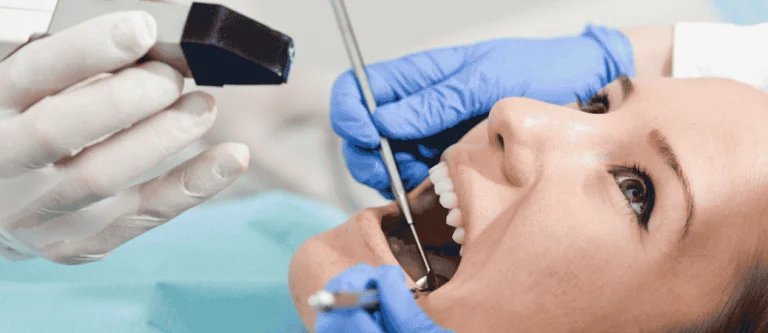
Your dentist will take 3D scans to measure bone and plan implant placement. This planning step helps lower risk and improves the chance that your teeth in 24 hours will heal properly and last.
Biological Process Behind Same-Day Implants
Same-day dental implants rely on precise implant placement, strong initial stability, and controlled healing. Your bone must grip the implant right away so it can support a temporary tooth while the deeper bond forms over time.

Implant Placement and Immediate Restoration
Your dentist or prosthodontist begins with careful planning, often using 3D scans to measure bone height and thickness. This step guides safe implant placement and helps avoid nerves and sinuses.
During implant surgery, the doctor places a titanium implant into your jawbone. The implant must feel tight at placement.
Dentists measure this with insertion torque or stability tests. Strong early stability lowers the risk of movement during healing teeth.
If you need tooth extractions, the dentist may place the implant in the same visit. In some cases, they add bone grafting material to fill gaps and support the implant.
On the same day, you receive a temporary bridge or crown. This immediate restoration is shaped to reduce heavy biting force. It protects the implant while you eat soft foods and heal.
Understanding Osseointegration
Osseointegration is the direct bond between your bone and the implant surface. This bond forms at a microscopic level.
After implant placement, your body sends bone-forming cells to the area. These cells attach to the textured titanium surface. Over weeks, new bone grows tightly against the implant threads.
For this process to succeed, the implant must stay still. Even small movements can interrupt bone healing and lead to failure.
Dentists often check stability with tools that measure implant movement. Higher stability means better conditions for osseointegration.
Healing and Bone Integration Timeline
Healing starts right after implant surgery. In the first few days, your body forms a blood clot around the implant. This clot protects the site and supports early bone repair.
Within 2 to 4 weeks, soft tissue closes around the implant. At the same time, early bone remodeling begins under the surface.
Between 6 and 12 weeks, stronger bone replaces early woven bone. This phase builds long-term stability.
Most patients receive their final restoration after this integration period. The prosthodontist removes the temporary bridge and attaches a custom crown or full-arch prosthesis.
The idea behind same day teeth in 24 hours is not instant healing. You function with temporary teeth while your bone completes the deeper biological work.
Role of Temporary Teeth in the Healing Journey
When you get teeth in 24 hours, you leave surgery with an immediate smile. But those same-day smile teeth play a clear medical role while your bone heals and bonds to the implants.
Why Temporaries Are Essential
After your oral surgeon places full arch dental implants, your jaw needs time to fuse with them. This process, called osseointegration, often takes three to six months. During that time, you cannot leave the implants uncovered.
Temporary teeth fill that gap.
A temporary bridge attaches to your implants on the same day. It restores basic function and keeps pressure controlled while your bone heals.
These healing teeth also help shape your gums. Your dentist uses smile design principles to guide how your tissue forms around the bridge. This makes it easier to place your final teeth with a natural look and stable fit.
Without temporary teeth, your bite could shift and your gum tissue could heal unevenly.
How Temporary Restorations Protect Implants
Temporary restorations protect the implants in specific ways:
- Control bite force so implants are not overloaded
- Shield the surgical site from food debris
- Stabilize your jaw position during healing
Right after surgery, your bone is soft around the implant posts. Too much pressure can disrupt early bonding. Temporary teeth are made from lighter materials than permanent ones.
That design reduces stress while still letting you chew soft foods.
Your dentist also adjusts your bite so back teeth carry less force. This protects each implant while bone cells grow tightly around the surface.
Patient Comfort and Confidence During Recovery

You do not have to go without teeth while you heal.
Temporary teeth allow you to speak clearly and smile in public. They support your lips and cheeks, which helps prevent a sunken look after extractions.
Immediate dentures serve a similar purpose by preserving appearance and function during early healing.
You still need to follow a soft diet at first. Hard or sticky foods can damage a temporary bridge. Most patients adjust within a few days.
Minor soreness is normal, but the bridge should feel stable. If it feels loose, your dental team should check it right away.
Your temporary teeth support daily life while your implants become strong enough to hold your final, custom-designed smile.
Final Restoration and Achieving a Permanent Smile
After your implants heal, your dental team shifts focus to strength, fit, and appearance. They design and place your final restoration so you can chew well and feel confident in your permanent smile.
Customizing Your Permanent Teeth
Your restorative dentist or prosthodontist plans your smile design using detailed records. These include digital scans, photos of your face, and bite measurements.
They study how your lips move when you talk and smile. They also check how your upper and lower teeth meet.
You help guide choices such as:
- Tooth shape
- Tooth shade
- Tooth length
- Gum contour
For a fixed full arch, the lab often mills the final restoration from strong materials like zirconia. This material resists wear and supports daily chewing.
Your provider balances looks and function. The goal is not just white teeth, but teeth that match your face and bite. Careful planning helps your permanent teeth look natural and feel stable.
Ensuring Fit and Function After Healing
Before placing the final restoration, your implants must bond to the bone. This process, called osseointegration, creates a stable base.
Your dentist confirms healing with exams and imaging. They check that the implants do not move and that your gums look healthy.
Next, they test the bite. A poorly balanced bite can overload implants and cause problems over time. Some experts warn about rushing permanent teeth too soon.
During fitting visits, your provider may place a prototype or try-in version. This step lets you:
- Feel the bite
- Check speech
- Review appearance
Small changes at this stage prevent larger issues later. Careful adjustment protects your long-term results.
Delivering the Final Restoration
When fit and function meet the plan, your team secures the final restoration. For a fixed full arch, they attach it to the implants with screws. This method allows future removal for maintenance if needed.
You leave the office with permanent teeth designed for daily use. Some clinics promote fast solutions, such as permanent teeth in 24 hours, but the key factor is stability and proper healing.
After delivery, your dentist checks:
- Tightness of screws
- Bite pressure
- Gum response
- Speech clarity
You receive clear cleaning instructions. Even with a permanent smile, you still need daily brushing, flossing tools made for implants, and regular follow-up visits.
With proper design, healing, and placement, your final restoration supports normal chewing and a confident smile.
Risks of Rushing Versus Patient-First Approaches
You want fast results, but your body still follows a set healing timeline. When you rush implant treatment, you may raise the risk of failure, poor fit, and long-term problems.
Potential Complications of Accelerated Timelines
Dental implants rely on osseointegration, which means your jawbone must bond tightly to the implant. This process takes time. If you overload the implant too soon, the bond can weaken or fail.
Some clinics market teeth in a day treatment timelines and risks without fully explaining what can go wrong. When steps move too fast, you may face:
- Implant movement before the bone fully heals
- Gaps at the gumline where bacteria collect
- Higher risk of infection or early implant loss
Bacteria and plaque build up quickly if your oral hygiene slips during healing. This can irritate the gumline and lead to gum disease, which threatens both natural teeth and implants.
Even with permanent teeth in 24 hours, your bone and soft tissue still need months to mature. A fast placement does not speed up biology.
Quality, Customization, and Long-Term Success
A patient-first approach focuses on careful planning, not speed. Your dentist studies your bone density, bite force, and gum health before placing implants.
Clinics that support slow dentistry and patient-focused care give you time for detailed exams and clear instructions. This lowers the risk of poor fit and long-term stress on the implants.
Customization matters. Your final teeth must match your bite and jaw movement. If they do not, you may grind, strain the implants, or trap plaque near the gumline.
Long-term success depends on:
- Strong osseointegration
- Proper bite alignment
- Daily oral hygiene and regular dental care visits
When you choose a plan built around your healing, you protect your investment and support healthy gums and bone for years to come.
Choosing the Right Dental Implant Center and Financing Options
You trust a team with your bone, gums, and long-term dental health. Choose a center with the right specialists, clear steps, and realistic payment options that fit your budget.
Specialist Expertise: Oral Surgeons and Prosthodontists
You want both surgical skill and restorative planning in one place. An oral surgeon places the implants into your jawbone, while a prosthodontist or restorative dentist designs and fits your new teeth.
This team approach matters. Implant surgery involves nerves, sinuses, and bone levels. The final teeth must match your bite, speech, and facial shape.
Look for a dental implant center that offers:
- On-site oral surgeons
- Prosthodontists trained in full-arch cases
- 3D scans and digital treatment planning
- Clear explanations of risks and healing time
Many established dental implant centers focus only on implants. That narrow focus often means more experience with complex cases and fewer referrals between offices.
Ask how many full-arch cases the team completes each year. Experience improves planning, timing, and follow-up dental care.
What to Expect at Leading Centers Like ClearChoice and Nuvia
Leading groups follow a structured process from consult to final teeth. At a ClearChoice Dental Implant Center, you usually start with a free consultation, scans, and a written treatment plan before implant surgery.
ClearChoice explains why healing time supports long-term fit and bone stability. The center often places implants first, then fits the final prosthesis after bone integration.
Nuvia promotes a different model. It states that patients can receive permanent teeth in 24 hours after surgery, without wearing temporary dentures for months.
When you compare centers, focus on:
- Whether you receive temporary or final teeth on day one
- How the team checks bone healing
- How adjustments are handled after surgery
- What happens if complications occur
Clear steps reduce confusion and help you plan work, travel, and recovery.
Flexible Financing, Consultation, and Aftercare
Full-mouth implants can cost thousands of dollars. Many patients need flexible financing to move forward. Some centers work with third-party lenders that specialize in healthcare loans.
You should also ask about:
- In-house payment plans
- Health Savings Accounts (HSA) or Flexible Spending Accounts (FSA)
- What insurance may cover
- Refund or revision policies
A good dental implant center also outlines aftercare. You need clear instructions for cleaning, follow-up visits, and what to do if pain or swelling lasts longer than expected.
Strong aftercare protects your investment and supports long-term dental care success.
Frequently Asked Questions
Same-day dental implants rely on strong initial stability, fast clot formation, and early bone healing. Your body starts reacting to the implant within minutes of placement.
What biological changes allow same-day dental implants to feel stable so quickly?
Your dentist places the implant tightly into your jawbone. This tight fit creates primary stability, which means the implant does not move right after surgery.
Your bone grips the implant threads through mechanical pressure. This contact helps you feel steady enough to wear a fixed temporary bridge the same day.
Some clinics explain how this works in guides on Teeth in 24 Hours surgery day procedures. The key factor is strong bone and precise placement.
How does the jawbone start bonding with an implant right after it’s placed?
Your body begins healing as soon as the implant enters the bone. Blood fills the tiny spaces around the implant and forms a clot.
Cells called osteoblasts move into the area within days. They start building new bone along the implant surface. This process is called osseointegration. Osseointegration means your bone slowly fuses to the implant.
What tissues are healing during the first 24 hours after getting new teeth?
Your gum tissue starts sealing around the implant right away. This seal helps protect the bone underneath from bacteria.
The bone begins early repair at a microscopic level. Blood vessels also form in the area to bring oxygen and nutrients.
You may notice mild swelling during this stage. That swelling is part of your normal healing response.
How do dentists decide if your bone and gums can support immediate teeth placement?
Your dentist checks your bone density with 3D scans. Dense bone gives the implant a firm grip on day one.
They also measure how tightly the implant locks into place during surgery. If it does not reach a safe stability level, they may delay fixed teeth.
Careful case selection matters. Many providers stress that proper digital planning and implant stability criteria are essential for safe same-day treatment.
What’s the difference between the temporary teeth you get right away and the final set biologically?
Your temporary teeth protect the implants while your bone heals. They are lighter and designed to reduce pressure during chewing.
Your final teeth come after full osseointegration, which usually takes a few months. At that point, your bone has bonded firmly to the implants. The biology behind both steps centers on bone healing and stable support.
What factors can slow down or disrupt healing and integration after same-day teeth placement?
Smoking reduces blood flow to your gums and bone. Poor blood flow slows healing.
Uncontrolled diabetes can also delay bone repair. Excess pressure from chewing hard foods too soon may disturb the implant before it fully bonds.
Your dentist gives you clear instructions about diet and hygiene for a reason. Following them helps protect the early bond between your bone and the implant.