If you have sleep apnea or use a CPAP machine, you might wonder whether you can still get dental implants.
Yes, you can get dental implants if you have sleep apnea or wear a CPAP, and with proper planning and evaluation, most patients achieve successful outcomes comparable to those without sleep disorders.
Understanding how dental implants and sleep apnea conditions interact is important for your treatment success.
Sleep apnea affects more than just your nightly rest. It can impact your oral health in ways that matter for dental implant treatment.
People with sleep apnea often experience dry mouth, gum inflammation, and teeth grinding, which can influence how well implants integrate with your jawbone.
Your dentist needs to know about your sleep apnea diagnosis and CPAP use before starting any implant procedure.
The good news is that dental implants can actually play a role in managing your sleep apnea symptoms. They can stabilize oral appliances that help keep your airway open during sleep.
Whether you currently use a CPAP or are looking for alternative treatments, understanding the relationship between dental implants and sleep apnea helps you make informed decisions about your oral health and sleep quality.
Key Takeaways
- You can safely receive dental implants with well-controlled sleep apnea through proper evaluation and treatment planning
- Sleep apnea affects oral health through bruxism and inflammation, which may increase implant complications without proper management
- Dental implants can support oral appliances and jaw positioning devices that improve sleep apnea treatment effectiveness
Sleep Apnea Types and Their Impact on Dental Health
Sleep apnea affects your breathing during sleep and creates specific challenges for your mouth, teeth, and jaw.
The type of sleep apnea you have determines how it impacts your oral health and what your dentist needs to consider before dental implant treatment.
Understanding Obstructive Sleep Apnea (OSA)
Obstructive sleep apnea is the most common form of sleep-disordered breathing. It happens when your throat muscles relax too much during sleep and block your airway.
Your airway can collapse partially or completely many times throughout the night. Each time this happens, your brain wakes you up just enough to restart breathing.
OSA produces the most pronounced dental consequences because of the physical struggle your body goes through to breathe.
Unlike central sleep apnea where your brain fails to signal breathing muscles, OSA involves actual airway blockage. Complex sleep apnea combines both mechanisms.
Your jaw structure plays a major role in OSA. A small jaw, large tongue, or narrow airway increases your risk. These same factors also affect how your mouth responds to dental treatments.
Common Symptoms and Diagnosis
Loud snoring is often the first sign of OSA that others notice. You might also wake up with morning headaches or feel exhausted despite sleeping a full night.
Your doctor diagnoses sleep apnea through a sleep study called polysomnography. This test measures how many times per hour your breathing stops or becomes shallow. This number is your AHI (Apnea-Hypopnea Index).
AHI Severity Levels:
- Mild: 5-14 events per hour
- Moderate: 15-29 events per hour
- Severe: 30 or more events per hour
You might also experience gasping for air during sleep, difficulty concentrating during the day, or mood changes. Many people don’t realize they have sleep apnea until a partner mentions their breathing patterns.
How Sleep Apnea Affects the Mouth and Jaw
Sleep apnea creates several oral health problems that matter for dental implants. Dry mouth is one of the most common issues because mouth breathing reduces saliva production.
When you breathe through your mouth all night, your gums and teeth don’t get the protective benefits of saliva. This leads to inflammation and increases your risk of gum disease.
Conditions such as dry mouth, gum inflammation and teeth grinding are commonly associated with sleep apnea. Grinding puts extra stress on your teeth and jaw.
Over time, this can damage existing teeth and potentially affect dental implants.
Your oral health deteriorates faster when you have untreated sleep apnea. The constant oxygen drops and inflammation throughout your body also affect how well your mouth heals after procedures.
Oral Health Challenges for Sleep Apnea Patients
Sleep apnea creates a cycle of oral health problems that can make you less ready for dental implants. Dry mouth, teeth grinding, and gum inflammation work together to damage your teeth and jawbone over time.

Gum Disease, Bone Loss, and Implant Readiness
Sleep apnea often causes dry mouth because you breathe through your mouth at night. Without enough saliva, bacteria grow faster in your mouth.
This leads to gum disease and periodontal disease that can destroy the tissues supporting your teeth.
When gum disease affects oral health in sleep apnea patients, it can progress to bone loss in your jaw. Your jawbone density matters a lot for dental implants because the implant needs strong bone for osseointegration.
This is the process where your bone fuses with the titanium implant.
Before you get implants, your oral surgeon or prosthodontist will do a full implant evaluation. They check your bone health and measure if you have enough jawbone to support the implant.
If sleep apnea has caused too much bone loss, you might need a bone graft first.
Good oral hygiene becomes even more important when you have sleep apnea. Brushing twice daily and flossing helps control inflammation and prevent bone loss.
Bruxism and Its Impact on Dental Restorations
Teeth grinding, also called bruxism, happens frequently in people with sleep apnea. Your body responds to breathing problems during restless sleep by clenching your jaw.
This puts extreme pressure on your teeth and any dental work you have.
Bruxism can damage dental implants and the crowns attached to them. The constant grinding wears down restorations faster than normal. It can even cause implants to loosen or fail if the force is too strong.
You might notice these signs of bruxism:
- Jaw discomfort when you wake up
- Worn or flattened teeth
- Cracked dental work
- Headaches in the morning
- Tight jaw muscles
Your dentist may recommend a night guard to protect your implants from grinding damage. Managing sleep apnea concerns during dental implant treatment helps improve your results.
The Relationship Between Missing Teeth and Airway Stability
Missing teeth replacement options and sleep apnea affect each other in ways many people don’t realize. When you lose teeth, your jawbone starts to shrink because it’s not being used.
This changes the shape of your face and can make your airway problems worse.
Tooth loss also affects your oral function and how your jaw sits. Your tongue may have more room to fall back into your throat during sleep. This blocks your airway more easily.
All-on-4 dental implants can help patients with missing teeth restore their bite and jaw position. Better tooth support may improve how your airway stays open at night.
The implants prevent bone loss and keep your jaw structure stable.
Your prosthodontist will look at how missing teeth have changed your jaw and bite. Replacing these teeth does more than improve your smile. It supports better oral health and may even help with breathing during sleep.
Candidacy and Evaluation for Dental Implants With Sleep Apnea
Getting dental implants when you have sleep apnea requires careful evaluation of your overall health, the severity of your condition, and how your treatment devices will work with your new teeth.
Your dental team needs to understand your specific situation to plan successful implant surgery that won’t interfere with your breathing therapy.
Health Assessments and Sleep Apnea Severity
Your dentist will review your sleep apnea diagnosis and current treatment before moving forward with dental implants.
The severity of your condition matters because patients with more severe sleep apnea may experience higher rates of implant complications.
You’ll need to share information about your oxygen levels during sleep and any breathing disruptions you experience. These factors can affect implant stability and healing after surgery.
Your dentist will also check for signs of teeth grinding or bruxism. Sleep apnea patients often grind their teeth at night, which can lead to implant failure or damage to implant-supported restorations.
This happens because sleep disruptions increase certain sleep stages where grinding occurs most frequently.
Consulting With a Multidisciplinary Team
You’ll benefit from working with multiple specialists who can address both your missing teeth and your sleep condition.
A multidisciplinary approach typically includes your sleep medicine specialist, a prosthodontist, and an oral surgeon.
Your sleep doctor can provide detailed information about your breathing patterns and treatment effectiveness.
The prosthodontist designs your implant-supported dentures or other restorations. An oral surgeon handles the actual implant placement and evaluates your jaw bone quality.
These professionals work together to create a treatment plan that considers your oral appliance therapy needs. They’ll determine whether you need full-mouth dental implants or individual implants.
Coordination between providers helps ensure your implants won’t interfere with your CPAP or other sleep apnea devices.
Oral Appliance Compatibility and Alternatives
If you wear a mandibular advancement device or other oral appliances for sleep apnea, your dentist must plan your implants carefully. These devices attach to your teeth and move your jaw forward to keep your airway open.
Your dental team will need to ensure your new implant-supported restorations work with your existing oral appliance therapy. Sometimes your sleep device will need adjustments or replacement after getting implants.
Forces from inserting and removing oral appliances can potentially damage implant crowns or affect jaw alignment. Your dentist may modify the appliance design to protect your implants.
Some patients switch to CPAP therapy after getting full-arch implant solutions to avoid complications with oral devices.
The Interaction of CPAP Therapy, Oral Appliances, and Dental Implants
CPAP therapy and oral appliances can both affect dental implants in different ways, from the pressure applied during healing to the forces created by mandibular advancement devices.
Understanding these interactions helps you make informed decisions about timing treatments and protecting your investment.
CPAP Use After Implant Surgery
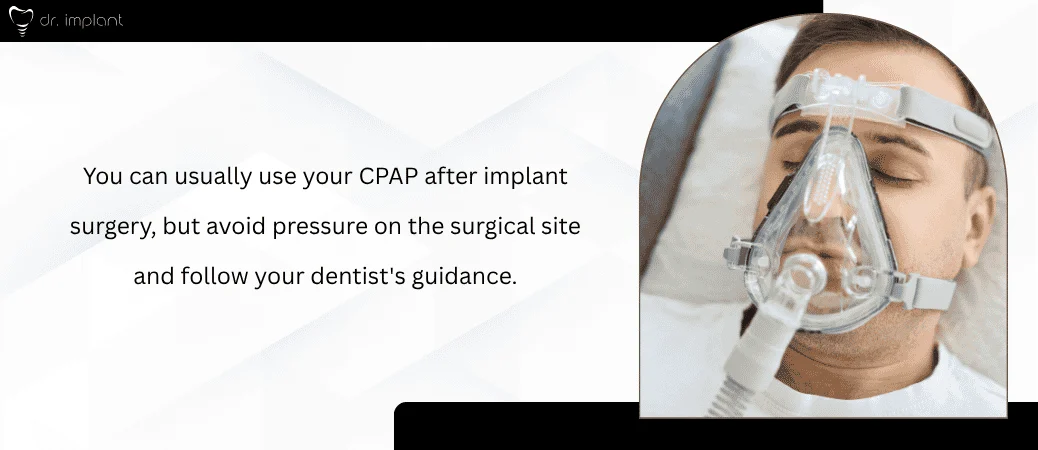
You can typically use your CPAP machine immediately after dental implant surgery. The gentle air pressure from CPAP therapy doesn’t directly interfere with osseointegration or implant stability during the healing phase.
However, you need to be careful with your CPAP mask positioning. Avoid putting pressure on the surgical site, especially if you had implants placed in your upper jaw.
Side-sleeper masks or nasal pillows work better than full-face masks during the first few weeks of healing.
CPAP use may increase risks for implant-supported prostheses in rare cases. One documented case showed a full-arch prosthesis failure potentially linked to CPAP therapy.
The constant air pressure combined with mouth breathing might create unusual forces on your implant-supported teeth.
Your sleep specialist should know about your recent implant surgery. They can adjust your CPAP settings if needed to reduce pressure during the initial healing period.
Mandibular Advancement and Alternative Treatments
Oral appliances for sleep apnea work differently than CPAP machines by physically repositioning your jaw. A mandibular advancement device (MAD) moves your lower jaw forward to prevent airway collapse during sleep.
If you have dental implants, oral appliance therapy requires special considerations. The MAD attaches to your teeth, including implant-supported crowns, which means insertion and removal creates mechanical stress.
Your dentist may need to block out space around implant crowns to reduce these forces.
Research suggests that vertical opening might work as well as mandibular advancement for some patients. This approach may reduce the occlusal load on your implants compared to traditional jaw advancement.
The forces from a mandibular advancement device can affect:
- Implant crowns and abutments during daily insertion and removal
- Bone levels around implants over long-term use
- Prosthetic components if you grind your teeth
Your dentist should evaluate implant stability before prescribing oral appliance therapy. Polysomnography can measure your AHI reduction to confirm the device works without compromising your implants.
Factors Influencing Implant Healing and Stability
OSA itself affects osseointegration through several biological pathways. The condition creates inflammation from repeated oxygen drops during sleep. This oxidative stress can slow bone healing around your new implants.
Patients with obstructive sleep apnea face higher rates of implant complications, including implant failure and prosthetic problems.
Studies show OSA patients had complications in 13 of 16 cases reviewed, with higher severity linked to fractures and failures.
Key factors that impact your implant success include:
- Untreated OSA reducing oxygen levels during healing
- Bruxism occurring in 33-54% of sleep apnea patients
- Diabetes risk increasing with sleep-disordered breathing
- Periodontal disease showing proven links to OSA
Your sleep apnea severity matters for implant planning. Patients with higher AHI scores experience more technical complications like screw loosening, abutment fractures, and porcelain breaks.
Getting your OSA treated before implant surgery improves your chances of long-term success.
The link between sleep apnea and oral health includes dry mouth and gum inflammation. These conditions create additional challenges for maintaining implant health after your surgery completes.
How Dental Implants Can Support Sleep Apnea Treatment
Dental implants can work alongside traditional sleep apnea treatments by anchoring oral appliances and improving your jaw position.
They also help support full-mouth dental implants to maintain proper airway anatomy during sleep.
Implant-Anchored Oral Appliances for OSA
If you have missing teeth, standard oral appliance therapy might not work well for you. Oral appliances need solid anchor points to stay in place and move your jaw forward effectively.
Dental implants can serve as permanent anchors for jaw-repositioning devices. These titanium posts lock the appliance in place throughout the night.
You won’t need to worry about the device slipping or losing effectiveness.
This approach works best for mild to moderate obstructive sleep apnea. The implant-supported restorations give your oral appliance the stability it needs to keep your airway open.
Your dentist can design a custom device that attaches directly to your implants.
This option helps if you can’t tolerate CPAP or need an alternative treatment. The implants stay permanently in your jaw while the appliance can be removed for cleaning.
Improving Jaw Structure and Airway Function
Missing teeth can change your jaw alignment over time. When teeth are gone, your jawbone shrinks and your bite position shifts. This can make your airway smaller and worsen sleep apnea symptoms.
Dental implants help maintain proper jaw structure. They stimulate your jawbone just like natural tooth roots do. This prevents bone loss that could affect your airway anatomy.
Implant-supported restorations also restore your bite height. When your bite is at the correct position, your jaw sits in a better alignment. This can improve airway stability and breathing during sleep.
The improved jaw position from dental implants works well with other treatments. You might still use CPAP, but the better jaw structure can make all your treatments more effective.
When to Consider Full-Arch Solutions
Full-arch implant solutions replace all your upper or lower teeth. These restorations do more than just restore oral function. They can be designed to support your airway needs.
If you’re missing most or all of your teeth, full-arch implants give your oral appliances a solid foundation. Your sleep dentist can work with your implant dentist to plan the restoration.
They’ll consider your airway anatomy when designing the final teeth.
Full-arch solutions are worth considering if you need extensive dental work anyway. You can address both your tooth loss and sleep apnea support at the same time.
These restorations cost more than single implants. However, they provide comprehensive benefits for both your oral health and breathing during sleep.
Your insurance might cover part of the cost if the work relates to sleep apnea treatment.
Talk to both a sleep specialist and an implant dentist. They can determine if full-arch implants would help your specific situation.
Care Strategies and Collaborative Treatment Planning
Getting dental implants when you have sleep apnea requires teamwork between your healthcare providers and a commitment to protecting your investment through proper care habits.
Success depends on coordinated planning before treatment and consistent maintenance afterward.
The Importance of Sleep Medicine and Dental Coordination
Your treatment works best when your sleep specialist and dental team communicate regularly.
The American Academy of Dental Sleep Medicine recommends this team approach because sleep apnea and dental health affect each other in important ways.
Your sleep specialist understands how your airway functions and can assess whether CPAP therapy is working well. They can also identify if you have bruxism or teeth grinding during sleep.
Your oral surgeon or prosthodontist needs this information to plan implant placement that won’t interfere with your sleep appliances.
Before getting implants, your dentist should review your sleep study results and current CPAP settings.
If you use a mandibular advancement device instead of CPAP, your dental sleep medicine provider must coordinate with the implant team. This prevents problems like excessive force on new implants during the healing period.
Maintaining Implant and Oral Health Long-Term
Your oral hygiene routine becomes even more important after getting implants because sleep apnea can increase inflammation in your mouth.
People with untreated sleep apnea face higher risks of periodontal disease, which threatens both natural teeth and implants.
Daily care steps include:
- Brushing twice daily with a soft-bristled brush
- Flossing around implants using special floss or interdental brushes
- Rinsing with antimicrobial mouthwash if recommended
- Cleaning your CPAP mask and tubing regularly to prevent bacteria transfer
Visit your dentist every three to six months for professional cleanings. These appointments let your provider check for signs of inflammation or bone health problems around your implants.
If you grind your teeth at night, you might need a protective nightguard to prevent damage to your implant restorations.
Enhancing Quality of Life Post-Treatment
Successful implant treatment combined with managed sleep apnea improves your daily life in multiple ways. You can eat comfortably, speak clearly, and smile confidently without worrying about missing teeth or loose dentures.
When dental implants and sleep apnea treatment work together, you experience better sleep quality and overall health. Your energy levels increase because you’re breathing properly at night.
Your oral health stays stable because the implants preserve your jawbone and prevent further tooth loss.
Stay in touch with both your dental team and sleep medicine providers. Report any changes like implant sensitivity, loose crowns, or worsening sleep symptoms.
Quick attention to small problems prevents bigger complications. Your quality of life depends on keeping both your sleep apnea and your implants well-managed through ongoing professional care.
Frequently Asked Questions
Many people with sleep apnea have concerns about how their CPAP machine and breathing condition might affect dental implant treatment and recovery.
These common questions address the practical aspects of combining implant care with ongoing sleep apnea management.
Will using a CPAP mask affect the healing process after implant surgery?
Using your CPAP machine right after implant surgery can potentially affect healing, especially if you had implants placed in your upper jaw.
The air pressure from the mask might create strain on the surgical site during the early healing phase.
Most dental professionals recommend waiting at least 24 to 48 hours before resuming CPAP use after implant placement.
However, the exact timing depends on where your implants were placed and how extensive your surgery was.
If you had sinus lift procedures along with upper implants, you may need to wait longer before using your CPAP. The positive airway pressure could interfere with proper healing in the sinus area.
Do I need to tell my dentist or oral surgeon about my sleep apnea before getting implants?
You absolutely need to inform your dentist or oral surgeon about your sleep apnea diagnosis before getting implants.
Dentists must be aware of health-related consequences for patients with obstructive sleep apnea before and during implant placement.
Sleep apnea can affect your overall health in ways that impact implant success. The condition is associated with higher inflammation levels, increased risk of diabetes, and a connection to periodontal disease.
Your dentist needs to know if you use a CPAP machine so they can plan your surgery and recovery timeline accordingly. They may also want to coordinate with your sleep doctor to ensure safe treatment.
Can a CPAP mask put pressure on my gums or implant area and cause problems?
A CPAP mask can potentially put unwanted pressure on healing implant sites, particularly if your mask sits near the treatment area. This pressure could disrupt the integration process between the implant and your jawbone.
The type of mask you use matters. Full-face masks that cover both your nose and mouth may create more pressure points around your jaw and gums than nasal masks or nasal pillow styles.
If your mask applies direct pressure to a healing implant site, it could cause discomfort or even compromise the healing process. You might need to temporarily switch to a different mask style during recovery.
How soon after implant placement can I start using my CPAP again?
Most patients can resume CPAP use within one to three days after implant surgery. Your oral surgeon will give you specific instructions based on your individual procedure.
For simple implant placements, you might be cleared to use your CPAP after just 24 hours. More complex procedures involving bone grafting or multiple implants may require a longer waiting period.
Never stop using your CPAP without consulting your sleep doctor first. Untreated sleep apnea poses serious health risks that may outweigh the temporary concerns about implant healing.
Your medical team can help you balance both treatment needs safely.
Are there specific CPAP mask styles that are more comfortable or safer after implants?
Nasal pillow masks are often the most comfortable option after dental implant surgery because they don’t put pressure on your mouth or jaw. These masks use small cushions that fit directly into your nostrils.
Nasal masks that cover only your nose can also be a good choice during implant recovery. They create less contact with your facial structures compared to full-face masks.
If you currently use a full-face mask, talk to your sleep doctor about temporarily switching to a nasal option during your implant healing period.
This change can reduce pressure on your jaw and gum tissue while still treating your sleep apnea effectively.
Could untreated sleep apnea increase the risk of implant failure or complications?
Untreated sleep apnea may increase your risk of dental implant complications and failure. Studies show a connection between obstructive sleep apnea and dental implant issues, including problems with bruxism and oral health conditions.
Sleep apnea is often associated with teeth grinding during sleep. This grinding can create excessive force on dental implants, potentially leading to mechanical problems or bone loss around the implant.
The inflammation and reduced oxygen levels that occur with untreated sleep apnea can also affect your body’s ability to heal properly. This may slow down the integration process between your implant and jawbone.
Proper planning and management of sleep apnea can help most patients achieve implant success rates comparable to those without the condition.
Working with both your dentist and sleep doctor ensures the best possible outcome for your treatment.