Missing teeth affect more than just your smile. When you lose a tooth, the bone underneath starts to shrink because it no longer gets pressure from chewing.
Over time, this bone loss can change the shape of your face, making your cheeks look sunken and your lips appear thinner.
Dental implants can improve facial structure by preventing bone loss and maintaining the natural contours of your face.
Unlike dentures that sit on top of your gums, dental implants are placed into your jawbone and act like natural tooth roots. This stimulates the bone and keeps it healthy, which helps preserve your facial appearance over time.
Understanding dental implants and facial structures can help you make a confident decision about tooth replacement. The benefits go beyond just filling gaps in your smile.
Key Takeaways
- Dental implants prevent jawbone shrinkage that causes facial sagging and an aged appearance
- Implants provide long-term support for your facial structure by stimulating bone like natural tooth roots
- Choosing implants maintains facial contours and offers better stability than traditional dentures or bridges
Table of Content
- The Role of Teeth in Supporting Facial Structure
- How Dental Implants Restore and Preserve Facial Appearance
- Aesthetic and Structural Advantages of Choosing Dental Implants
- Dental Implants Compared to Other Tooth Replacement Options
- Psychological and Quality of Life Benefits
- Frequently Asked Questions
The Role of Teeth in Supporting Facial Structure
Your teeth do more than help you chew food and speak clearly. They provide essential support that keeps your face looking full and well-proportioned by maintaining jawbone health and holding facial tissues in their proper position.
How Teeth Maintain Facial Contours and Shape
Your natural teeth work beneath the surface to keep your face looking youthful. Each tooth root sends pressure signals through your jawbone every time you bite or chew.
This constant stimulation tells your body to keep renewing bone tissue in your jaw.
The jawbone acts as a foundation for your entire lower face. It supports your lips, cheeks, and the area around your mouth. When your teeth are in place, they keep this foundation strong and stable.
Your teeth also help maintain proper spacing between your nose and chin. This distance affects your overall face shape and profile. The bone volume in your jaw determines how much support your facial tissues receive from below.
Consequences of Missing Teeth on Facial Appearance
Missing teeth trigger bone resorption, where your body removes minerals from the jaw and redirects them elsewhere. Without tooth roots to provide stimulation, your jawbone begins to shrink within months of tooth loss.
As bone volume decreases, you may notice several visible changes. Your cheeks can start to look hollow or sunken because they lack proper support underneath.
The distance between your nose and chin becomes shorter, creating an aged appearance.
Your lips may also appear thinner and less defined. The jawbone loss removes the structure that once kept them properly positioned. Some people develop wrinkles around their mouth as facial tissues collapse inward where teeth used to be.
Changes in Facial Symmetry After Tooth Loss
Losing teeth on one side of your mouth creates uneven bone loss. Your facial structure becomes unbalanced as one side of your jaw shrinks faster than the other.
Your bite alignment shifts when teeth are missing. Remaining teeth may drift into empty spaces, changing how your upper and lower jaws meet. This can affect your jawline definition and create an asymmetrical appearance.
The cheek volume on the side with missing teeth often decreases more noticeably. You might see one side of your face looking more hollow than the other. These changes can make your face appear crooked or lopsided over time.
How Dental Implants Restore and Preserve Facial Appearance
Dental implants work beneath the surface to maintain your facial structure by stimulating bone growth and providing support that natural teeth once offered.
They address both immediate concerns about appearance and long-term changes that affect how your face ages.
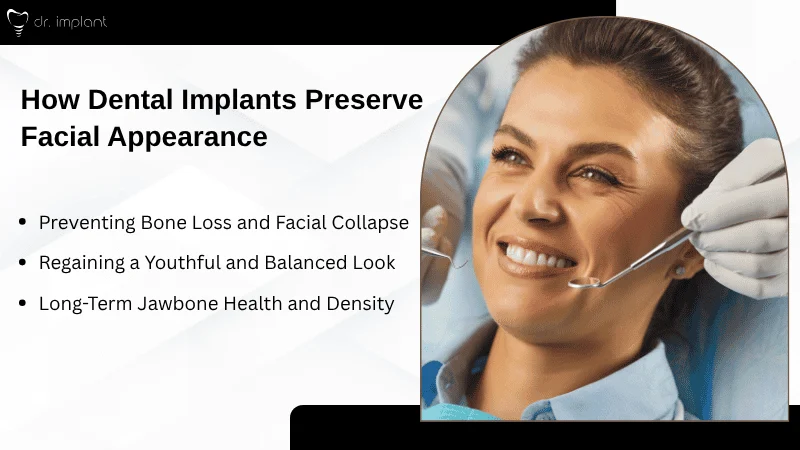
Preventing Bone Loss and Facial Collapse
Your jawbone needs constant stimulation to stay healthy and strong. When you lose teeth, that stimulation disappears, and your jawbone starts to shrink through a process called bone resorption.
Dental implants help prevent bone loss by acting as artificial tooth roots that keep your jawbone active.
Without this stimulation, you can lose about 25% of your jawbone width within the first year after tooth extraction.
This bone loss creates a sunken appearance in your cheeks and changes the distance between your nose and chin. Your face may start to look compressed or collapsed.
Implants stop this process through osseointegration, where the titanium posts fuse directly with your bone tissue. Each time you chew, the implants transfer force to your jawbone just like natural teeth would.
This ongoing stimulation maintains bone density and prevents facial collapse that makes people look older than they are.
Regaining a Youthful and Balanced Look
The support that dental implants provide helps restore fullness to your cheeks and lips. When teeth are missing, these areas can appear hollow or sunken because they lack the proper foundation behind them.
Implants fill this void and bring back natural contours to your face.
Your facial proportions improve as implants maintain the proper spacing in your mouth. This affects how your facial muscles sit and prevents the sagging that often comes with tooth loss.
Many patients notice that their jawline looks more defined and their cheeks appear fuller after getting implants.
The changes are subtle but meaningful. You won’t look like you’ve had plastic surgery, but friends might comment that you look refreshed or younger.
The benefits of dental implants for facial appearance become more obvious over several months as your bone integrates with the implants and soft tissues adjust to the new support.
Long-Term Jawbone Health and Density
Dental implants protect your jawbone for decades, not just months or years.
Traditional dentures sit on top of your gums and don’t provide any stimulation to the bone underneath, allowing deterioration to continue. Implants work differently by maintaining ongoing bone activity.
Your jawbone density stays stable with implants because they create the same type of pressure that natural tooth roots provide. This preserves the bone structure that supports your entire face.
The long-term effects on facial structure help you maintain a more youthful appearance as you age.
The health benefits extend beyond just keeping bone from shrinking. Strong jawbone density supports better oral health overall and maintains the stability of any remaining natural teeth.
Your facial support system stays intact, preventing the accelerated aging that happens when bone continues to deteriorate over time.

Aesthetic and Structural Advantages of Choosing Dental Implants
Dental implants offer benefits that go beyond simply replacing missing teeth. They provide crucial support for your facial tissues and help maintain the natural contours that keep your face looking full and youthful.
Restoring Cheek and Lip Support
When you lose teeth, the bone in your jaw begins to shrink over time. This bone loss removes the foundation that supports your cheeks and lips from the inside. Your face can start to look hollow or sunken as a result.
Dental implants act like natural tooth roots in your jawbone. They stimulate the bone tissue and prevent it from deteriorating. This keeps your jaw strong and maintains the structure your facial tissues need.
With proper support restored, your cheeks regain their natural volume. Your lips also get the backing they need to maintain their position.
Dental implants help maintain the natural shape of your face by preventing the collapsed appearance that happens after tooth loss.
The result is a fuller, more youthful facial appearance that looks natural.
Improving Facial Symmetry and Bite Alignment
Missing teeth can cause your remaining teeth to shift into empty spaces. This movement changes how your upper and lower teeth come together.
Your bite alignment becomes uneven, which can make one side of your face look different from the other.
Dental implants fill these gaps and keep your other teeth in their proper positions. When your teeth stay aligned, your jaw moves correctly. This balanced movement supports even facial contours on both sides.
Proper bite alignment also affects your jaw joints and muscles. When everything works together correctly, your facial features appear more balanced.
Solutions like All-on-4 can restore full arches and completely rebuild your bite relationship when multiple teeth are missing.
Reversing the Effects of Ill-Fitting Dentures
Traditional dentures sit on top of your gums without supporting the underlying bone. Over time, your jawbone continues to shrink beneath them. The dentures become loose and shift when you eat or talk.
Ill-fitting dentures can make your face look older than it should. They don’t provide stable support for your facial tissues. The constant movement can also create sore spots and make you feel self-conscious about your smile.
Implant-supported restorations work differently. They anchor directly into your jawbone through restorative dentistry techniques.
This stable foundation stops bone loss and provides consistent support for your facial aesthetics. Your face maintains its proper dimensions, and you don’t have to worry about dentures slipping out of place.
Dental Implants Compared to Other Tooth Replacement Options
While several methods exist to replace missing teeth, they differ significantly in how well they preserve your facial structure.
Implants stand out because they stimulate your jawbone, while traditional options like dentures and bridges sit on top of the gums without providing this essential benefit.
Traditional Dentures and Bridges Versus Implants
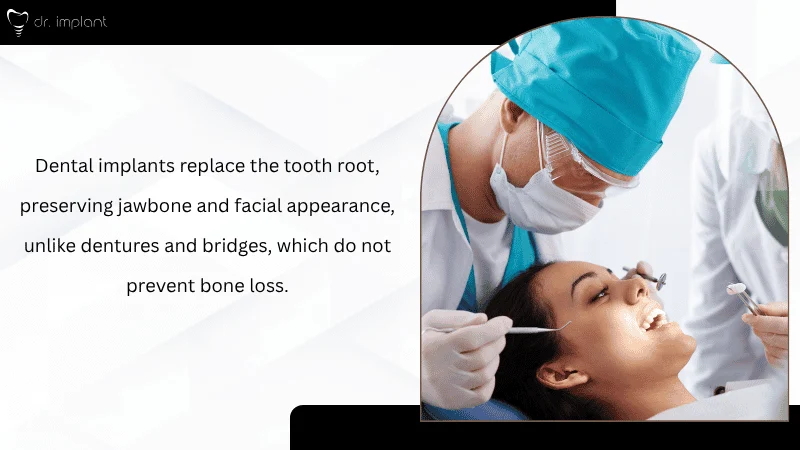
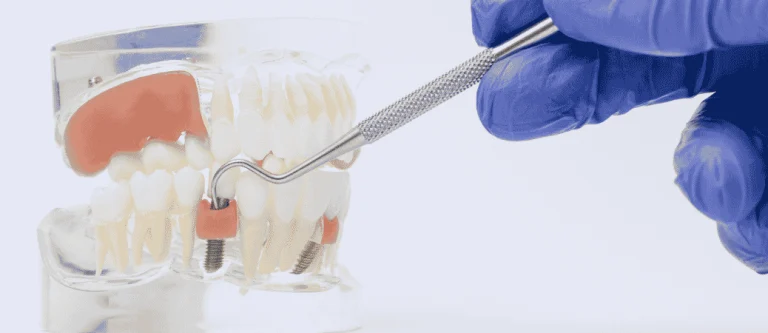
Dental implants are titanium posts surgically placed into your jawbone that act as artificial tooth roots. They support crowns, bridges, or dentures while maintaining bone density in your jaw.
Traditional dentures rest directly on your gums without anchoring into the bone. This means they can’t prevent bone loss, which leads to facial sagging over time.
Ill-fitting dentures often slip around in your mouth, making eating and speaking difficult.
Bridges provide natural-looking tooth replacement, but their stability depends on the health of the teeth that support them. Unlike implants, bridges require grinding down healthy adjacent teeth.
They also don’t prevent bone deterioration in the gap where your tooth is missing.
The key difference in restorative dentistry options comes down to bone preservation. Only implants replace both the visible tooth and the root structure beneath your gums. This stimulates your jawbone just like natural teeth do.
Maintaining Facial Structure Over Time
Your jawbone needs stimulation from tooth roots to maintain its density and shape. When you lose teeth, the bone in that area begins to shrink because it no longer receives this stimulation.
Implants prevent this bone loss by functioning like natural tooth roots. The titanium post transfers chewing forces directly into your jawbone, keeping it active and healthy. Implants maintain facial structure and prevent drooping that occurs when bone deteriorates.
Traditional dentures and bridges can’t provide this benefit. Without bone stimulation, your jaw gradually shrinks. This causes your face to develop a sunken appearance, particularly around your mouth and cheeks.
The bone loss also means your dentures will need frequent adjustments or replacements as your jaw shape changes. Implants avoid this problem entirely by preserving your natural bone structure from day one.
Psychological and Quality of Life Benefits
Missing teeth affects more than just how you chew your food. Dental implants restore both emotional confidence and physical function, creating meaningful improvements in your daily life and mental well-being.
Boosted Self-Esteem and Confidence

When you lose teeth, your facial appearance changes in ways that can make you feel older or less attractive. Dental implants give you back a complete smile that looks natural. This directly impacts how you feel about yourself.
Research shows dental implants significantly enhance self-esteem and quality of life. You’ll likely notice you feel more comfortable in social situations.
Many people report feeling more willing to smile, laugh, and speak without worrying about their teeth.
The psychological benefits go beyond just appearance. You gain back the ability to eat the foods you enjoy without pain or embarrassment. Your speech improves, which makes conversations easier and less stressful.
Long-Term Oral Health and Facial Wellness
Dental implants protect your facial structure for years to come. Unlike dentures that need frequent replacements, implants can support your smile for life with proper care.
Your jawbone stays healthy because implants work like natural tooth roots. This prevents the bone loss that causes your face to look sunken or aged. You maintain a more youthful appearance as the years pass.
The stability of implants means you don’t deal with slipping dentures or ongoing dental problems. Your oral health stays stronger, which connects to your overall physical health.
You can focus on living your life instead of worrying about your teeth.
Frequently Asked Questions
Missing teeth create changes that go beyond your smile. The bone underneath starts to shrink, which affects how your face looks and feels over time.
How do missing teeth affect the shape of your face over time?
When you lose a tooth, the jawbone underneath no longer gets pressure from chewing. Your body stops sending nutrients to that area because it thinks the bone isn’t needed anymore.
Over months and years, the jawbone begins to shrink. This process is called bone resorption. As the bone decreases, your cheeks and lips lose the support they need.
You might notice your face looking shorter in the lower third. Wrinkles around your mouth can become deeper. Your lips may appear thinner than they used to be.
Can replacing missing teeth help reduce a sunken or collapsed look in the cheeks and lips?
Yes, but the timing matters. Dental implants can help prevent facial collapse by replacing the missing tooth roots and preserving bone density.
When you get implants before too much bone is lost, they provide support for your facial muscles. This keeps your cheeks fuller and your lips better supported.
If significant bone loss has already happened, you may need additional procedures like bone grafting. The implants themselves don’t automatically rebuild large amounts of lost bone on their own.
How long does it take to notice changes in facial appearance after getting implants?
Most patients notice subtle improvements fairly quickly. After your implants are placed and restored with teeth, you’ll see better fullness around your mouth right away.
The long-term benefits take longer to appreciate. Over the following months and years, your face maintains its shape instead of gradually changing. The real difference shows up in what doesn’t happen.
You won’t develop the sunken look that comes with continued bone loss. Your facial proportions stay balanced as the implants stimulate the jawbone the way natural tooth roots do.
Do dental implants help prevent jawbone loss that can change facial contours?
Yes, this is one of the main benefits of dental implants for facial structure. Unlike dentures that sit on top of your gums, implants are placed into your jawbone.
They create a stable foundation that keeps the bone active. When you chew, the pressure travels through the implant into the bone. This signals your body to keep maintaining that bone.
The implants help preserve your natural facial contours and maintain vertical facial height. They also keep your bite structure stable and reduce the risk of deep wrinkles forming around your mouth.
Will implants make my face look fuller, or will it look unnatural?
Dental implants are designed to restore your appearance, not transform it. Most patients say they look like themselves again, just healthier.
You may notice improved fullness around your mouth and better lip support. Your facial proportions will look more balanced. These changes are usually subtle but positive.
The goal is to give you a natural look that blends with your features. Your dentist will plan the implant placement and tooth design to match your face shape and smile.
Are implants better than dentures for supporting facial features and overall profile?
Dental implants offer advantages that traditional dentures can’t match. Dentures rest on top of your gums and don’t stop bone loss from happening.
Over time, dentures can actually contribute to facial changes as the bone underneath continues to shrink. You may need to get your dentures relined or replaced as your jaw changes shape.
Implants provide long-term stability because they integrate with your jawbone. They help maintain jaw alignment and prevent surrounding teeth from shifting. This keeps your facial features supported for years to come.