A low advertised price for dental implants can look like a great deal when you’re trying to save money. The risks of cheap dental implants include lower-quality materials, skipping important diagnostic steps, and involving less experienced providers.
Those shortcuts frequently lead to implant failure, infections, bone loss, and additional surgeries that end up costing far more than choosing quality treatment from the start.
When you pay for cheap dental implants, you may face repairs, replacements, and unexpected out-of-pocket expenses within just a few years. You might also discover that the initial price didn’t include CT scans, surgical guides, temporary crowns, or follow-up care.
Travel costs, limited warranties, and complications after you return home can add up quickly.
Understanding what drives implant pricing helps you make smarter decisions about your oral health and your budget.
This article explains the hidden long-term expenses, medical risks, and factors that influence dental implant costs so you can weigh true value against advertised discounts.
Key Takeaways
- Low-cost implants often require frequent repairs, additional surgeries, and corrective procedures that exceed initial savings
- Poor-quality materials and inexperienced providers increase your risk of implant failure, infection, and bone loss
- Investing in experienced professionals, premium materials, and thorough planning protects your health and reduces long-term costs
Hidden Costs Behind Low-Cost Dental Implants
Low-cost dental implants often advertise one price but deliver many surprise bills. The advertised rate rarely covers everything you need for a complete, successful implant, and missing components can add thousands of dollars to your final cost.
Missing Elements in Cheap Implant Offers
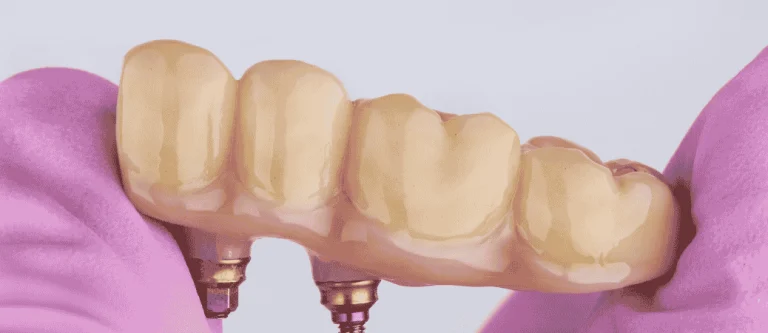
When you see ads for cheap dental implants at $999 or similar prices, that number usually covers only the implant post itself. The abutment that connects the post to your crown isn’t included. Neither is the crown, which is the visible tooth you actually chew with.
What’s often missing from low-price ads includes:
- The abutment connecting your implant to your new tooth
- The crown that serves as your functional, visible tooth
- The cover screw that protects the implant while it heals
- Consultations, X-rays, and CT scans
- Sedation or anesthesia
- Tooth extractions or bone grafting if needed
Your written treatment plan should list every component. If it doesn’t, you’ll face unexpected charges later. Many cheap implant offers also skip proper treatment planning, which means you won’t know the full scope of work until you’re already committed.
Unexpected Expenses and Hidden Fees
Beyond the missing pieces, cheap dental implants often come with hidden costs that push your total bill much higher. Some providers use bait-and-switch tactics to get you in the door, then tell you the advertised price doesn’t apply to your case.
You might discover you need bone grafting, which can cost several thousand dollars more. Sedation fees appear as separate line items. Follow-up care and adjustments aren’t covered in the initial quote.
Low-cost dental implants may also require more frequent repairs or replacements. Poor-quality materials fail sooner, forcing you to pay for corrective procedures.
Some patients end up needing to have failed cheap implants removed and replaced entirely, essentially paying for the procedure twice.
Long-Term Financial Impact
The true dental implant cost becomes clear over years, not months. Low-quality materials and rushed procedures lead to complications that require expensive fixes down the road.
Failed low-cost implants can damage your jawbone. Repairing that damage costs far more than investing in quality implants from the start.
You may need bone grafts, tissue repair, or specialized surgery to correct problems caused by cheap dental implants.
Inadequate aftercare is another major expense. Quality providers include follow-up care in their pricing, but budget options often charge separately for each visit. These appointments add up quickly, especially if complications arise.
A comprehensive single-tooth implant typically ranges from $5,000 to $7,500 when you include all necessary components and care.
Trying to save money with low-cost implants often means paying that amount anyway through repairs, replacements, and corrective work.
The Role of Implant Materials and Components
The materials used in your dental implant directly affect how long it lasts and how well it works in your mouth. Budget implants often use lower-grade materials that can break down faster or cause problems with your body accepting them.
Quality vs Budget Implant Systems
Premium implant systems from companies like Straumann, Nobel Biocare, and Zimmer Biomet have decades of research behind them. These brands test their products extensively before they reach your dentist’s office.
Budget implant systems may look similar on the surface. However, they often lack the same level of testing and quality control. The implant fixture that goes into your jawbone needs precise manufacturing to work correctly.
Quality implant systems also offer better warranties and replacement guarantees. If something goes wrong with a premium implant, the manufacturer typically stands behind their product.
Cheaper alternatives may leave you responsible for the full cost of replacement and additional surgery.
Material Choices and Long-Term Success
Medical-grade titanium is the gold standard for dental implants. This material bonds well with your bone and resists corrosion in your mouth. Titanium implants have success rates above 95% when placed correctly.
Some budget options use lower grades of titanium or titanium alloys with unknown compositions. These materials may not integrate as well with your jawbone. Poor integration can lead to implant failure within the first few years.
The implant body must be made from biocompatible materials that your body accepts. Substandard implant materials can trigger inflammation or rejection.
This means more pain, more appointments, and potentially losing the implant entirely.
Impact of Inferior Components
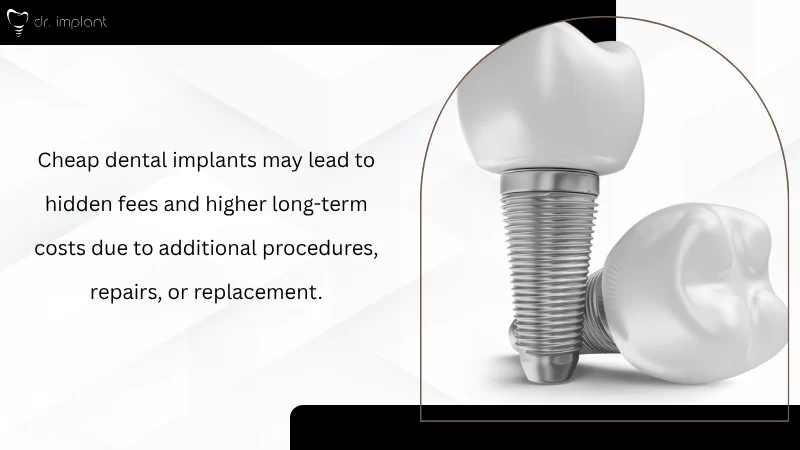
Your dental implant has multiple parts that work together. The main components include:
- Implant body (the screw that goes into your bone)
- Abutment (the connector piece)
- Crown (the visible tooth)
Each piece must fit precisely with the others. Cheap implant components often have poor tolerances, meaning the abutment and crown don’t connect properly to the implant body.
Loose connections create gaps where bacteria can enter. This leads to infections around your implant. The abutment may also break or loosen over time if it’s made from inferior materials.
Poor-quality implant fixtures can fracture under normal chewing pressure. Replacing a broken implant requires removing the failed piece, waiting for your bone to heal, and starting the entire process again.
Expertise and Diagnostic Tools Matter
The skills of your dental provider and the technology they use directly affect how well your implant integrates with your bone and how long it lasts.
Better training and modern imaging tools reduce complications and prevent costly repairs down the road.
Importance of Experienced Dental Professionals
An oral surgeon or specialist in implant dentistry brings years of training beyond dental school. These professionals spend four to six years in hospital-based programs learning how to handle complex surgeries and medical emergencies.
Your implant needs to be placed within millimeters of nerves and sinuses. Experienced dental professionals understand the complex biology of your face and jaw.
They know how to work around blood vessels and vital structures that could cause serious problems if damaged.
A board-certified surgeon can manage unexpected issues during your procedure. If you have thin bone or unusual anatomy, they have the skills to adjust the plan right away instead of creating complications.
Risks of Inexperienced Providers
General dentists without specialized training may offer cheaper rates but lack the depth of knowledge needed for complex cases. They might miss warning signs in your scans or place implants at wrong angles.
Inexperienced providers sometimes skip necessary steps to save time and money. They might place your implant in soft bone without doing a bone graft first. This leads to implant failure within months or years.
When complications arise during surgery, like unexpected bleeding, an untrained provider may not handle it safely. You could end up needing emergency care or extensive repairs that cost far more than you initially saved.
Advanced Diagnostic Imaging and Digital Planning
Standard X-rays only show two dimensions and miss critical details about your bone width and nerve locations. CBCT scans create 3D images of your jaw that let your surgeon see every angle before surgery.
Digital treatment planning uses these scans to map out your exact implant position on a computer. Your surgeon can measure bone density, avoid nerves, and choose the right implant size before touching you.
This technology transfers the digital plan to the operating room through surgical guides. These guides ensure your implant goes exactly where it was planned, preventing damage to nearby teeth and structures.
Budget clinics often skip CBCT scans to cut costs. Without this precision, your provider is essentially guessing where to place your implant based on limited information.
Precision in Implant Positioning
The angle and depth of your implant determine whether it can support chewing forces for decades. Even a few degrees off can cause stress fractures or make it impossible to attach your crown properly.
Surgical guides created from digital impressions act like GPS for your mouth. They show your surgeon the exact entry point and angle for drilling. This level of accuracy protects your bone and reduces healing time.
Poor implant positioning can damage adjacent teeth or leave gaps where bacteria collect.
Technology like dynamic navigation ensures your implant is placed exactly where planned, which prevents infections and structural problems years later.
When your implant sits at the right angle and depth, your final crown looks natural and functions like a real tooth. This precision is what separates successful implants from ones that need costly revisions.
Clinical Risks and Potential Complications
Low-quality dental implants carry several clinical risks that can affect your oral health for years. These complications range from early implant failure requiring removal to serious issues like nerve damage, infections, and progressive bone loss that may need costly corrective procedures.
Implant Failure and Removal
Dental implant failure happens when your jawbone doesn’t properly bond with the implant surface. This process, called osseointegration, is critical for long-term success.
When you choose cheap dental implants with poor surface properties, your body may reject the implant or fail to integrate it into your bone.
Early implant failure typically occurs within the first few months after placement. You might notice the implant becoming loose or painful.
When this happens, your dentist must remove the failed implant, which leaves you with less bone than you started with.
The removal process itself can be traumatic to your surrounding bone and tissue. After removal, you’ll need time to heal before attempting another implant. This delay means more time without teeth and additional costs for temporary solutions.
Infection, Nerve Injury, and Peri-Implantitis
Infection risk increases significantly when proper sterilization protocols aren’t followed or when inadequate post-operative care is provided. Signs of infection include swelling, persistent pain, and drainage around your implant site.
Nerve damage can occur when your dentist doesn’t use proper diagnostic imaging before surgery. The inferior alveolar nerve runs through your lower jaw, and placing an implant too close to it can cause numbness in your lip, chin, or tongue.
This numbness may be temporary or permanent depending on the severity of the injury.
Peri-implantitis is inflammation and infection around your implant that leads to bone loss. Poorly fitting components harbor bacteria that your toothbrush can’t reach.
Without treatment, peri-implantitis progresses and can destroy the bone supporting your implant.
Bone Loss, Grafting, and Sinus Lift Procedures
When implants fail, they typically leave behind less bone than was present before surgery. Progressive bone loss around failed implants means you’ll need bone grafting before placing new implants.
A bone graft takes tissue from another part of your body or uses synthetic materials to rebuild your jawbone.
Common bone grafting scenarios include:
- Socket preservation after implant removal
- Ridge augmentation for width or height
- Sinus lift procedures in your upper jaw
- Block grafts for severe bone loss
Sinus lift procedures become necessary when implants in your upper jaw penetrate your sinus cavity due to poor planning. This complication requires additional surgery to add bone between your jaw and sinus membrane.
The recovery time extends your treatment by several months.
Gum Recession and Long-Term Support
Gum recession around dental implants exposes the metal components and creates aesthetic problems. When implants are placed at incorrect angles or depths, your gum tissue gradually pulls away.
This recession is often irreversible without grafting procedures.
Your gums provide crucial long-term support for implants by creating a seal against bacteria. Poor implant positioning compromises this seal and allows bacteria to reach the bone. Missing teeth adjacent to poorly placed implants may shift, creating bite problems.
The soft tissue around your implants needs adequate thickness to stay healthy.
Thin gum tissue is more prone to recession and inflammation. You may need gum grafting to build up tissue thickness around failing implants before attempting replacement.
Essential Steps for Safe and Successful Dental Implant Treatment
Getting dental implants requires careful planning and proper care to avoid complications that could increase your costs.
The right assessment, consistent aftercare, and choosing an experienced provider are the main factors that determine whether your investment will last.
Thorough Assessment and Treatment Planning
Your dentist needs to evaluate your oral health completely before starting dental implant treatment. This includes examining your jawbone density, gum health, and overall medical history.
CBCT scans are a critical part of treatment planning. These 3D images show your dentist the exact structure of your jaw and help them place implants in the safest positions.
Key assessment steps include:
- Digital imaging and CBCT scans to map bone structure
- Evaluation of any infections or gum disease
- Review of medications that might affect healing
- Determining if tooth extraction or bone grafting is needed first
Your dentist should create a detailed treatment plan that outlines every step. This plan helps you understand the timeline and prevents surprises that could add unexpected costs later.
The Importance of Post-Operative Care
Follow-up care directly affects whether your implants succeed or fail. You need to attend all scheduled appointments so your dentist can monitor healing.
Your aftercare responsibilities include:
- Taking prescribed antibiotics to prevent infection
- Avoiding hard foods during the healing period
- Keeping the surgical site clean with gentle brushing
- Not smoking, which can cause implant failure
- Reporting any pain, swelling, or unusual symptoms immediately
Most implant failures happen because patients skip follow-up visits or don’t follow care instructions. Missing even one appointment can allow small problems to become major complications that require expensive repairs.
Selecting the Right Implant Provider
Your choice of dentist matters more than the price you pay. Choosing cheap implants often means working with less experienced providers who use lower-quality implant systems.
Look for a dentist who specializes in implant dentistry and has completed advanced training. Ask how many implants they place each year and what their success rate is.
Questions to ask potential providers:
- What implant systems do you use and why?
- How long have you been placing implants?
- Can I see before and after photos of your work?
- What happens if my implant fails?
- Do you offer payment plans or financing options?
An experienced provider will use proven implant systems and take time to explain each step. They should also offer clear warranties and have a plan for handling complications at no extra charge.
Frequently Asked Questions
Understanding what drives implant costs and what to watch out for can save you from expensive problems down the road. These questions cover the most important factors that affect both upfront pricing and long-term expenses.
What factors make dental implant prices vary so much between providers?
The biggest factor is the training and experience level of your dentist or oral surgeon. Specialists who place implants regularly tend to charge more than general dentists who only do a few cases per year.
Location plays a major role too. Practices in big cities with high rent and labor costs charge significantly more than rural clinics.
The brand and quality of implant materials matter. Premium titanium implants from manufacturers like Nobel Biocare or Straumann cost more than generic brands.
Materials used and the expertise of dental professionals directly influence the final price you pay.
Technology and equipment also affect pricing. Clinics that use 3D imaging, computer-guided surgery, and in-house labs can charge more. However, these tools often lead to better outcomes and fewer complications.
The complexity of your case matters too. If you need bone grafts, sinus lifts, or multiple extractions, your total cost will be much higher than someone with healthy bone who just needs a single implant.
What hidden fees should I ask about before choosing a lower-cost dental implant option?
Many advertised prices only cover the implant post itself. You need to ask if the quote includes the abutment and the final crown. These two pieces can add $2,000 to $3,000 to your total bill.
Ask about imaging costs upfront. CBCT scans typically run $250 to $500 and are necessary for proper planning.
Temporary teeth during healing often cost extra. If you need a temporary crown or flipper while your implant heals, that might be another $300 to $800.
Find out what happens if the implant fails. Some clinics include a warranty or free replacement within the first year. Others charge you full price to start over.
Ask about follow-up appointments. Some practices bundle all post-op visits into one fee. Others charge separately for each checkup and adjustment.
How can cheaper implant materials or components affect durability and long-term success?
Lower-quality titanium or off-brand implants may not fuse as reliably with your jawbone. This can lead to implant failure within the first few years, forcing you to pay for removal and replacement.
Generic implant components may not be readily available years later. If your crown breaks or you need a repair, your dentist might struggle to find matching parts. You could end up paying for a completely new restoration.
Cheaper crowns made from lower-grade materials wear down faster. They may chip, crack, or discolor within five to seven years instead of lasting 15 to 20 years like premium options.
Some discount implants come from overseas manufacturers with less stringent quality control. Surface treatments that help bone integration might be inconsistent, increasing your risk of complications.
The connection between the implant and abutment needs precise engineering. Poor-fitting components can create gaps where bacteria collect, leading to infections and bone loss around your implant.
How much do dental implants typically cost with insurance, and what does coverage usually exclude?
Most dental insurance plans still classify implants as cosmetic or elective. That means they offer little to no coverage for the procedure itself.
When insurance does help, it usually covers only parts of the process. You might get 50% to 80% coverage for tooth extraction and 50% for the crown that goes on top of your implant.
The implant post, abutment, and surgical placement typically receive zero coverage. These are the most expensive parts of the procedure.
Insurance might save you $500 to $1,000 on a single implant that costs $3,000 to $6,000 total. You will still pay most of the bill out of pocket.
Some newer dental plans include an implant rider or enhanced benefits option. You have to specifically request this add-on, and it usually increases your monthly premium.
Medical insurance occasionally covers implants if tooth loss resulted from an accident or medical condition like cancer. You need documentation from both your dentist and doctor to qualify.
What is the 50-40-30 rule in dentistry, and how can it help me budget for implant treatment?
The 50-40-30 rule is a budgeting guideline that helps you plan for dental work over time. It suggests spending 50% of your dental budget on prevention, 40% on needed treatments, and 30% on elective procedures.
For implants, this means prioritizing preventive care first. Regular cleanings and checkups cost less and help you avoid additional tooth loss that would require more implants later.
The 40% portion covers essential treatments like treating gum disease or infections before getting implants. Skipping these steps to save money often leads to implant failure.
The 30% elective category is where most implants fall. This helps you see implants as an investment you save for rather than an emergency expense.
You can apply this rule to payment planning too. Set aside money monthly in a health savings account or flexible spending account specifically for your implant procedure.
This approach prevents you from rushing into a cheap implant deal just because you need immediate treatment. Taking time to save often means you can afford better quality materials and a more experienced provider.