Getting a dental implant used to mean a lot of guesswork and hoping everything lined up right. Now, dentists can use digital tools to plan your entire treatment before they even start the procedure.
Digital Smile Design combines 3D imaging, computer planning software, and surgical guides to place implants with precise accuracy, reducing errors and improving your final results.
When your dentist uses digital planning for implant placement, they can see exactly where your implant needs to go before surgery begins. This means fewer complications and better outcomes for you.
The technology maps out the perfect position, angle, and depth for your implant down to fractions of a millimeter.
Research shows that fully digital workflows improve implant placement accuracy, especially at the coronal level where your implant meets your gum line. This matters because accurate placement means your implant will look more natural, function better, and last longer.
The digital approach takes the uncertainty out of the process and gives you more predictable results.
Key Takeaways
- Digital Smile Design uses 3D imaging and virtual planning to place implants with sub-millimeter precision
- Fully digital workflows significantly reduce placement errors compared to traditional methods
- Advanced digital tools improve both the look and long-term success of your dental implants
Get cutting-edge digital implant solutions across Miami, Pembroke Pines, and Delray Beach, FL.
The Role of Digital Smile Design in Implant Accuracy
Digital Smile Design creates a bridge between what you want your smile to look like and where your dental implants need to be placed.
This approach combines facial analysis, smile aesthetics, and precise implant positioning to help your dentist plan treatments that work both functionally and visually.
Fundamental Principles of Digital Smile Design
Digital Smile Design starts with capturing detailed images of your face and mouth. Your dentist takes 2D photos and combines them with 3D scans of your teeth and gums.
The software analyzes your facial features to determine the ideal tooth size, shape, and position for your unique smile. It considers factors like your lip line, facial symmetry, and the relationship between your teeth and facial structures.
This digital approach lets you see a preview of your final results before any work begins. Your dentist can adjust the design based on your feedback, ensuring you’re happy with the plan.
The technology also helps identify any anatomical challenges early in the planning process. This means fewer surprises during surgery and better outcomes overall.
Integration With Implant Planning
Once your smile design is complete, the data transfers directly into implant planning software for precise surgical execution. This integration ensures your implants are positioned to support the teeth you designed.
Your dentist uses cross-sectional images to map out bone structure, nerve locations, and sinus cavities. The software shows exactly where each implant should go, at what angle, and how deep.
Digital workflows enhance precision and predictability by converting your aesthetic goals into specific surgical coordinates. This backward planning approach starts with the end result and works back to determine implant placement.
The system can create surgical guides based on your digital plan. These guides fit over your gums during surgery to direct the drill exactly where it needs to go.
Personalized Aesthetic and Functional Outcomes
Digital Smile Design tailors every aspect of your treatment to your individual needs. The software accounts for how you speak, smile, and move your mouth naturally.
Your new teeth will match your facial proportions and personality. The digital planning process considers your age, gender, and personal preferences when designing tooth shape and color.
AI-facilitated digital workflows can merge facial photographs with digital records to create smile designs guided by your facial features. This technology helps predict how your final restoration will look in different expressions.
The integration between smile design and implant positioning means your implants support teeth that look natural when you talk and smile. This coordination between form and function is difficult to achieve with traditional planning methods.
Visit our clinic for advanced digital implant planning and smile design.
Advancements in Digital Implant Planning and Workflow
Digital implant planning has transformed how dentists design and place dental implants. Modern tools like advanced imaging systems, virtual planning software, and intraoral scanners work together to create precise treatment plans that improve accuracy and patient outcomes.
Virtual Implant Planning Software
Virtual planning software lets you visualize your entire implant treatment before any surgery takes place. These programs combine different types of imaging data to create a complete 3D model of your jaw, teeth, and surrounding structures.
Your dentist can use digital implant planning tools to position implants with extreme precision. The software shows exact measurements for implant depth, angle, and placement. This helps avoid nerves and other important structures in your jaw.
Most planning programs also show how your final restoration will look. You can see the planned crown or bridge on screen before treatment starts. This visual approach helps you understand the treatment plan and what results to expect.
Cone-Beam Computed Tomography and 3D Imaging
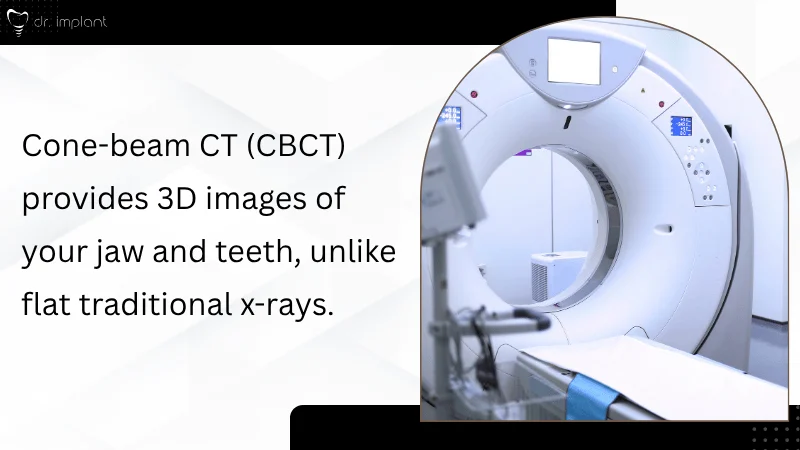
Cone-beam computed tomography (CBCT) provides detailed 3D images of your jaw bone and teeth. Unlike traditional x-rays that show flat images, CBCT scans capture your anatomy from all angles.
Your dentist uses these scans to measure bone height, width, and density at the implant site. CBCT and 3D imaging technologies help identify the exact location of nerves and sinuses that must be avoided during surgery.
The detailed view shows even small variations in bone structure that could affect implant placement.
The technology has become standard in modern implant dentistry. CBCT scans integrate directly with virtual planning software to create a complete digital workflow.
Digital Impressions and Intraoral Scanning
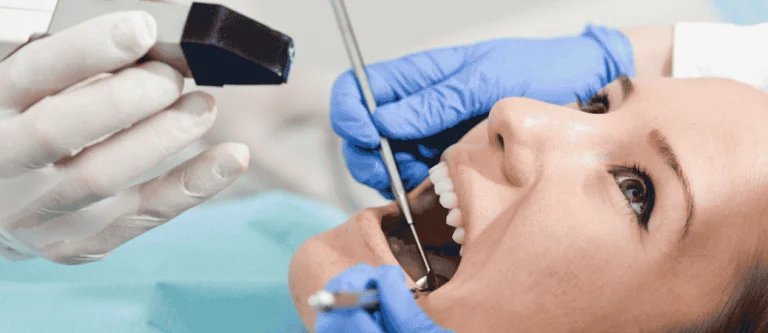
Intraoral scanners have replaced messy impression trays in many dental offices. These small cameras capture thousands of images inside your mouth in just minutes.
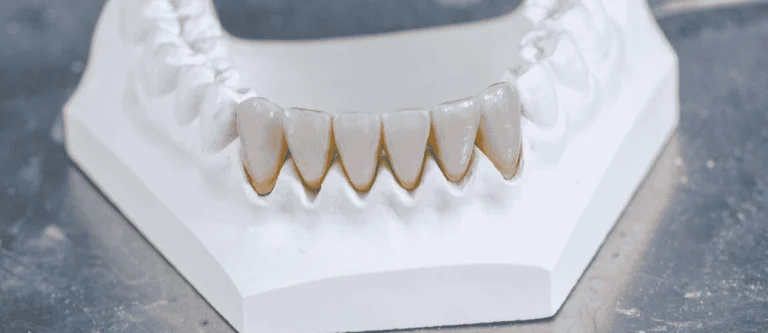
The scanner creates a precise 3D model of your teeth and gums. Digital impressions are often more accurate than traditional molds and much more comfortable for patients. You don’t have to deal with gagging on impression material.
Digital technologies in dentistry allow these scans to connect directly with planning software and manufacturing systems. Your dentist can design your restoration on the same day and send the file to a lab or mill it in the office.
This streamlined digital workflow reduces treatment time and the number of appointments you need.
Schedule your consultation to experience precision with digital smile design for implants.
Precision in Implant Placement: Guided Surgery and Navigation
Modern technology has transformed how dentists place dental implants with pinpoint accuracy. Guided implant surgery offers failure rates three times lower than traditional methods, while dynamic navigation provides real-time adjustments during your procedure.
Guided Implant Surgery Techniques
Guided surgery uses a combination of 3D imaging and computer planning to map out your implant placement before the procedure begins.
Your dentist creates a digital plan that shows exactly where each implant should go based on your bone structure and final restoration needs.
This approach creates a clear roadmap for your procedure. The accuracy of implant placement improves significantly when using digital guides compared to freehand techniques.
The technology connects virtual planning to clinical reality through precise surgical protocols. Your implant position gets planned down to the millimeter, considering depth, angle, and spacing.
Guided implant surgery achieves survival rates exceeding 95%, making it the current standard for precise implant placement.
Dynamic Navigation and Real-Time Guidance
Dynamic navigation systems provide real-time guidance that lets your dentist see exactly where the drill is positioned during your surgery. Think of it like a GPS system for dental implants.
The technology tracks your jaw movements and the surgical instruments simultaneously. Your dentist can make immediate adjustments if needed, reducing the risk of complications during your procedure.
A recent comparison study found that robotic surgery and dynamic navigation both deliver high levels of surgical accuracy for implant placement.
The real-time feedback helps your dentist stay on the planned path throughout the entire procedure, even if you move slightly.
Surgical Guides and Template-Assisted Placement
Surgical guides are physical templates that fit over your teeth or gums during implant placement. These guides have precise holes that direct the drill at the exact angle and position planned in your digital design.
Types of surgical guides include:
- Tooth-supported guides that rest on your remaining teeth
- Tissue-supported guides that sit on your gums
- Bone-supported guides that attach directly to your jawbone
Your guide gets made from your CT scan and digital plan using 3D printing. The template prevents the drill from deviating from the planned position, ensuring your implant goes exactly where it should.
Static guides combined with digital planning help maintain consistent implant placement accuracy throughout your procedure.
Enhancing Prosthesis Fabrication and Fit With Digital Technology
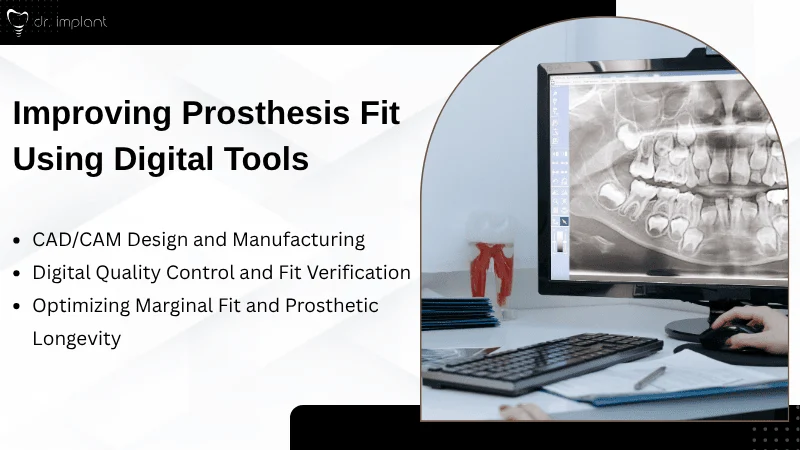
Digital technology transforms how dental prostheses are created and fitted, with CAD/CAM systems enabling precise design and manufacturing that reduces errors and improves outcomes.
These tools allow for better quality control and verification before the final prosthesis is placed in your mouth.
CAD/CAM Design and Manufacturing
CAD/CAM technology uses computers to design and create your implant crowns and abutments with greater accuracy than traditional methods.
The digital workflow starts with scan data from your mouth and allows your dentist to design a custom prosthesis that fits your specific anatomy.
Computer-aided design and manufacturing systems have streamlined the prosthetic fabrication process to create precise and reproducible restorations. You benefit from improved accuracy in both the design phase and the manufacturing stage.
The digital workflow removes errors that happen when making physical casts and inserting implant analogues. Studies show that CAD/CAM technology optimizes prosthetic fit, aesthetics, and material selection for better long-term results.
Digital Quality Control and Fit Verification
Digital dentistry gives your dental team the ability to check the fit of your prosthesis before it’s permanently placed. Virtual try-ins allow problems to be spotted and fixed early in the process.
The accuracy of fit connects directly to the quality of the full-arch digital impression taken at the start of treatment. Digital tools measure trueness and precision to ensure your prosthesis matches the planned specifications.
Research on optimized digital protocols shows significant improvements in time efficiency and precision for full-arch implant prostheses. Your dentist can verify measurements and make adjustments before the final prosthesis is made.
Optimizing Marginal Fit and Prosthetic Longevity
Marginal fit refers to how well the edge of your prosthesis meets your natural tooth or implant abutment. Better marginal fit means less space for bacteria to grow and better long-term health for your implant.
Digital fabrication methods achieve tighter marginal fit than conventional casting techniques. This precision reduces the risk of complications and extends implant longevity.
Intraoral scanners and CAD/CAM systems provide evidence of superior accuracy in implant placement and improved prosthesis fit. The combination of accurate planning and precise manufacturing helps your implant restoration last longer with fewer problems.
Digital technology also reduces apical deviation during implant placement, which affects how well the final prosthesis fits and functions.
When your implant is positioned correctly from the start, the prosthesis fits better and performs better over time.
Clinical Impact: Patient Experience and Treatment Outcomes
Digital Smile Design transforms how you experience implant treatment by streamlining workflows and giving you clear visual expectations.
The technology directly affects implant stability through better planning and improves your long-term outcomes with precise placement.
Workflow Efficiency and Reduced Chairtime
Digital Smile Design cuts down the time you spend in the dental chair by combining multiple steps into one efficient process. Your dentist can complete diagnosis, planning, and design in a single appointment instead of scheduling separate visits.
The digital workflow eliminates many traditional steps. You don’t need messy physical impressions or multiple try-ins. Your dentist captures digital scans and designs your smile on screen while you wait.
This efficiency means fewer appointments overall. Studies show that integrating DSD into restorative dentistry reduces treatment time and improves predictability. Your implant dentistry procedure becomes more streamlined from start to finish.
The time savings benefit both you and your dental team. Less chairtime means less fatigue and discomfort for you during lengthy procedures.
Improving Patient Satisfaction Through Visualization
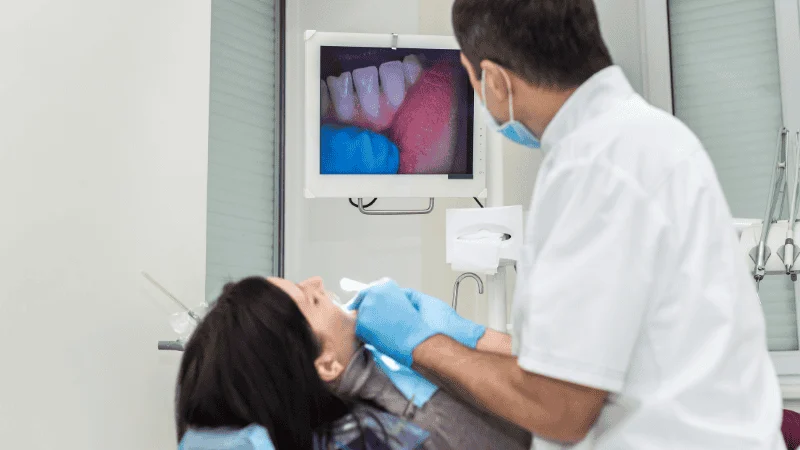
You can see exactly how your new smile will look before any work begins. Digital Smile Design creates realistic previews that show your final results on your own face. This removes the guesswork and anxiety about permanent dental changes.
Research indicates that patients rate AI-generated smile previews more favorably than traditional 2D designs. You become an active participant in designing your smile rather than just accepting what the dentist suggests.
The visualization tools help you communicate what you want. You can request adjustments to tooth shape, size, or color before treatment starts. This collaboration leads to higher acceptance rates and better satisfaction with final outcomes.
When you understand the treatment plan visually, you feel more confident moving forward. The digital preview reduces fear of the unknown that often comes with implant procedures.
Influence on Implant Stability and Long-Term Success
Precise digital planning directly impacts how well your implants integrate with your bone. Digital Smile Design helps your dentist position implants at optimal angles and depths for maximum stability. Better initial placement means stronger implant stability from day one.
The technology considers your bone density, nerve locations, and gum tissue health. Your dentist maps out the exact surgical path before making any incisions. This careful planning protects your peri-implant health and reduces complications.
Digital visualization improves treatment predictability and leads to better aesthetic outcomes. When your implants are placed with digital precision, they have higher implant success rates over time.
Long-term implant success depends on proper positioning from the start. Digital planning ensures your implants support proper bite forces and distribute pressure evenly. This reduces stress on surrounding bone and maintains healthy tissue for years to come.
Future Directions: Artificial Intelligence and Innovations in Digital Implantology
Artificial intelligence is transforming how dentists plan and execute implant treatments, with systems that can analyze bone density, predict outcomes, and design personalized restorations.
Smart implant technologies now monitor healing in real time, while emerging research explores new materials and methods to improve success rates.
AI in Digital Smile Design and Virtual Planning
AI in dentistry uses computer algorithms that simulate human intelligence to perform tasks like visual perception and decision-making.
When you visit a dental office using AI-powered planning, the system can analyze your CBCT scans and automatically suggest optimal implant positions based on thousands of previous cases.
Machine learning algorithms examine your specific anatomy and prosthetic needs to recommend ideal implant locations.
These tools help your dentist predict potential complications before surgery begins. Artificial intelligence in oral implantology can provide real-time surgical visualization and assist with precision placement.
The technology handles complex diagnostic tasks quickly. AI-supported preoperative planning remains in development for widespread adoption, but the focus on diagnosis and prediction continues to advance.
Your treatment plan becomes more personalized as AI systems learn from both successful outcomes and complications across large patient databases.
Smart Implants and Osseointegration
Smart implants contain sensors that track healing progress after surgery. These devices monitor osseointegration, which is the process where your jawbone fuses with the implant surface to create a stable foundation.
The sensors detect changes in stability and can alert your dentist to potential problems before they become serious.
Early detection of peri-implantitis, an inflammatory condition affecting tissues around implants, becomes possible with continuous monitoring. You benefit from interventions at the earliest signs of trouble.
In vitro study results guide the development of new implant surfaces and materials that promote faster bone integration. Researchers test coating materials and surface textures in laboratory settings to identify which combinations work best.
Digital technology in implant dentistry now includes integration of bioengineering principles that enable biomechanical analysis and predictive modeling for better outcomes.
Emerging Technologies and Research Trends
Augmented reality systems let your dentist see virtual implants overlaid on your actual anatomy during surgery. This visualization technology helps with spatial understanding and reduces placement errors.
Haptic feedback systems give surgeons tactile sensations during implant placement. These systems help detect subtle changes in bone density that might not be visible on scans alone.
Markerless tracking simplifies the workflow by eliminating the need for fiducial markers attached to your gums.
Three-dimensional printing advances allow for customized surgical guides and prosthetics made specifically for your mouth. Digital workflows now encompass real-time stress monitoring and advanced biomaterial selection.
Robotics research aims to assist with precise drilling and implant insertion, though ethical considerations and clinical complexity slow adoption.
Frequently Asked Questions
Digital smile design brings together advanced imaging, computer planning, and precise manufacturing to help dentists place implants more accurately and create better results for patients.
These tools let you see your future smile before treatment starts and help your dentist work with greater precision.
What are the benefits of using digital smile design in dental implant procedures?
Digital smile design lets you preview your final results before any work begins on your teeth. Your dentist can show you exactly how your new smile will look using digital images and 3D models.
Digital smile design offers improved accuracy and predictable results. You’ll have better communication with your dentist because you can both see the treatment plan on screen.
The technology helps create harmony between your teeth and facial features. Your dentist can make adjustments to the design based on your feedback before starting the actual procedure.
Can digital smile design improve the precision of implant placement?
Digital smile design significantly improves how accurately your dentist can place implants. The technology uses detailed scans and computer planning to determine the exact position for each implant.
Your dentist creates a surgical guide based on the digital plan. This guide directs exactly where each implant should go during surgery.
Digital dentistry has revolutionized implant placement, resulting in higher levels of precision. The combination of 3D imaging and computer-aided design removes much of the guesswork from traditional methods.
How does digital smile design technology integrate with restorative dentistry practices?
Digital smile design has revolutionized restorative dentistry by giving dentists powerful tools to design and visualize treatments. The technology works with various procedures including veneers, crowns, implants, and orthodontics.
Your dentist uses digital scans instead of traditional impressions. These scans create precise 3D models of your teeth and gums.
The digital workflow connects planning software with manufacturing equipment. CAD/CAM systems help produce implant restorations with high accuracy and consistency.
What is the workflow like when implementing digital smile design for aesthetic dentistry?
The process starts with taking digital photographs and scans of your teeth and face. Your dentist analyzes these images to understand your facial proportions and smile characteristics.
Next, the dentist creates a digital design showing your new smile. You can review this design and request changes before any treatment begins.
The final design guides the entire treatment process. Whether you’re getting veneers, crowns, or implants, the digital plan ensures everything fits together properly.
In what ways does artificial intelligence enhance the digital smile design process?
Artificial intelligence helps analyze facial features and dental structures more quickly. The technology can identify ideal proportions and suggest design options based on your unique characteristics.
AI tools speed up the planning process while maintaining accuracy. Your dentist can explore multiple design options in less time.
The technology learns from thousands of cases to recommend treatments that work well. This helps your dentist make informed decisions about your specific situation.
What principles are crucial to consider when creating a digital smile design?
The choice of digital implant method becomes more accurate when tailored to your individual characteristics. Your dentist considers your facial features, lip position, and gum line when designing your smile.
Proper tooth proportions and spacing are essential for natural-looking results. The design should complement your face shape and existing features.
Your dentist must ensure the planned implants have adequate bone support. The digital plan accounts for bone density and available space before finalizing implant positions.