If you smoke and need to replace a missing tooth, you may wonder if dental implants are even an option. You want a solution that lasts, but you also know smoking can affect your health.
Yes, you can get dental implants if you smoke, but smoking raises the risk of healing problems and implant failure.
Nicotine reduces blood flow to your gums, which can slow healing and make it harder for the implant to bond with your jawbone.
The good news? Dental implants for smokers are not automatically off the table.
With the right care, honest talks with your dentist, and changes to your smoking habits, you can improve your chances of success and protect your investment.”
Key Takeaways
- You can get dental implants as a smoker, but you face higher risks.
- Smoking slows healing and can affect how well the implant bonds to bone.
- You can improve success by following care instructions and reducing or stopping smoking.
Can Smokers Get Dental Implants?
Yes, you can get dental implants if you smoke, but your risk of problems is higher. Your dentist will look closely at your health, bone support, and your willingness to pause or quit smoking during healing.
Candidacy Criteria for Smokers
Your dentist checks a few key factors before approving implant surgery. Smoking lowers blood flow to your gums and jaw, which can slow healing and raise the risk of implant failure.
A clinical review noted that smokers can face a failure rate two to three times higher than non-smokers due to poor healing and bone loss, as explained in this overview on how smoking affects implant success rates.
You are more likely to qualify if you:
- Have healthy gums with no active gum disease
- Show enough jawbone density on digital imaging
- Agree to stop smoking 1–2 weeks before surgery
- Commit to avoiding tobacco for at least 8–12 weeks after surgery
Heavy smokers may need bone grafting first if bone loss has occurred. Your dentist will review scans and your medical history before making a final decision.
Consulting With Your Implant Dentist
You need an honest conversation with your implant dentist. Be clear about how much you smoke and for how long. This helps your dentist plan your care safely.
Your dentist may take 3D scans to measure bone thickness and check for hidden bone loss. They will also examine your gums for infection or inflammation.
Many practices explain that smokers can still receive implants with careful planning and close follow‑up, as outlined in this guide on smoking and dental implant risks and healing issues.
Expect your dentist to discuss:
- Short‑term smoking cessation
- Strict oral hygiene routines
- More frequent checkups after surgery
If you follow instructions and protect the healing area, you improve your chances of long‑term success.
With convenient locations across Florida in Miami, Pembroke Pines, and Delray Beach, expert implant care is close to home. Contact us today to schedule your visit.
How Smoking Affects Dental Implant Success
Smoking changes how your body heals, how your bone bonds to the implant, and how long the implant lasts. These effects start right after surgery and can continue for years if you keep smoking.
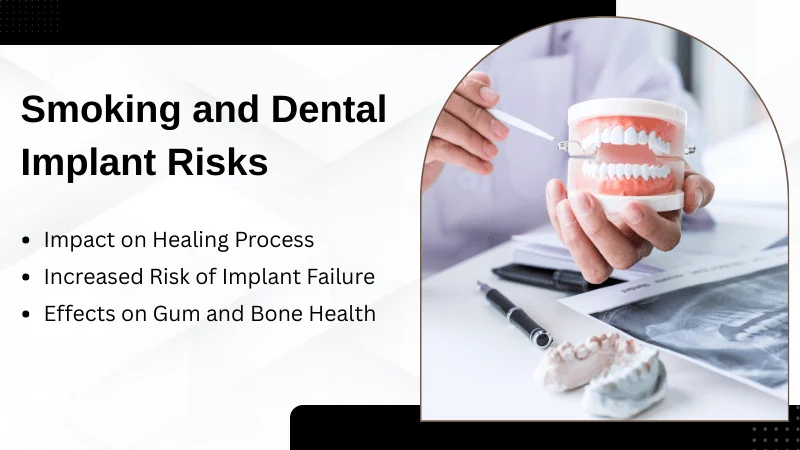
Impact on Healing Process
After implant surgery, your body needs strong blood flow to repair tissue and build new bone. Smoking narrows blood vessels and lowers oxygen levels in your blood.
This slows down healing in the gums and bone around the implant. You may notice more swelling, bleeding, or discomfort that lasts longer than expected.
Nicotine and other chemicals also reduce the activity of cells that build new bone. That can delay osseointegration, the process where your jawbone fuses to the implant.
Many dentists warn that smoking during recovery increases complications. For example, this guide on smoking after dental implants and healing explains how tobacco can interfere with early stability.
Even a few cigarettes a day can reduce blood flow for hours. When this happens often, your body struggles to repair the surgical site the way it should.
Increased Risk of Implant Failure
Smoking raises the chance that your implant will fail, especially in the first year. Research shows smokers face a much higher risk of implant loss compared to non-smokers.
One report found smokers had a 140.2% higher risk of implant failure than people who do not smoke. You can read more about these numbers in this article on smoking and implant success risks.
Implant failure can happen in two main stages:
- Early failure: The implant never bonds fully with the bone.
- Late failure: Bone loss or infection develops after healing.
Heavy smoking increases both risks. The more cigarettes you smoke per day, the higher your chances of problems.
Effects on Gum and Bone Health
Your gums and jawbone support the implant for life. Smoking weakens both.
Tobacco lowers your immune response. This makes it harder for your body to fight bacteria around the implant. As a result, you face a higher risk of infections such as peri-implantitis.
Smoking also increases bone loss around implants. Reduced blood flow and chronic inflammation can lead to gradual bone breakdown. If enough bone is lost, the implant can loosen.
If you already have gum disease, smoking makes it worse. This article on smoking and dental implant success rates explains how tobacco affects long-term stability.
When your gums stay inflamed and your bone weakens, your implant has less support. That makes long-term success harder to achieve if you continue to smoke.
Have Questions About Smoking and Implants? Discuss your specific health history and get a personalized treatment plan from our experienced team.
Risks and Complications for Smokers
Smoking lowers blood flow in your gums and bone. That makes it harder for your body to heal and fight infection after implant surgery.
Infection and Delayed Healing
When you smoke, nicotine tightens your blood vessels. Less blood reaches the surgical site, which means less oxygen and fewer nutrients for healing.
This delay raises your risk of infection in the first few weeks after surgery. Bacteria can grow around the implant before your gum tissue seals properly. If infection sets in early, the implant may fail to bond with your jawbone.
Research shows smokers face a higher failure rate than non-smokers.
A review of clinical data shared in this guide on smokers and dental implant success rates notes failure rates of about 10–20% in smokers, compared to 2–5% in non-smokers.
You may also notice:
- More swelling
- Longer bleeding time
- Slower gum closure
- Greater discomfort during recovery
Stopping smoking even a few weeks before and after surgery can improve blood flow and healing.
Higher Rate of Peri-Implantitis
Peri-implantitis is an infection that affects the gum and bone around your implant. It acts much like advanced gum disease and can lead to bone loss.
Smoking weakens your immune response. Your body has a harder time controlling harmful bacteria around the implant. Over time, this can cause the bone supporting your implant to shrink.
Watch for warning signs such as:
- Red or swollen gums
- Bleeding when brushing
- Bad taste or odor
- A loose feeling around the implant
Without treatment, bone loss can progress and lead to implant failure. Careful brushing, flossing, and regular dental visits become even more important if you continue to smoke.
Tips to Improve Implant Success for Smokers
You can raise your chances of implant success by changing a few key habits. Focus on stopping tobacco use, keeping your mouth very clean, and seeing your dentist on a set schedule.
Smoking Cessation Before and After Surgery
You give your implant the best chance to heal when you stop smoking before surgery. Many dentists advise you to quit at least 2 to 3 months before implant placement and stay smoke‑free during healing.
This window allows better blood flow to your gums and jawbone.
Smoking limits oxygen and slows bone bonding to the implant. Research shows smokers face higher failure rates, often around 10–20%, compared to much lower rates in non-smokers, as explained in this review of implant success rates for smokers.
If you cannot quit long term, stop for a set period before and after surgery. Even short‑term quitting improves healing.
Ask your doctor about nicotine patches or other stop‑smoking tools. Avoid vaping and smokeless tobacco as well, since they still affect gum health.
Oral Hygiene Best Practices
You must control plaque every day. Bacteria around an implant can cause infection and bone loss, especially if you smoke.
Follow this simple routine:
- Brush twice daily with a soft toothbrush
- Use a low‑abrasive toothpaste
- Floss once a day or use implant-safe floss
- Rinse with an antibacterial mouthwash
Smoking dries your mouth, which helps bacteria grow. Drink water often and avoid sugary drinks.
Inflammation around implants, called peri‑implantitis, occurs more often in smokers. You can lower this risk by cleaning carefully along the gumline.
If you feel swelling, bleeding, or notice a bad taste, call your dentist right away.
Regular Dental Check-Ups
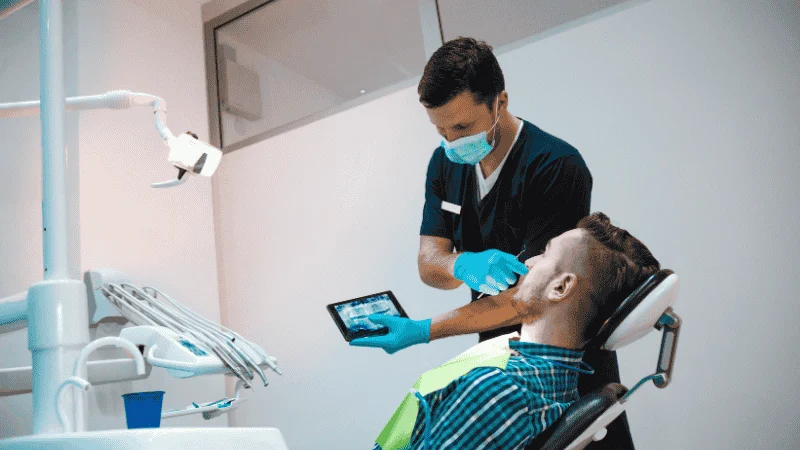
You need more than home care to protect your implant. Regular visits allow your dentist to spot early problems before they lead to failure.
Most patients should schedule cleanings every 3 to 6 months after implant placement. Your dentist may suggest shorter intervals if you continue to smoke. Professional tools remove hardened plaque that brushing cannot.
During these visits, your dentist checks:
| What They Check | Why It Matters |
| Gum health | Detects early infection |
| Bone levels | Confirms implant stability |
| Implant movement | Identifies loosening early |
Many implant specialists stress close monitoring for smokers, as noted in this guide on smoking and dental implants before surgery.
When you keep every visit, you protect your investment and lower your risk of long‑term problems.
Alternative Solutions for Smokers
If you are not ready to quit smoking, you still have options. Your dentist may suggest treatments that carry fewer risks than implants.
One common choice is a dental bridge. A bridge uses nearby teeth to support a false tooth. It does not require surgery in the jawbone, so smoking has less impact on healing.
Another option is a removable partial denture. This appliance replaces one or more missing teeth and rests on your gums. It costs less than implants and does not rely on bone fusion.
You may also consider a full denture if you are missing many teeth. Dentures do not need osseointegration, which smoking can affect. However, they may feel less stable than implants.
Here is a quick comparison:
| Option | Surgery Needed | Affected by Smoking Healing Issues | Removable |
| Dental Implant | Yes | Yes | No |
| Bridge | No (minor prep) | Less | No |
| Partial Denture | No | No | Yes |
| Full Denture | No | No | Yes |
You can also talk with your dentist about a delayed implant plan. Some offices outline risks and preparation steps in guides like this page on can smokers get dental implants.
If you decide to move forward later, you can work on reducing or stopping smoking first. Even short-term quitting may improve healing and give you more treatment choices.
The first step is an honest, no-obligation conversation. Contact us to discuss your health history and learn what your personal success rate could look like.
Frequently Asked Questions
Smoking raises the risk of infection, slow healing, and bone loss around implants. You can still get implants, but you need clear steps before and after surgery to protect them.
What precautions should smokers take after dental implant surgery?
Stop smoking for at least 2 to 8 weeks after surgery. This time frame protects the blood clot and supports early bone growth.
Keep the area clean but be gentle. Brush carefully, avoid strong rinsing for the first day, and use any prescribed mouth rinse as directed.
Go to every follow-up visit. Your dentist will check for swelling, infection, or early bone loss and act fast if needed.
Is it possible to smoke immediately following dental implant placement?
No. Smoking right after surgery can disturb the blood clot and delay healing.
Nicotine tightens blood vessels. That reduces blood flow to the surgical site at the exact time your body needs oxygen and nutrients.
Many dental offices warn patients about the risks of smoking after dental implants and healing complications. Waiting improves your chances of success.
How does smoking affect the healing process of dental implants?
Smoking slows the process called osseointegration. This is when your jawbone grows around the implant and locks it in place.
Nicotine reduces blood flow, and tobacco toxins weaken your immune response. That makes infection more likely and bone healing less predictable.
You may notice more swelling, delayed gum healing, or ongoing soreness. These signs can point to poor integration.
Can smoking cause dental implants to fail and what are the rates?
Yes, smoking can increase implant failure rates. Smokers often show lower long-term success compared to non-smokers.
Reports commonly show success rates above 95% in non-smokers. Heavy smokers may see lower rates, often in the 85% to 90% range over several years.
You can review how smoking changes implant outcomes in this guide on dental implants for smokers: risks and real results. Quitting before surgery can move your odds closer to those of a non-smoker.
At what point post-surgery is it less risky for a smoker to resume smoking?
The highest risk period is the first 2 to 8 weeks after surgery. This is when soft tissue closes and early bone forms around the implant.
After this window, the risk drops but does not disappear. Smoking at any stage can still lead to gum inflammation and bone loss over time.
The longer you wait, the better your healing environment becomes. Permanent quitting offers the strongest protection.
Why do some dentists hesitate to perform dental implant surgery on smokers?
Dentists know smoking increases complications like infection and peri-implantitis. These problems can lead to implant failure and extra treatment.
Some studies and clinical reviews explain how smoking affects dental implant success. Because of these risks, some dentists ask you to quit or reduce smoking before they agree to place implants.
They want to protect your investment and avoid avoidable failure. Clear communication about your smoking habits helps them plan your care safely.